Landscape Lighting in Asheville NC: Walkway Lights vs String Lights — Which One Does Your Yard Actually Need?
If you’ve been searching for landscape lighting in Asheville NC, you’ve probably already noticed that your yard isn’t exactly flat — and that changes everything. Walkway lighting and string lights both have a place on Western North Carolina properties, but they do very different jobs. One keeps you from rolling an ankle on the stone steps at 9 PM. The other makes your patio look like a magazine spread. Knowing which to use, where, and how to combine them is where good landscape lighting planning starts — and we can help you figure that out.
Key Takeaways
Walkway lighting provides safety and structure while string lights create ambiance, but combining both transforms your Asheville outdoor space into something truly special.
- Walkway lighting ensures safe navigation on mountain terrain and uneven surfaces
- String lights offer flexible ambiance but lack focused illumination for pathways
- LED options reduce energy costs and handle Western North Carolina weather extremes
- Professional installation prevents common issues with water damage and electrical problems
- Strategic placement combines safety functionality with entertaining atmosphere
Why Landscape Lighting in Asheville NC Is a Whole Different Animal
Your Asheville property faces lighting challenges that flat-terrain homes never have to think about. Steep grades, seasonal temperature swings from 20°F to 90°F, and regular rainfall demand lighting solutions that are actually built for mountain conditions. According to the National Safety Council, proper outdoor lighting reduces nighttime accidents by up to 39%. That stat hits different when you’re navigating stone steps, gravel paths, and the natural elevation changes that are just part of life throughout Buncombe County.
Here’s the mistake a lot of homeowners make: they try to force one type of lighting to do both jobs. Walkway lighting is your outdoor safety system. String lights are your entertainment upgrade. Trying to light a tricky pathway with bistro bulbs alone is a little like using a flashlight to decorate your porch — it kind of works but misses the point entirely. Professional hardscaping and outdoor design ensures your investment handles Western North Carolina’s weather patterns while giving you years of reliable, beautiful performance.

Walkway Lighting: Your First Line of Defense on Mountain Terrain
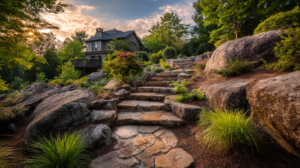
Walkway lighting focuses light exactly where you need it. Path lights, bollard fixtures, and recessed step lighting guide movement along set routes. This targeted approach works especially well on Asheville’s hilly terrain where uneven surfaces and elevation changes create trip hazards the moment the sun goes down.
Modern LED walkway fixtures use 75% less energy than traditional halogen options while lasting 25 times longer, according to the U.S. Department of Energy. For a typical Asheville home running 10 path lights six hours a night, annual electrical costs drop from roughly $180 to $45 with LED conversion. That’s real money staying in your pocket, and you get better light out of the deal too. Weather-resistant fixtures handle mountain conditions from summer thunderstorms to the occasional ice event without skipping a beat.
Professional installation involves proper voltage calculations, transformer sizing, and weatherproof connections. DIY attempts often fail within a season or two because of moisture getting into connections or wire gauge that can’t handle longer runs. Quality walkway lighting also integrates with your yard’s water management and drainage systems, so your lights and your landscape work together instead of fighting each other.
String Lights: The Atmosphere Specialists
String lights can turn an ordinary backyard into the kind of place where people linger long after dinner. Draped between trees, wrapped around pergola posts, or suspended over a patio, they deliver gentle ambient light that makes outdoor spaces feel warm and welcoming. Restaurant-style bistro bulbs, fairy light strands, and Edison bulb strings each create a distinct mood — so there’s real room to match your style here.
The installation flexibility is a genuine selling point. You can rearrange configurations for the season, add temporary displays for a party, or tuck them away during a stretch of rough weather. That said, string lights almost never provide enough focused illumination for safe pathway navigation, which matters a lot when you’re designing outdoor entertainment areas and pool deck spaces where guests are moving around in the dark.
Quality makes a big difference with string lights too. Commercial-grade options hold up outdoors while budget residential versions often fail within months. Weather-resistant sockets, heavy-duty wire insulation, and solid electrical connections prevent the usual headaches — flickering, early burnout, and the occasional safety issue. Professional installation of your entire outdoor entertainment space ensures proper load calculations and circuit protection so your string lights stay charming rather than becoming a problem.
How to Combine Both for Landscape Lighting That Actually Works
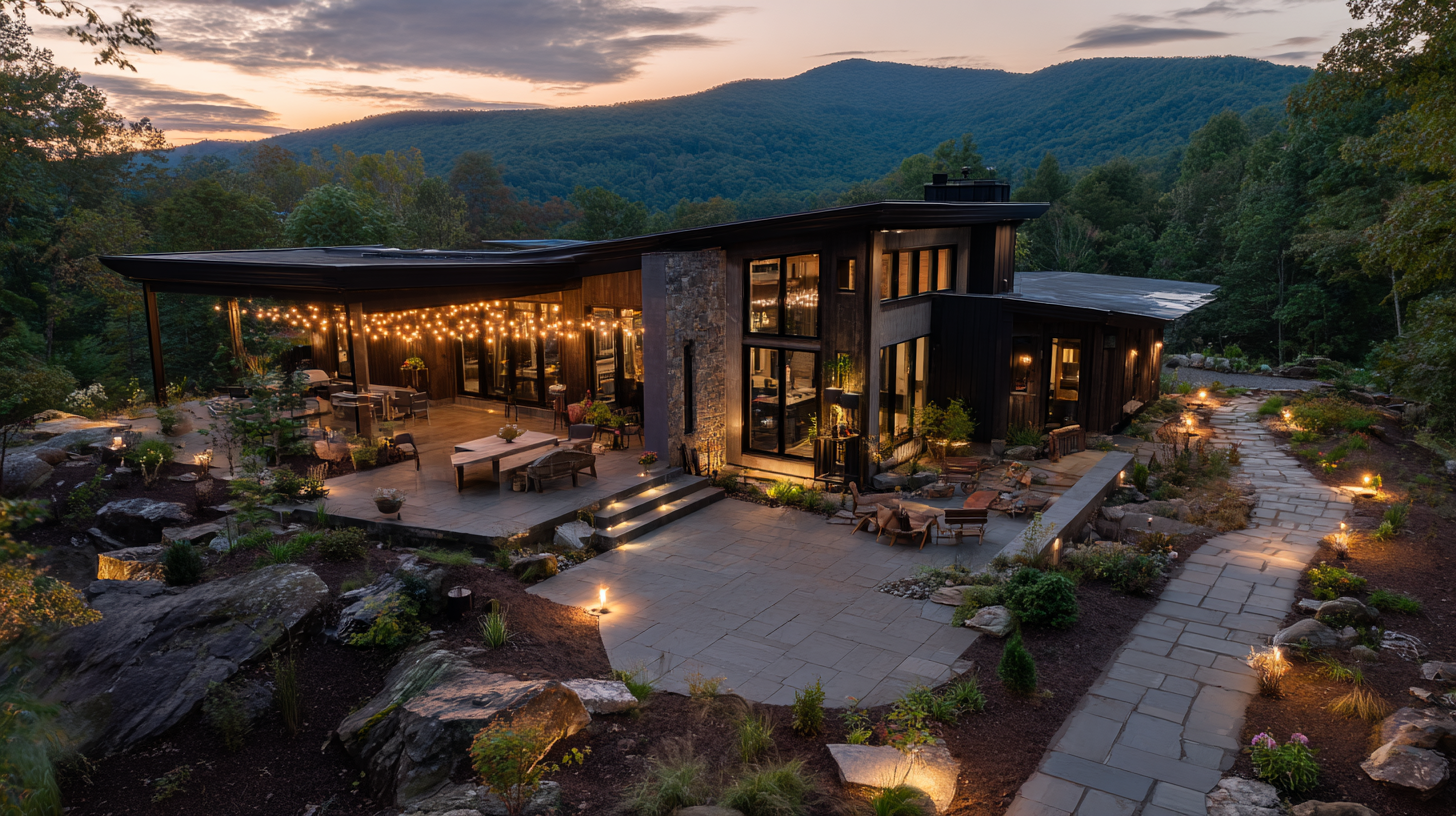
The most effective outdoor lighting plans layer walkway fixtures with string light accents. Your path lights handle the safety side while string lights add personality and a sense of place. It’s the same logic behind custom hardscaping designs that combine multiple elements for unified spaces — each piece has a job, and together they make something better than any single element could alone.
Smart placement prevents light pollution while maximizing how useful and beautiful your yard looks after dark. Position walkway lights at decision points, elevation changes, and anywhere a misstep could happen. Use string lights to define gathering areas, highlight architectural features, or create that overhead canopy effect that makes a patio feel like an outdoor room. Proper spacing keeps you from wasting energy with overlapping coverage while making sure you’re not leaving dark gaps that defeat the whole purpose.
Smart controls and timers make both systems more useful without adding hassle. Motion sensors wake up your walkway lighting when someone heads outside, while timer controls handle the string lights on autopilot. Integration with existing landscape lighting creates cohesive outdoor environments that improve both property value and how much you actually enjoy your yard. Your backyard transformation benefits from unified design approaches that treat function and beauty as equally important — because they are.
What to Look for in Landscape Lighting for Asheville NC Properties
Not all outdoor lighting is built for what Western North Carolina throws at it. When you’re choosing fixtures for a mountain property, here are the things worth paying attention to.
First, look at the IP rating on any fixture you’re considering. An IP65 rating or higher means the fixture is protected against rain, spray, and the kind of humidity that Asheville summers serve up regularly. Second, stick with LED across the board. The energy savings are real, the lifespan is dramatically longer, and the performance in cold weather is better than older bulb types. Third, think about your transformer capacity before you start adding fixtures. Undersizing your transformer is one of the most common reasons a well-planned lighting system starts acting up within the first year. Planning outdoor improvements in spring allows proper budget allocation for quality systems that hold up season after season.
Finally, think about the overall design, not just the individual fixtures. Landscape lighting that looks great on your neighbor’s flat lot may not work the same way on a sloped Asheville yard. Getting a design eye involved early — someone who knows how light behaves on grades and around mature trees — saves you from reworking things later.
Landscape Lighting Asheville NC: Getting the Design Right From the Start
Good landscape lighting doesn’t happen by accident. It starts with understanding how you actually use your yard. Do you need a lit path from the driveway to your front door every single night? Are you mostly lighting up the back deck for weekend entertaining? Are there specific features — a stone wall, a garden bed, a water feature — that you want to highlight? Answering those questions shapes the entire design before a single fixture goes in the ground.
For properties in Asheville, Weaverville, Hendersonville, and Riceville, the terrain itself is part of the design conversation. Sloped yards need lighting that accounts for sightlines, grade changes, and the way shadows fall differently on a hillside than on level ground. Steps, slopes, and uneven terrain typical throughout Weaverville and surrounding areas need dedicated path lighting — string lights alone just won’t cut it for safety. We treat every property like it’s our own, which means we’re not going to suggest a lighting plan that looks good in photos but leaves your guests guessing where the steps are.
Frequently Asked Questions
Which costs less to install and operate — walkway lighting or string lights?
String lights typically cost less upfront, but walkway lighting is usually more economical over time. LED walkway fixtures use minimal electricity and can last for decades with little maintenance, while string lights need more frequent bulb replacements and use more energy for comparable coverage areas. When you factor in the lifespan difference, quality walkway lighting often ends up being the better value — especially on a mountain property where durability really matters. Planning outdoor improvements in spring allows proper budget allocation so you can invest in the right systems from the start rather than patching things together later.
Can string lights provide enough safety lighting for walkways?
String lights create a beautiful atmosphere but they rarely provide the kind of focused, consistent illumination you need for safe pathway navigation. According to the Illuminating Engineering Society, pathways need a minimum of 0.5 to 1.0 foot-candles for safe navigation. Walkway fixtures are designed to hit those levels reliably. String lights spread light in all directions and rarely concentrate enough on the ground plane to meet that standard — especially on steps, slopes, and uneven terrain typical throughout Weaverville and surrounding areas. Use string lights as the layer that makes your space feel great, and let dedicated walkway fixtures handle the safety job.
How do Western North Carolina weather conditions affect outdoor lighting?
Mountain weather is harder on outdoor fixtures than most people expect. Temperature swings, high humidity, summer thunderstorms, and occasional ice events put real stress on lighting systems. Quality walkway lighting with high IP ratings handles Western North Carolina weather far better than most string light options. Professional-grade fixtures are built to resist moisture, temperature extremes, and wind load. String lights need protection during severe weather or seasonal storage to prevent damage and extend their lifespan. If you’re investing in outdoor lighting, choosing fixtures rated for outdoor use — not just outdoor-adjacent — is a decision you’ll appreciate the first time a storm rolls through.
What maintenance do outdoor lighting systems require?
LED walkway lighting is refreshingly low-maintenance. Beyond occasional cleaning and bulb replacement every 10 to 15 years, there’s not much to do. String lights take a bit more attention — periodic bulb swaps, connection checks, and inspecting for weather damage are all part of keeping them looking their best. Both systems benefit from a seasonal walk-through to make sure everything is working the way it should and that no fixtures have shifted or gotten buried under mulch or debris. Regular maintenance keeps both systems safe and effective without requiring a big time investment.
Do I need permits for outdoor lighting installation in Asheville?
Walkway lighting that involves a new circuit installation typically requires an electrical permit in Asheville. String lights connected to existing outdoor outlets generally don’t trigger a permit requirement. That said, permit rules can vary depending on the scope of the project and the specific location on your property. It’s always worth checking with Buncombe County building services before you start, and a professional installer will already know what’s required for your situation — so you’re not left guessing or dealing with a failed inspection down the road.
Can both systems work with smart home controls?
Yes, and it’s one of the best upgrades you can make to an outdoor lighting system. Both walkway lighting and string lights can integrate with smart home systems for scheduling, remote control, and automation. Motion sensors are especially useful for walkway lighting — your path lights come on when you need them and go off when you don’t, saving energy without any thought on your part. Modern LED fixtures also offer dimming and color temperature options that add a lot of flexibility. Professional installation ensures your new controls integrate cleanly with your existing electrical setup and don’t create any safety issues down the line.
Ready to Get Your Landscape Lighting Right? We Can Help.
Whether you’re starting from scratch or rethinking a setup that isn’t quite working, landscape lighting in Asheville NC doesn’t have to be complicated — it just needs to be planned well. At Reems Creek Outdoors, we work with homeowners in Asheville, Weaverville, Hendersonville, and Riceville to design outdoor lighting that’s safe, beautiful, and built to hold up in the mountains. We treat your property like it’s our own, and we’re not going to oversell you on fixtures you don’t need. Call us at (828) 500-1940 to talk through what your yard actually needs — or reach out through our contact form and we’ll get back to you fast.