Key Takeaways
Slope landscaping costs vary dramatically between DIY and professional installation, with terrain complexity, materials, and drainage requirements driving the biggest price differences in Western North Carolina’s challenging mountain geography.
- DIY slope projects cost 40-60% less upfront but carry higher failure risks on steep Asheville terrain
- Professional installation averages $8-15 per square foot for basic grading, $20-35 for retaining walls
- Drainage and erosion control add $3-8 per square foot but prevent costly future repairs
- Permits and soil testing requirements often push homeowners toward professional services
- Clay soil and freeze-thaw cycles in WNC create unique challenges DIYers frequently underestimate
Understanding Slope Landscaping Costs in Mountain Terrain
Slope landscaping in Asheville isn’t like working flat suburban yards. Our mountain terrain throws curveballs that catch even experienced DIYers off guard. Clay soil that turns to concrete when dry and soup when wet. Freeze-thaw cycles that can destroy poorly built retaining walls in a single winter. Slopes that look manageable until you’re halfway through excavation and realize you’re in over your head.
The cost difference between DIY and professional slope work starts with understanding what you’re really tackling. A gentle 15-degree slope with good drainage? That’s one thing. A 30-degree clay bank that sheds water like a roof? That’s another beast entirely. We’ve seen too many weekend warriors start projects in spring only to call us for emergency repairs by fall when their “budget-friendly” solution starts sliding downhill.
“Slope stability isn’t just about making things look pretty,” says Jim Peterson, a licensed landscape architect with 20 years in Western North Carolina. “You’re essentially building infrastructure that has to handle decades of weather, and mountain weather is particularly unforgiving.”
Breaking Down DIY Slope Landscaping Costs
DIY slope work typically runs 40-60% less than professional installation when you only count materials and tool rental. For a basic 500 square foot slope project, expect to spend $2,000-4,000 on materials alone. That includes retaining wall blocks ($3-8 per square foot), drainage gravel ($40-60 per ton), landscape fabric ($0.50-1.00 per square foot), and plants or seed ($1-3 per square foot).
Tool rental adds another $200-500 for a weekend project. Compact excavator rental runs $300-400 per day. Plate compactor rental costs $40-60 daily. Add a truck for hauling materials unless you enjoy making 47 trips to the supply yard in your Honda Civic.
Hidden costs bite hard though. Soil amendments for our notorious clay often double plant material budgets. Permit fees for retaining walls over 4 feet run $150-300. Most DIYers underestimate drainage needs, then spend another $500-1,500 when water issues surface later. For more information on soil conditions and construction challenges, consult erosion and soil mechanics resources. “I thought I could skip the french drain,” one homeowner told us after their retaining wall failed spectacularly. “Turns out water doesn’t negotiate.”
Professional Slope Landscaping Investment
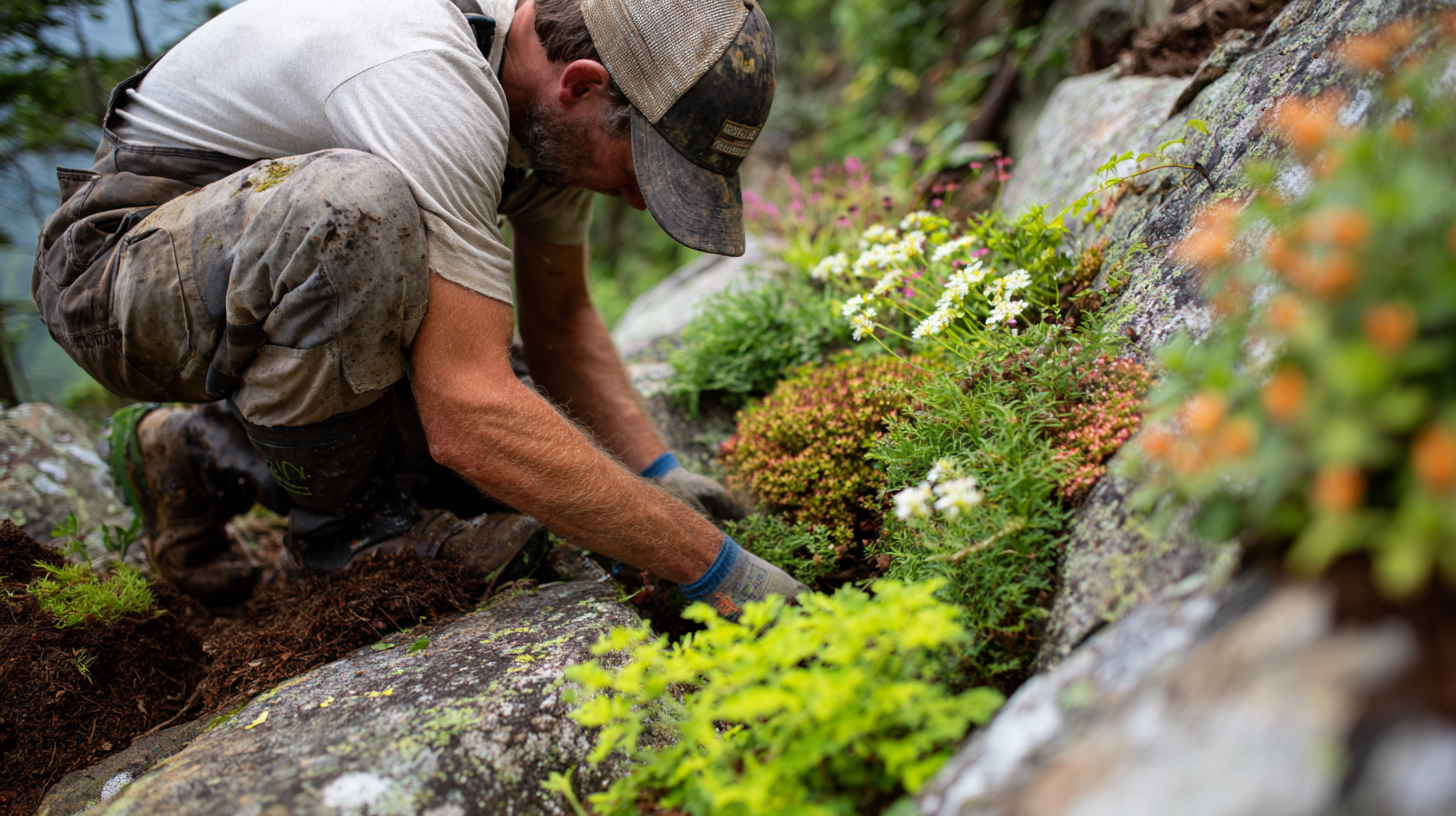
Professional slope landscaping runs $8-15 per square foot for basic grading and planting, jumping to $20-35 per square foot when retaining walls enter the picture. For that same 500 square foot slope, professional installation typically costs $6,000-12,000 for moderate complexity, $15,000-25,000 for challenging terrain requiring significant retention and drainage work.
Those numbers include proper site preparation, engineered drainage systems, and materials selected for local conditions. Professional crews know that standard retaining wall blocks designed for Georgia clay don’t necessarily play nice with Buncombe County’s unique soil composition. They factor in frost-line depths, drainage coefficients, and load-bearing calculations that weekend warriors rarely consider.
“The difference isn’t just skill level,” explains Sarah Mitchell, a geotechnical engineer who consults on slope stability projects throughout the region. “Professionals carry insurance, pull proper permits, and understand local building codes. When a DIY retaining wall fails and damages a neighbor’s foundation, homeowners insurance often won’t cover it because permits weren’t obtained.” For additional information on building standards and safety regulations, refer to OSHA guidelines.
Professional installation also includes warranties. Most reputable contractors guarantee their slope work for 2-5 years, covering both materials and labor. That peace of mind has real value when you’re dealing with thousands of dollars in landscaping investment.
Risk Factors That Drive Costs Higher
Several factors push both DIY and professional costs significantly higher in mountain terrain. Slope grade tops the list. Anything steeper than 20 degrees requires careful engineering to prevent erosion and failure. Clay soil conditions add complexity because proper drainage becomes critical, not optional. For technical information on soil properties, see EPA environmental and soil resources.
Access challenges multiply costs quickly. If equipment can’t reach your slope directly, material costs jump 30-50% due to hand-carrying requirements. Tight spaces between houses, mature trees, or utility easements force crews into labor-intensive installation methods that drive up time and cost.
Existing drainage problems compound everything. Many Asheville homes battle water issues from upslope neighbors or inadequate storm management. Fixing underlying drainage before landscaping slope work adds $2,000-6,000 to project costs, but skipping this step virtually guarantees future problems.
“Sample Scenario: We had a client attempt DIY terracing on a 25-degree slope,” recalls Mike Thompson, our lead landscape designer. “Eighteen months later, after two washouts and a failed retaining wall, they called us for a complete rebuild. The professional solution cost twice their original budget, but it included fixing problems the DIY approach created.”
When DIY Makes Sense vs Professional Installation
DIY slope work makes sense for gentle grades under 15 degrees with good natural drainage. Simple plantings, basic terracing with timber or small stone, and erosion control on stable slopes fit well within ambitious homeowner skill sets. If you can rent equipment easily, have helper hands available, and aren’t dealing with utility lines or structural concerns, DIY offers real savings.
Professional installation becomes necessary for slopes over 20 degrees, retaining walls over 3 feet high, or projects requiring permits. Clay soil conditions almost always benefit from professional drainage design. If your property borders neighbors, structural damage from failed DIY work creates liability issues that professional insurance covers but homeowner policies often exclude. Learn more about safety standards from NIH health and safety resources.
Time considerations matter too. DIY slope projects stretch across multiple weekends or even seasons. Professional crews typically complete similar work in 3-7 days, weather permitting. If you need results quickly for erosion control or upcoming events, professional installation delivers faster completion.
Frequently Asked Questions
What permits do I need for slope landscaping in Asheville?
Retaining walls over 4 feet typically require building permits and engineered plans. Extensive grading or drainage modifications may need land disturbance permits. Contact Buncombe County permitting office before starting major slope work to avoid costly corrections later.
How much does slope drainage installation cost?
Professional drainage systems run $3-8 per square foot depending on complexity. French drains cost $15-25 per linear foot installed. Proper drainage prevents expensive failures, making this investment worthwhile for most slope projects in our clay soil conditions.
Can I save money by doing partial DIY slope work?
Some homeowners hire professionals for technical aspects like retaining walls and drainage, then handle planting and finishing work themselves. This hybrid approach can save 20-30% while ensuring structural elements are properly installed and warranted.
What slope landscaping materials work best in Western North Carolina?
Natural stone retaining walls handle freeze-thaw cycles better than concrete blocks. Native plants reduce water needs and establishment costs. Permeable materials for pathways and patios manage mountain rainfall more effectively than solid surfaces.
How long do professional slope landscaping projects take?
Simple slope plantings take 1-3 days. Retaining wall projects typically require 5-10 days depending on height and drainage complexity. Weather delays are common in mountain regions, so schedule projects during drier months when possible.