Key Takeaways
TL;DR: Outdoor home improvement in Asheville NC covers a wide range of services from gravel patios and fire pits to erosion control and seasonal cleanups. Western North Carolina’s steep slopes, clay-heavy soil, and freeze-thaw cycles mean these projects require local know-how, not generic solutions. One team handling multiple services saves homeowners time, coordination headaches, and often money.
- Asheville’s mountain terrain and clay soil demand specialized approaches to grading, drainage, and hardscaping that generic contractors often miss.
- Services like mulching, gutter cleaning, and seasonal cleanups protect your property value year-round, not just in spring.
- Gravel patios and fire pits are cost-effective alternatives to poured concrete or wood decks in WNC’s climate.
- Erosion control on steep lots is not optional — it prevents foundation damage, drainage failures, and costly repairs down the road.
- Radon testing matters outdoors too, especially when disturbing soil during landscaping projects in EPA Zone 1 Buncombe County.
- Hiring a single local team for multiple outdoor services reduces scheduling gaps and keeps project accountability in one place.
What Outdoor Home Improvement Actually Covers in Asheville NC
Outdoor home improvement services in Asheville NC include any work that improves, protects, or transforms the exterior of a residential property — from lawn care and mulching to hardscaping, erosion control, fire pit installation, gutter cleaning, and seasonal property cleanups. These services address the specific challenges of Western North Carolina terrain, including steep grades, heavy clay soil, and seasonal weather swings that range from summer downpours to winter freeze-thaw cycles.
Most homeowners in Asheville know the inside of their home needs regular attention. New paint, updated fixtures, a repaired bathroom tile. But the outside? It often gets treated as an afterthought until something breaks. A retaining wall shifts. Water pools against the foundation after a heavy rain. The back slope starts sliding toward the neighbor’s yard. These aren’t just cosmetic problems. They’re structural ones, and in WNC’s mountain environment, they tend to get worse fast if ignored.
The good news is that the same category of thinking that applies to indoor handyman work applies to outdoor spaces. You want a reliable team that knows the territory, shows up consistently, and handles multiple project types without you needing to manage five different contractors. That’s exactly the gap that outdoor home improvement services are designed to fill. Reems Creek Outdoors operates in Asheville and the surrounding communities, handling this full range of exterior work for homeowners who want one accountable team instead of a rotating cast of strangers.
The sections below break down each major service category, what it actually costs in this region, why WNC conditions make specialized knowledge essential, and what homeowners should expect from the process start to finish.
Hardscaping: Patios, Walkways, and Gravel Surfaces That Actually Last
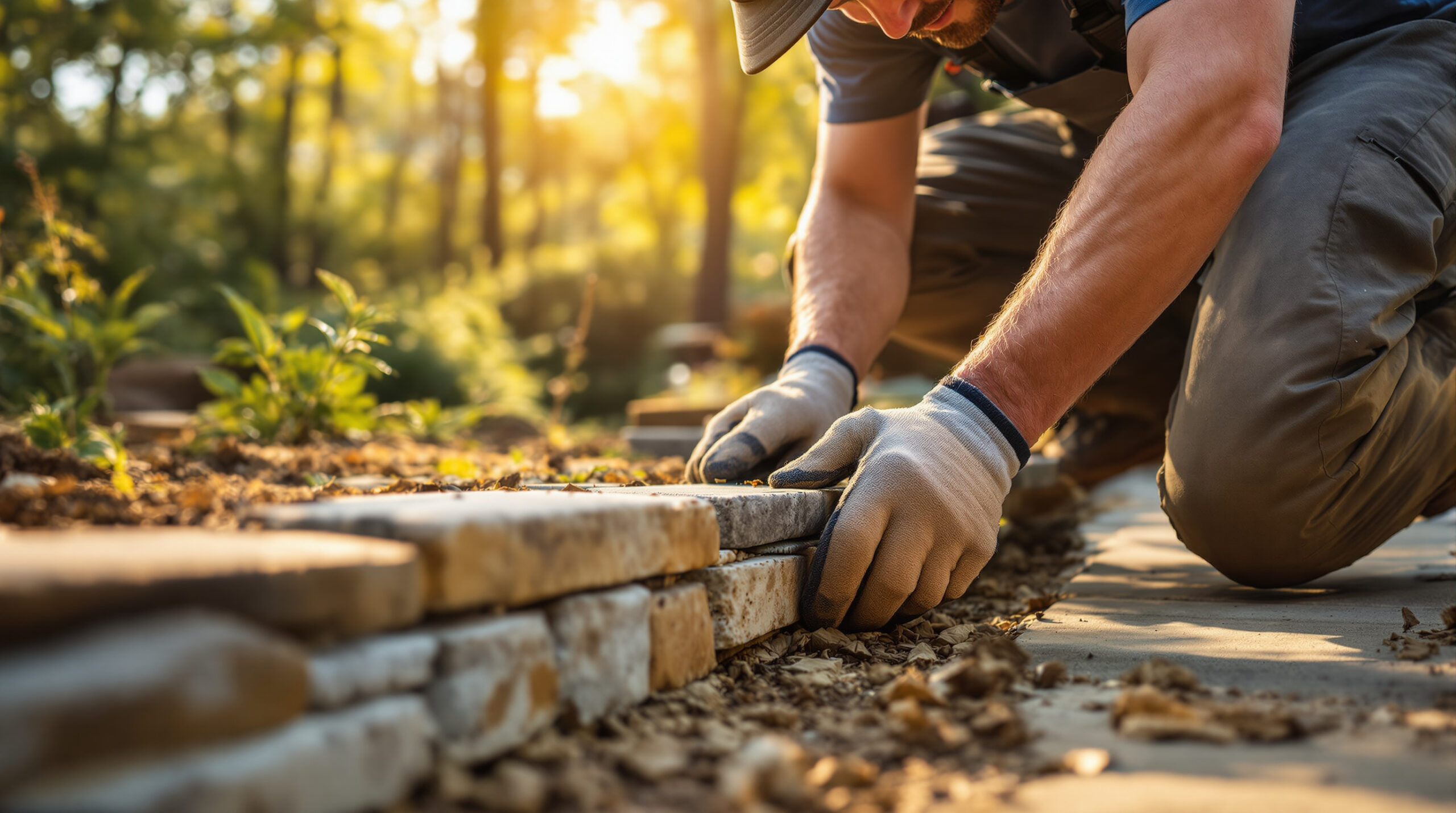
Hardscaping in Asheville NC means designing and installing durable outdoor surfaces — patios, walkways, steps, and retaining walls — using materials suited to the region’s freeze-thaw cycles, slope angles, and drainage demands. A flat-region contractor’s approach does not translate here without significant adjustments.
What materials hold up best in WNC winters?
Material choice is the first decision, and it matters more in mountain climates than most homeowners realize. Concrete pavers, natural flagstone, and compacted gravel are the three most common choices for Asheville patios and walkways. Each has specific tradeoffs. Concrete pavers offer good durability and handle freeze-thaw movement reasonably well when set on a properly compacted base with adequate drainage. Natural flagstone provides a distinctive look common in WNC’s mountain aesthetic and performs well on slopes when set correctly. Gravel surfaces are the most affordable option, drain naturally, and work well for fire pit areas, side yards, and transitional spaces. Pricing for all materials varies based on site conditions, supplier, and project scope — contact a local contractor for current estimates. For a deeper comparison of material options specific to Asheville’s climate, this guide on best patio materials for Asheville climate covers the tradeoffs in detail.
How much does a gravel patio cost in Asheville?
A gravel patio in the 200 to 400 square foot range typically runs $600 to $3,200 depending on site prep, edging material, gravel depth, and whether geotextile fabric is included beneath. Labor accounts for a significant portion of that cost on steep or difficult-to-access lots, which describes a lot of Asheville residential properties. Budget an additional $500 to $1,500 for grading if the site requires leveling before installation.
Are there good alternatives to wood decks in this region?
Wood decks require ongoing maintenance in WNC’s humid summers and wet winters — staining, sealing, and board replacement every few years. Hardscaped alternatives like flagstone patios, paver terraces, and composite decking eliminate much of that maintenance burden. Homeowners researching this decision will find useful comparisons in this article on wood deck alternatives in Asheville NC.
Fire Pit Installation: What Asheville Homeowners Need to Know
A properly installed fire pit on an Asheville property creates a usable outdoor gathering space across a long season — roughly April through November for comfortable evening use — and adds functional appeal to a backyard without the permit complexity of a full outdoor kitchen build.
What does fire pit installation cost in Western NC?
Prefabricated fire pit rings set into a gravel or flagstone base start around $800 to $1,500 for materials and labor combined. Custom-built stone fire pits using natural fieldstone or dry-stacked granite run $2,000 to $5,000 depending on size, design complexity, and seating wall integration. Adding a flagstone or gravel surround with built-in seating brings the total to $3,500 to $8,000 for a complete fire pit area. These ranges assume a reasonably accessible backyard. Hillside lots with limited equipment access add 15 to 30 percent to labor costs.
Are there fire restrictions or permits required in Asheville?
Buncombe County and the City of Asheville both maintain fire ordinances that affect open burning, including recreational fire pits. As of current county code, permanent fire pit structures on residential lots generally do not require a building permit if they meet setback requirements — typically 10 feet from structures and property lines — and stay within size limits. Burn bans during dry periods are enforced seasonally. Homeowners should confirm current restrictions with Buncombe County before installation, as rules change year to year based on drought conditions.
What base material works best under a fire pit?
Compacted gravel is the standard choice for fire pit bases in WNC. It drains well after rain, doesn’t crack from heat exposure the way concrete can, and allows for minor adjustments over time as the ground settles. A minimum depth of 4 inches of compacted crusher run beneath a 2-inch surface layer of decorative gravel is the typical specification for a stable, long-lasting base.
Erosion Control on Asheville’s Steep Slopes
Erosion control on steep residential lots in Asheville NC requires a combination of physical barriers, strategic planting, and drainage management to stop soil loss before it damages foundations, retaining walls, or neighboring properties. WNC receives substantial annual rainfall — estimates from regional climate sources suggest well over 40 inches on average — concentrated in heavy events that accelerate erosion on unprotected slopes.
How do I know if my slope has an erosion problem?
Visible rills — small channels cut by runoff — are the clearest sign. So is exposed root systems on established trees, sediment depositing at the base of a slope after rain, or soil that has migrated onto a driveway or walkway. Foundation cracks appearing without a clear structural cause can also signal that soil movement is loading the foundation unevenly. Slopes steeper than 3:1 (horizontal to vertical) are considered high-risk in WNC soil types and typically need active management rather than passive grass cover.
What erosion control methods work in mountain terrain?
Retaining walls, riprap (loose stone), erosion control blankets, and deep-rooted native plantings are the four main approaches used in this region. Each serves a different slope angle and erosion severity. Retaining walls work well for slopes with defined grade changes. Riprap handles high-flow drainage channels. Erosion control blankets stabilize newly seeded areas while plant roots establish. Native ground covers like native ferns, creeping juniper, and wild ginger provide long-term root structure without requiring irrigation once established. USDA NRCS and university agricultural extension programs such as NC State Extension provide research on native plant performance in erosion control applications. For a detailed look at slope-specific solutions specific to this region, consult local resources or contractors familiar with Buncombe County soil profiles and drainage patterns.