Key Takeaways
Asheville’s steep slopes, clay soil, and freeze-thaw cycles demand specialized hardscaping approaches that most contractors don’t understand. Success requires proper drainage, retaining walls, and materials designed for mountain terrain.
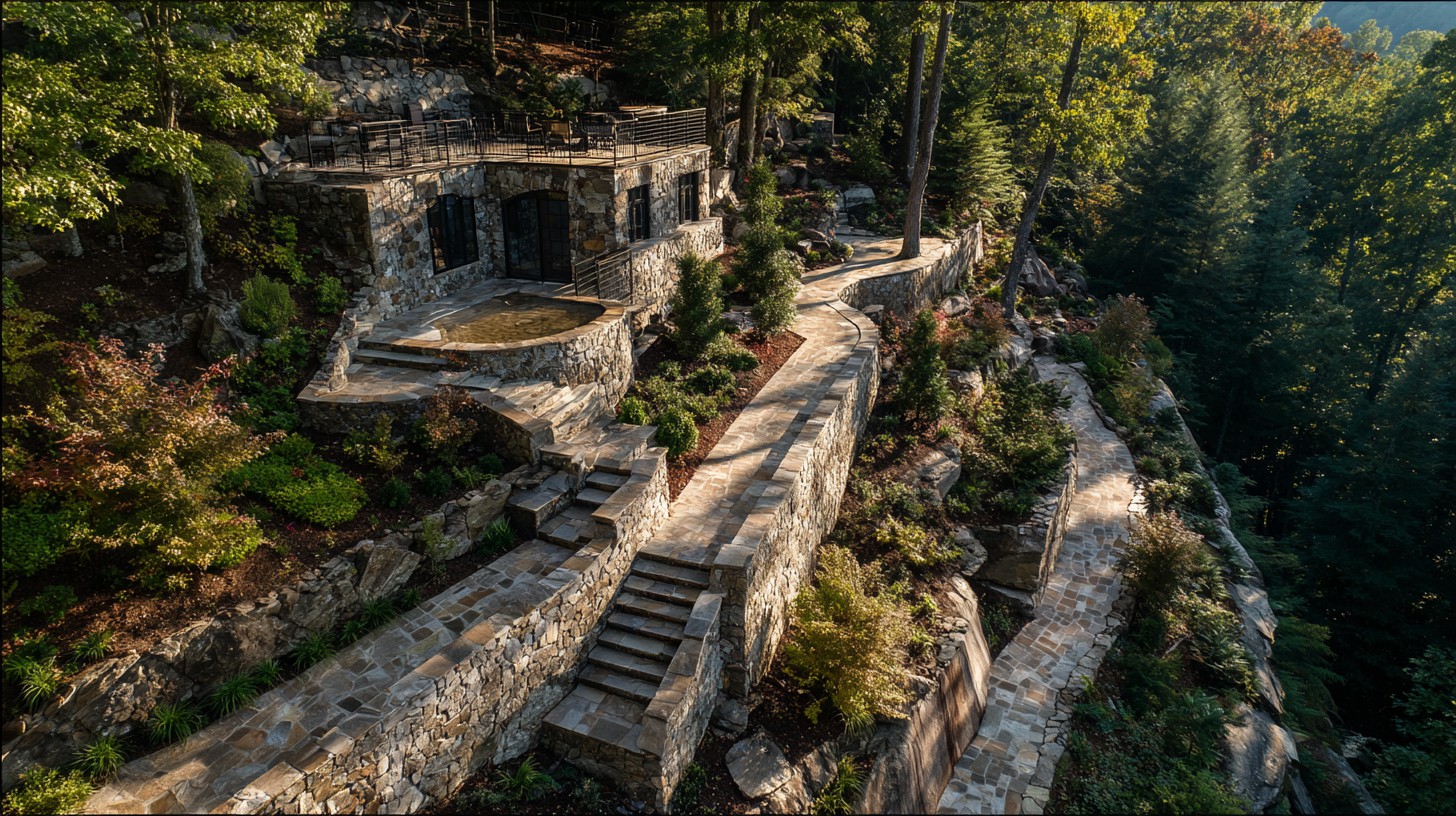
- Terraced retaining walls transform steep slopes into functional outdoor living spaces
- Proper drainage systems prevent costly erosion and foundation damage
- Natural stone materials handle freeze-thaw cycles better than manufactured alternatives
- Professional site evaluation identifies soil conditions and grade challenges before installation
- Timing installation during dry seasons reduces clay soil complications
Mountain Terrain Hardscaping Realities
Hardscaping ideas challenging terrain Asheville properties face unique obstacles that flat-land contractors simply don’t encounter. Our mountain geography creates steep grades, clay-heavy soil, and seasonal freeze-thaw cycles that can destroy poorly planned installations. Average slopes in West Asheville range from 15 to 30 degrees, while areas like Town Mountain and Sunset Mountain present even steeper challenges.
Clay soil composition throughout Buncombe County expands when wet and contracts when dry, creating movement that cracks concrete and shifts stone. Winter temperatures drop below freezing 60-80 nights annually, causing frost heave that pushes hardscaping materials out of place. These aren’t theoretical problems. They’re daily realities we’ve handled for over a decade serving Asheville homeowners. For more information on soil science and erosion prevention, consult the National Institutes of Health and the Environmental Protection Agency resources on environmental management.
Dr. Sarah Williams, soil scientist at NC State Extension, explains: “Western North Carolina’s residual clay soils derived from weathered granite create unique challenges for hardscaping projects. Proper drainage and soil stabilization are essential for long-term success.”
Retaining Wall Solutions for Steep Properties
Steep terrain doesn’t have to limit your outdoor living dreams. Terraced retaining walls create level spaces for patios, gardens, and walkways while preventing erosion. The key lies in understanding load distribution and drainage behind each wall system. Learn more about structural engineering principles at Wikipedia’s retaining wall overview.
Natural fieldstone retaining walls work exceptionally well in Asheville because they allow water movement while maintaining structural integrity. Manufactured block systems can work but require more extensive drainage preparation. Heights above four feet require engineering analysis, but multiple lower walls often provide better functionality and cost savings.
Sample scenario: A Weaverville landscaping project with a 25-degree slope wanted a level patio space. We installed three terraced retaining walls creating 400 square feet of usable outdoor area. Total investment: $12,000 including drainage and patio installation. The alternative would have been extensive grading costing twice as much.
Critical Drainage Considerations
Every retaining wall needs proper drainage to prevent hydrostatic pressure buildup. French drains behind walls, weep holes every six feet, and gravel backfill are non-negotiable requirements. Without these elements, even perfectly built walls fail within two seasons. Our drainage solutions address these challenges systematically. For technical guidance on drainage systems and water management, refer to OSHA’s workplace safety standards which include site preparation guidelines.
Patio and Walkway Strategies
Level patios on sloping terrain require careful planning and often significant site preparation. Raised patios supported by retaining walls offer one solution, while terraced designs follow natural contours more economically.
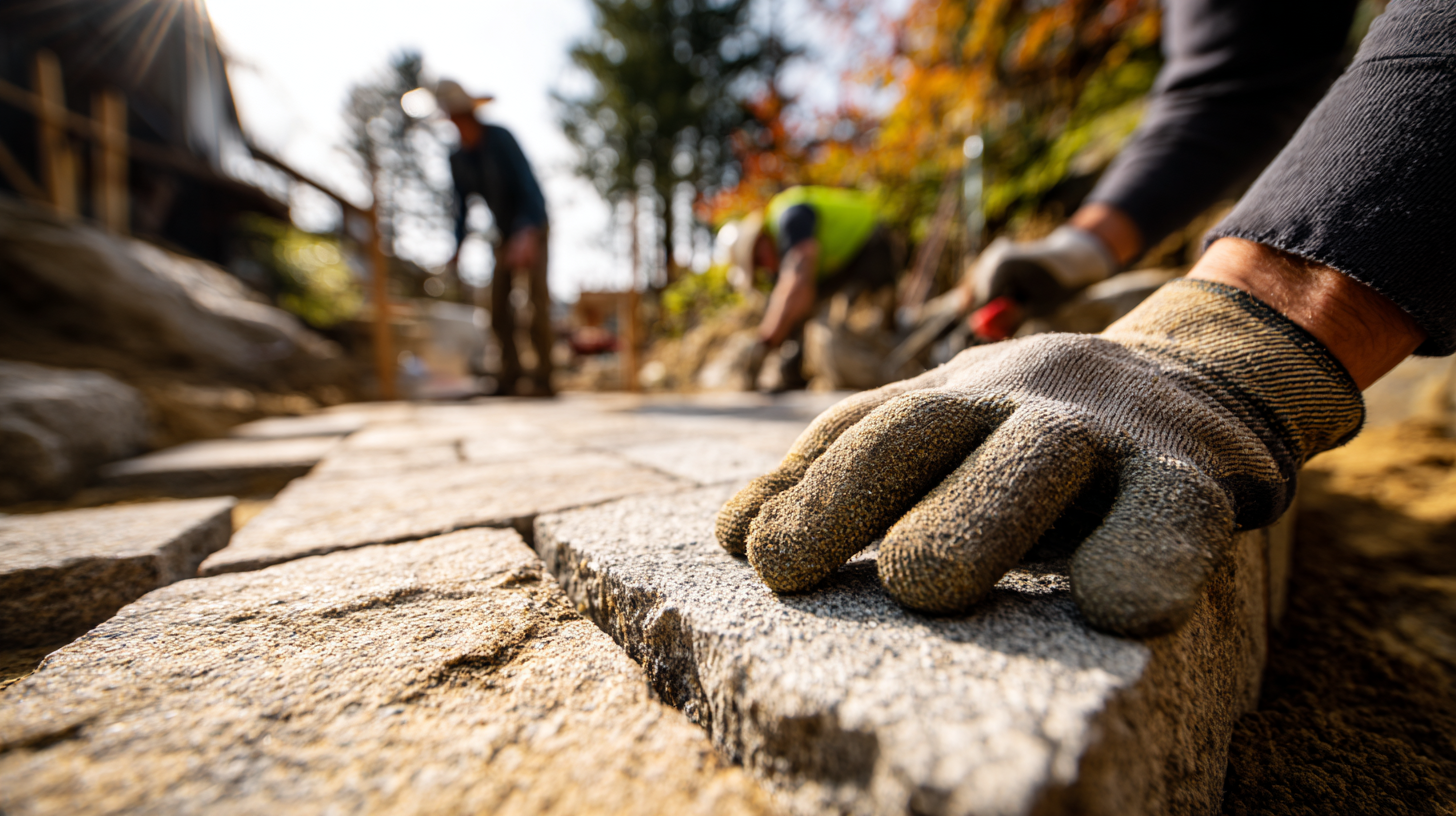
Flagstone patios handle mountain weather better than concrete alternatives. Natural stone expands and contracts uniformly, reducing crack formation. Proper base preparation includes 4-6 inches of compacted gravel, landscape fabric, and leveling sand. Clay soil beneath requires additional drainage measures.
Walkway installation on slopes demands different approaches than flat installations. Step-stone patterns follow natural grade changes, while formal walkways require retaining walls or significant excavation. Material choice affects long-term performance significantly. Slate and bluestone provide excellent traction when wet, crucial for mountain weather conditions.
Professional landscape architect Michael Chen notes: “Successful hardscaping on challenging terrain requires understanding both engineering principles and local weather patterns. Generic approaches fail in mountain environments.”
Material Selection for Mountain Conditions
Not all hardscaping materials handle Asheville’s climate equally. Natural stone materials expand and contract at rates similar to surrounding soil, reducing stress fractures. Manufactured materials often crack due to thermal cycling between hot summers and freezing winters. Review material science research at Wikipedia’s natural stone resource.
Fieldstone, quarried locally, offers exceptional durability and visual compatibility with mountain landscapes. Flagstone provides excellent patio surfaces that age gracefully. When considering permeable paving vs traditional options, concrete products work but require proper reinforcement and expansion joints every eight feet maximum.
Color considerations matter more than most people realize. Dark materials absorb heat, increasing thermal expansion. Light-colored stones reflect heat, reducing stress cycles. Natural earth tones blend with seasonal foliage changes, maintaining visual appeal year-round.
Cost Considerations
Material costs vary significantly based on availability and installation complexity. Local fieldstone averages $8-12 per square foot installed, while imported materials can exceed $20 per square foot. Transportation adds substantial expense for mountain property access.
Frequently Asked Questions
How steep is too steep for hardscaping installation?
Slopes exceeding 35 degrees require extensive retaining wall systems or terracing. Most patios and walkways work well on grades up to 20 degrees with proper preparation and drainage design.
What’s the best season for hardscaping installation in Asheville?
Late spring through early fall provides optimal conditions. Clay soil becomes unworkable when saturated, making winter installation challenging. Preparing your yard for spring construction helps plan projects during ideal weather windows.
Do retaining walls need permits in Buncombe County?
Walls over four feet require permits and engineering approval. Multiple shorter walls often avoid permit requirements while providing better functionality and lower costs.
How much does slope preparation add to project costs?
Site preparation typically adds 30-50% to base hardscaping costs. Steep slope landscaping requires more excavation, drainage work, and material transportation, increasing labor requirements significantly.
Will clay soil cause my hardscaping to shift over time?
Properly installed hardscaping with adequate drainage and base preparation handles clay soil movement effectively. Poor drainage and insufficient base preparation cause most movement problems within two seasons.
What drainage features prevent water damage to hardscaping?
French drains, surface drainage channels, and proper grading direct water away from hardscaping installations. Retaining walls require weep holes and gravel backfill to prevent hydrostatic pressure buildup. The CDC’s environmental health resources provide information on proper water management in residential settings.
Can existing slopes be modified for easier hardscaping installation?
Grade modification is possible but expensive. Terracing with retaining walls often provides better value while creating more functional outdoor spaces than extensive regrading projects.
How long do mountain hardscaping installations typically last?
Properly installed natural stone hardscaping lasts 25-30 years with minimal maintenance. Concrete installations typically require repairs within 10-15 years due to freeze-thaw damage and settling issues.
Get Your Steep Terrain Project Started Right
Hardscaping ideas challenging terrain Asheville properties demand local expertise and proven mountain installation techniques. Cookie-cutter approaches that work in flat regions fail spectacularly on our steep slopes and clay soils. Every successful project starts with understanding your specific site conditions, drainage patterns, and long-term stability requirements.
We’ve spent over a decade perfecting hardscaping ideas to enhance your outdoor living space that work in Western North Carolina’s unique conditions. From terraced retaining walls to flagstone patios that handle freeze-thaw cycles, we treat every challenging terrain project like our own property. Don’t let steep slopes limit your outdoor living dreams. Call us at (828) 500-1940 for a free consultation and see how proper mountain hardscaping transforms your property.

