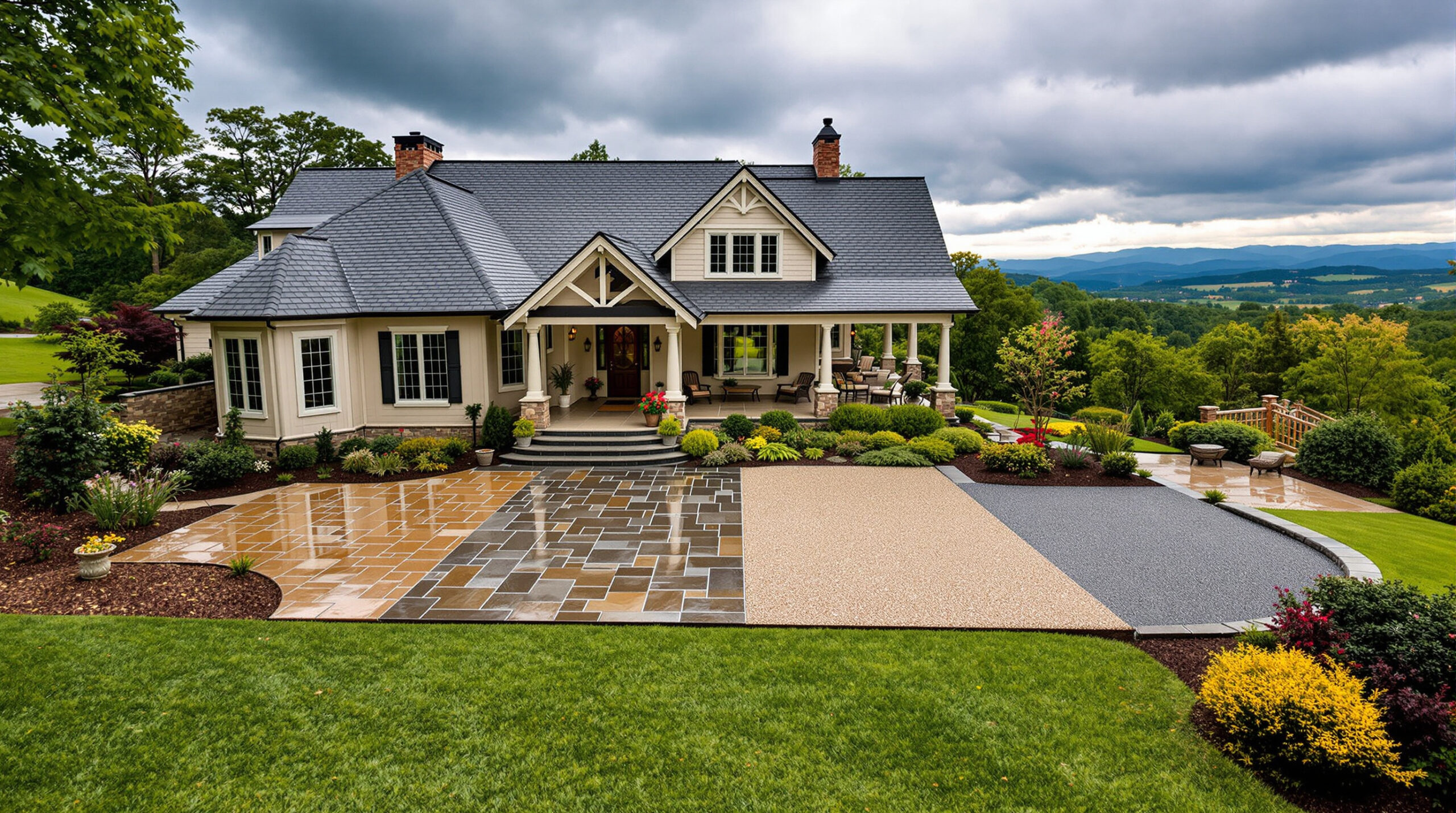
Key Takeaways
TL;DR: Asheville’s freeze-thaw cycles, heavy rainfall, and clay-heavy soil make patio material selection more important than in flatter, drier regions. Natural stone pavers, flagstone, and gravel each perform differently under WNC conditions. Choosing the wrong material can lead to cracking, heaving, and costly repairs within just a few seasons. Match your material to your site grade, drainage situation, and intended use before spending a dollar on installation.
- Asheville averages 47 inches of rain per year and sees multiple freeze-thaw cycles each winter, which crack and heave poorly chosen patio materials fast.
- Flagstone is a top performer in WNC because of its natural flexibility, but installation depth and base prep matter more than the stone itself.
- Concrete pavers are affordable but require tight drainage planning in clay soil to avoid settling and surface pooling.
- Gravel and decomposed granite work well on sloped or shaded sites but need edging and occasional re-grading to stay in place.
- Bluestone, slate, and locally sourced fieldstone each carry different price points, typically ranging from $6 to $22 per square foot installed.
- Proper base preparation, including compacted gravel sub-base depth of 6 to 8 inches, is non-negotiable in WNC’s clay-dominant soil.
- A free on-site consultation from a local hardscaping crew beats any online material guide because slope, shade, and soil type vary block to block in Asheville.
Why Asheville’s Climate Makes Patio Material Selection Unusually High-Stakes
The best patio materials for Asheville’s climate are those rated to handle repeated freeze-thaw cycles, heavy annual rainfall, and clay-dominant soil without cracking, heaving, or shifting within the first few winters. Asheville’s geography creates a specific set of stress conditions that most generic patio guides don’t account for.
Asheville sits at roughly 2,134 feet in elevation. That elevation means winter temperatures swing through the freezing point repeatedly, sometimes multiple times in a single week. The city averages around 47 inches of precipitation per year, which is significantly above the national average of about 38 inches. That water has to go somewhere. On a flat suburban lot in the Midwest, drainage is a solvable problem with basic grading. In WNC, you’re often dealing with steep grades, compacted clay soil that sheds water instead of absorbing it, and root systems from mature hardwoods that shift soil over time.
When water saturates the ground beneath a patio and then freezes, it expands. That expansion lifts whatever is sitting on top of it. If a patio material doesn’t have enough flexibility or the base isn’t prepared deep enough, you get cracking, lifting, and uneven surfaces. A patio that looks perfect in October can look like a minor disaster by March.
Reems Creek Outdoors has been working in this region and studying how hardscaping materials respond to WNC conditions over multiple seasons. The difference between a patio that lasts 20 years and one that needs major repairs in year four almost always comes down to material choice combined with site-specific base preparation. Neither factor works without the other.
Understanding the climate stressors is step one. Matching the right material to your specific yard’s drainage pattern, grade, and sun exposure is step two. This guide covers both. For more information on regional climate and weather patterns, consult the National Institutes of Health and Asheville’s geographic and climate data on Wikipedia.
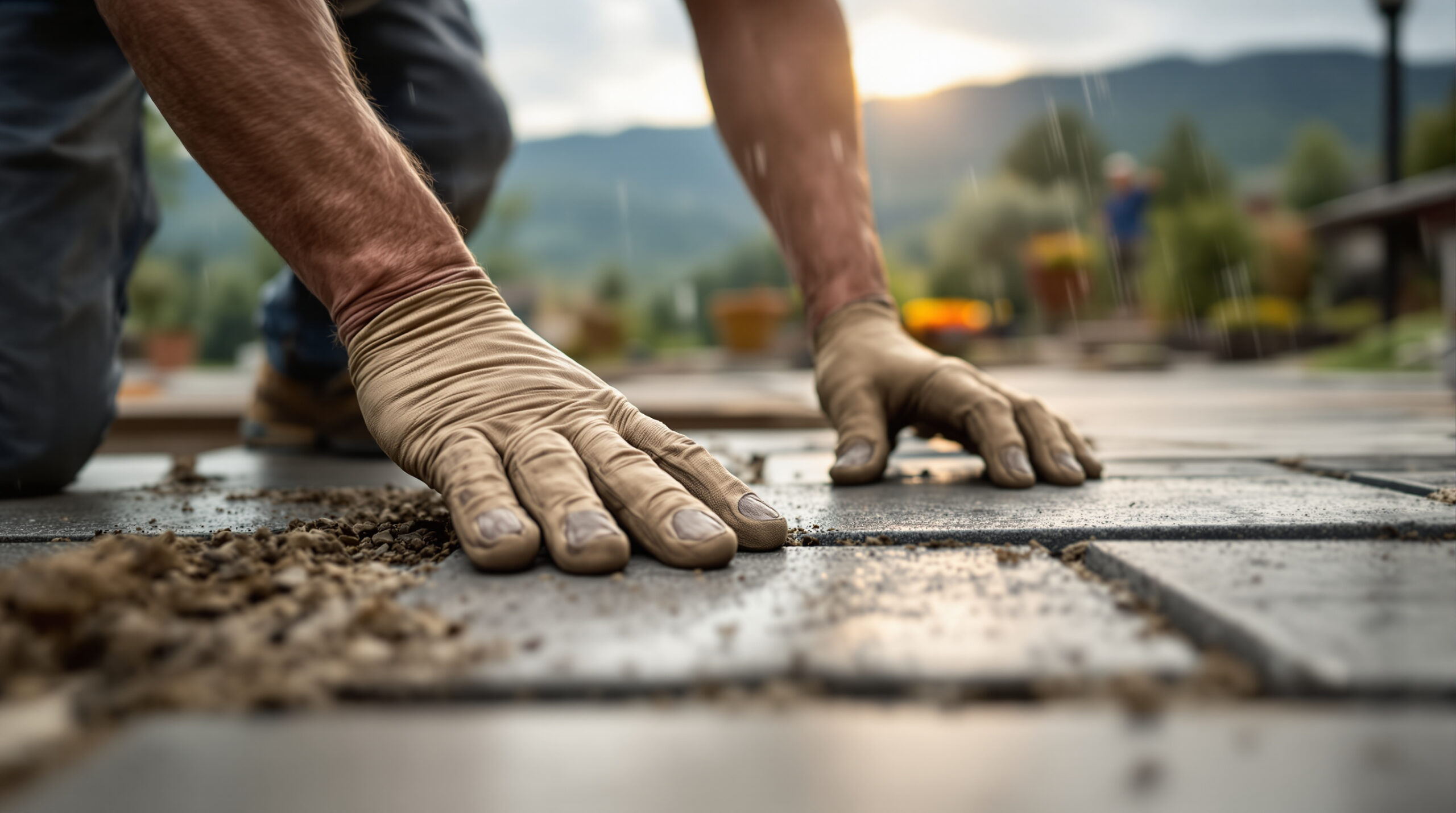
How Freeze-Thaw Cycles Damage Patio Materials Over Time
Frost heave is the primary enemy of hardscaped surfaces in Asheville. It occurs when water in the soil freezes, expands by roughly 9 percent in volume, and pushes upward against whatever material sits above it. In regions where the ground freezes once and stays frozen, this is manageable. Asheville’s problem is repeated cycling: temperatures drop below 32 degrees Fahrenheit, then climb back above it, sometimes multiple times in one week during January and February.
How many freeze-thaw cycles does Asheville actually see each winter?
Asheville typically experiences 30 to 50 freeze-thaw cycles per winter season, based on historical temperature data from the National Weather Service Asheville office. That repeated expansion and contraction is what separates materials that last from materials that fail. A patio installed in Charlotte or Raleigh might survive with a 4-inch gravel base. In Asheville, 6 to 8 inches of compacted gravel sub-base is the starting point, and some sites with heavy clay or poor drainage call for deeper preparation.
Which patio materials crack most easily under freeze-thaw stress?
Thin concrete pavers under 2.5 inches thick and poured concrete slabs without control joints are the most vulnerable to freeze-thaw cracking in WNC. Poured concrete expands and contracts as a single unit. When the ground moves underneath it, the slab has nowhere to flex, so it cracks along the path of least resistance. Concrete pavers perform better than poured slabs because individual units can shift slightly without catastrophic cracking, but they still require a properly compacted and drained base.
Does the material’s porosity affect how it handles freezing temperatures?
Yes. Porous materials absorb water, which then freezes inside the material itself. This is called spalling, and it causes surface flaking and pitting. Dense, low-porosity stones like bluestone and granite are far more resistant to spalling than softer sandstone varieties. Slate can perform well if sealed, but unsealed slate in a wet WNC winter can delaminate at the surface over time. Material density matters as much as installation depth when selecting for climate durability.
For information on soil composition and drainage principles, the Environmental Protection Agency provides resources on environmental considerations in outdoor construction.
Flagstone for Asheville Patios: Performance, Cost, and Installation Requirements
Flagstone is one of the most reliable patio materials for Western North Carolina conditions. Its natural, irregular shape allows individual pieces to shift slightly under freeze-thaw pressure without transmitting stress to adjacent stones, which is a significant advantage over rigid materials like poured concrete. Flagstone also handles the heavy rainfall common in Asheville well, particularly when laid with open joints filled with gravel or polymeric sand that allows water to drain through rather than pool on the surface.
What types of flagstone work best in the Asheville area?
Bluestone, Tennessee crab orchard stone, and locally sourced Appalachian fieldstone are the three most common flagstone varieties used in WNC. Bluestone is dense and low-porosity, making it excellent for freeze-thaw resistance. It runs approximately $10 to $22 per square foot installed, depending on thickness and site complexity. Crab orchard stone offers a warm reddish-brown tone and is regionally quarried, which reduces material cost and supports a natural aesthetic that blends with WNC landscapes. Fieldstone sourced locally can cost less but requires more labor in the setting process due to irregular sizing.
How thick should flagstone be for a patio in WNC?
For a foot-traffic patio, flagstone should be a minimum of 1.5 inches thick, with 2 inches preferred for high-traffic areas or sites where the sub-base is not perfectly level. Thinner pieces are more prone to cracking under weight and freeze-thaw stress. The base preparation underneath is equally critical: a compacted gravel layer of 6 to 8 inches topped by a 1-inch setting bed of coarse sand or stone dust provides the drainage and stability that WNC soil conditions require.
Can flagstone be dry-laid or does it need mortar in Asheville’s climate?
Both methods work, but dry-laid flagstone on a compacted gravel base actually performs better in Asheville’s climate than mortared flagstone for most residential applications. Mortared installations look tighter and more refined, but mortar joints crack under freeze-thaw stress, and once a joint fails, water infiltrates and accelerates the heaving process. Dry-laid flagstone allows the individual stones to respond to ground movement independently. This keeps the overall surface level longer with minimal maintenance. Mortared flagstone makes more sense for covered patios or porches with stable substrates and minimal ground exposure to rainfall.
Natural Stone Pavers: Granite, Travertine, and Bluestone Compared
Natural stone pavers differ from flagstone in that they are cut to consistent sizes and thicknesses, making installation faster and the finished surface more uniform. They perform differently from each other based on density, porosity, and surface texture, all of which matter significantly in WNC’s wet, freeze-thaw climate.
How does granite compare to bluestone for a WNC patio?
Granite is among the most durable natural stone options available. It has extremely low porosity, typically under 0.5 percent absorption, and is resistant to both spalling and cracking under freeze-thaw cycles. WNC geology actually includes significant granite formations, which means locally quarried granite is a regionally appropriate choice. Learn more about stone composition and durability through resources provided by geological information on Wikipedia and construction safety guidance from OSHA regarding outdoor material installation.