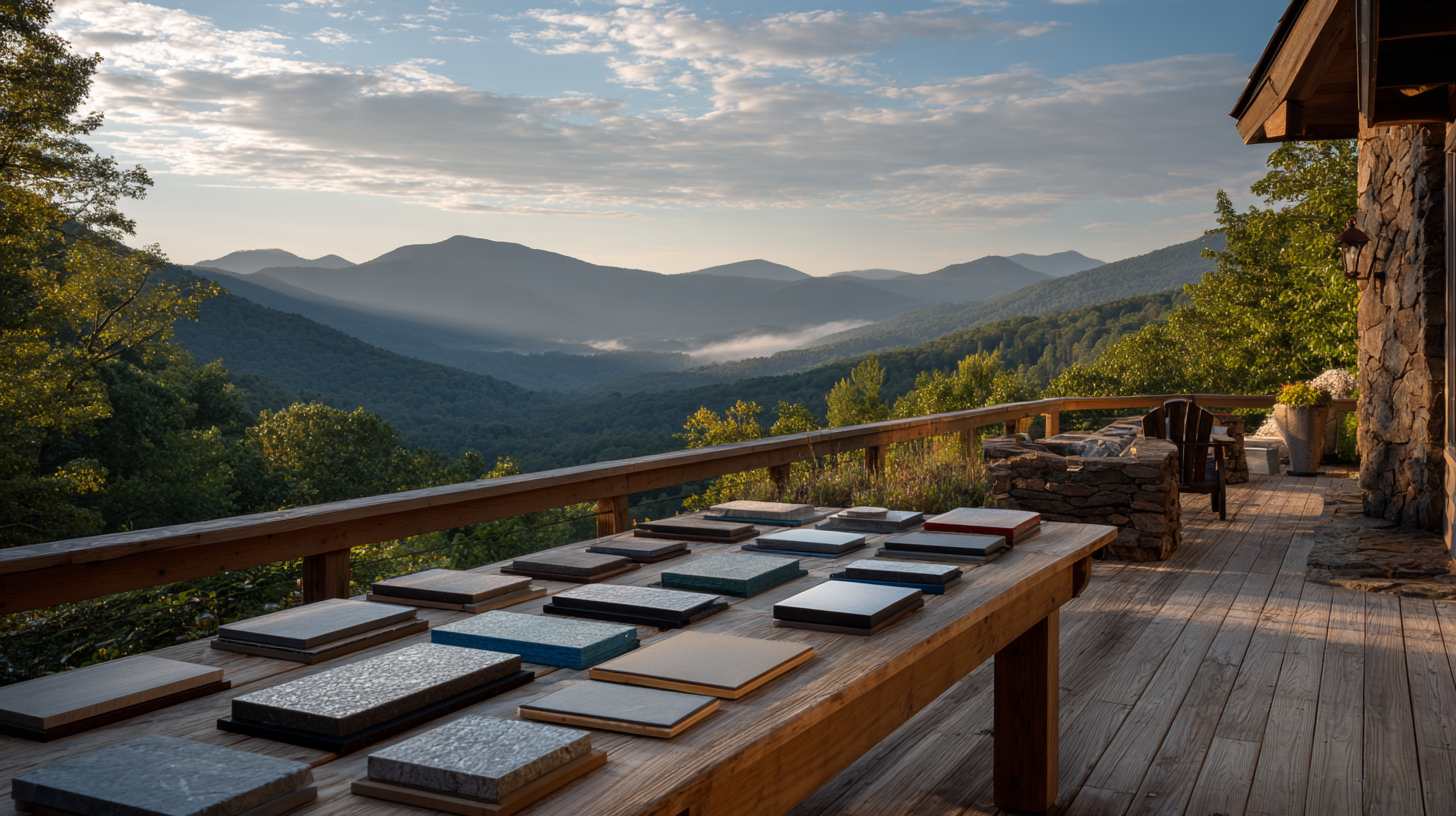
Choosing the best deck materials for mountain homes and landscapes starts with understanding your local climate. Asheville’s humid summers, hard freezes, and over forty-seven inches of annual rainfall make this decision critical. Capped composite decking handles WNC mountain weather best overall, while pressure-treated lumber is the most budget-friendly starting point—but your specific site, shade, slope, and drainage matter just as much as the material itself.
Why Asheville’s Climate Makes Deck Material Selection Tricky
Asheville sits at roughly 2,100 feet elevation, and the climate does not play nice with shortcuts. You get humid, warm summers with regular afternoon rain, then winters that drop below freezing more often than most people expect. That freeze-thaw cycle is hard on wood that is not prepped for it. Water seeps into the grain, freezes, expands, and suddenly you have boards cupping, cracking, and pulling away from fasteners. Add in the area’s clay-heavy soil that drains slowly, and moisture is attacking your deck from both above and below. Choosing the best deck materials for Asheville’s climate is not about picking what looks great in a showroom. It is about picking what holds up when the mountains throw everything they have at it.
What Is the Best Composite Decking for Asheville?
Capped composite decking from brands like Trex, TimberTech, or Fiberon is the best composite decking choice for Asheville because the protective polymer shell on all four sides keeps moisture, mold, and mildew from gaining a foothold in WNC’s wet climate. Composite is made from a blend of wood fiber and plastic, which means it absorbs far less moisture than solid wood. That freeze-thaw cycle that wrecks untreated lumber? Composite handles it without nearly as much drama.
The capped products perform especially well here because they have no exposed wood fiber for moisture to grab onto. In a region that gets over 47 inches of rainfall annually, mold and mildew resistance is not a bonus feature. It is a necessity. Quality capped composite boards are also engineered to resist fading and staining, so the color you pick on day one stays close to what you see ten years later.
Composite costs more upfront than pressure-treated lumber, often 20 to 40 percent more depending on the product tier. But when you factor in nearly zero maintenance beyond occasional cleaning and a lifespan that routinely hits 25 to 30 years, the math starts making sense pretty fast. You are not buying sealant, renting sanders, or replacing boards every few years. According to decking industry research published by the North American Deck and Railing Association, the total cost of ownership for composite decking in humid climates often beats wood by year ten.
What Are the Best Decking Materials for Temperate Climates?
In temperate climates like Asheville’s, capped composite and tropical hardwoods are the best decking materials because they handle both seasonal moisture and temperature swings without constant upkeep. Temperate zones bring a wide range of conditions across a single year: warm wet summers, cold wet winters, and significant UV exposure in between. A material that only performs well in one season will let you down in another.
Capped composite is purpose-built for this kind of variability. It resists moisture, does not splinter, and holds its color through UV exposure better than raw wood. Tropical hardwoods like ipe handle temperature swings well due to their natural density and oil content. Pressure-treated lumber is a reasonable budget option in temperate climates but requires consistent seasonal maintenance to perform at that level. Cedar and redwood fall in the middle, offering natural rot resistance but needing regular sealing to hold up through wet winters.
What Are the Best Decking Materials for Rainy Climates?
Capped composite and PVC are the best decking materials for rainy climates because neither material absorbs standing water or holds moisture the way untreated or pressure-treated wood does. When rain is a near-daily event, especially Asheville’s summer afternoon thunderstorms, you need a surface that dries quickly and does not trap water against the grain.
Capped composite sheds water well and resists the mold that builds up on perpetually damp surfaces. PVC goes one step further because it is 100 percent plastic, so moisture is essentially a non-issue for the material itself. For shaded decks that never fully dry out between rain events, PVC is especially compelling. The one thing to watch with PVC in a rainy climate is surface texture. Smooth PVC gets slippery when wet. Stick with textured profiles and you solve that problem. Landscape architect and outdoor living specialist Kevin Ireton notes that shaded, north-facing decks need fundamentally different material thinking than sun-drenched south-facing ones, and rainy-climate selections should reflect where your deck actually sits.
What Are the Best Decking Materials for the Southeast?
Capped composite and tropical hardwoods are the best decking materials for the Southeast because the region’s combination of high humidity, UV intensity, and warm temperatures creates conditions that accelerate rot, mold, and wood degradation in less durable materials. The Southeast is not a dry climate with occasional rain. It is a consistently humid environment where moisture is always present, even on sunny days.
Capped composite performs well across the Southeast because it resists both the humidity-driven mold common in low-elevation coastal areas and the freeze-thaw stress that mountain areas like Asheville add on top. Tropical hardwoods like ipe, cumaru, and tigerwood are naturally adapted to high-humidity environments because they evolved in them. Their density and natural oils resist the rot that softer woods develop quickly in southeastern conditions. Pressure-treated lumber is widely used as a structural material throughout the Southeast, but as a decking surface it needs consistent maintenance to stay ahead of the region’s moisture.
What Are the Best Deck Materials for Mountain Homes and Landscapes?
For mountain homes and landscapes, capped composite and tropical hardwoods like ipe are the best deck materials because they handle the specific combination of elevation-driven freeze-thaw cycles, heavy rainfall, and UV exposure at altitude that breaks down less durable options quickly. Mountain decks face conditions that flatland decks simply do not.
At Asheville’s roughly 2,100-foot elevation, you get more freeze-thaw cycles per winter than lower elevations nearby. That repeated expansion and contraction is punishing for materials with any moisture absorption. Slope and drainage matter too. Mountain lots often have grade changes that direct runoff toward structures, so the underside of your deck can stay damp for extended periods. Capped composite handles this well. Tropical hardwoods do too, though they need periodic oiling to maintain appearance. PVC is worth considering for especially shaded or drainage-challenged mountain sites. Pressure-treated lumber works as a structural frame on mountain homes regardless of what decking boards sit on top.
What Are the Best Options for Decking in a Mountainous Region?
In a mountainous region, your best decking options are capped composite, tropical hardwoods, and PVC, listed in order of how well they balance low maintenance with durability against freeze-thaw cycles and persistent moisture. The mountain environment adds stresses that coastal or flat-terrain decks do not face: greater temperature swings, steeper drainage patterns, more shade from tree cover, and higher rainfall at elevation.
Capped composite is the most practical all-around choice for most mountainous homeowners because it addresses moisture, freeze-thaw, and low maintenance in one product. Tropical hardwoods offer a natural wood look and exceptional durability for those willing to do periodic oiling and accept a higher upfront cost. PVC is the right call for the dampest, most shaded mountain sites where even composite might see more mold than you want to clean. Pressure-treated lumber is a reliable and budget-friendly option if you commit to the maintenance schedule that WNC’s conditions demand.
What Is the Best Decking Material for Wet Climates?
PVC is technically the most moisture-proof decking material for wet climates because it contains no wood fiber and cannot absorb water, but capped composite is the better overall choice for most homeowners in wet climates because it combines moisture resistance with a more natural look and feel underfoot. In a wet climate, the enemy is sustained contact with water. Any material that absorbs moisture, holds it, and then cycles through wet and dry phases will degrade faster than one that sheds water cleanly.
PVC sheds water completely. Capped composite sheds water very well and offers more visual warmth than pure plastic. Both resist the mold and mildew that build up on wood surfaces that stay damp between rain events. Pressure-treated lumber can perform in wet climates if maintained aggressively, but it is working against its nature in a way that composite and PVC are not. As Dr. Joseph Lstiburek of the Building Science Corporation notes, wood in high moisture environments fails not because it is bad material, but because moisture management was not built into the design from the start.
What Is the Best Fence Material for Backyards in Asheville, NC?
Vinyl and aluminum are the best fence materials for backyards in Asheville, NC because they resist the humidity, rainfall, and freeze-thaw cycles that cause wood fences to rot, warp, and need frequent repainting in WNC’s mountain climate. Wood privacy fences are popular for their natural look, but in Asheville’s wet conditions they need staining or sealing every one to two years to stay ahead of moisture damage.
Vinyl fencing requires almost no maintenance and holds up well through freeze-thaw winters. Aluminum is a strong choice for decorative fencing and resists rust. Cedar is a better wood option than pine for this climate because of its natural rot resistance, but it still needs maintenance. Composite fencing, similar in concept to composite decking, is also available and brings the same low-maintenance benefits to fence applications. Site-specific factors like sun exposure, soil drainage, and whether the fence backs up against a wet hillside all affect how quickly any fence material ages in this region.
Pressure-Treated Lumber: The Workhorse Option
Pressure-treated lumber is where most deck projects start around here, and it earns its spot. It is the most budget-friendly option upfront, widely available, and when installed and maintained correctly, it performs well in WNC’s conditions. Modern pressure-treated wood uses copper-based preservatives that resist rot and insect damage effectively. For a deck that will see regular foot traffic and Asheville winters, a properly sealed pressure-treated structure is solid. Most deck frames use it regardless of what decking boards sit on top.
The maintenance commitment is real, though. Pressure-treated wood needs to dry out after installation before you apply sealant, usually 30 to 60 days. Skip that step and the sealant does not bond well. In a climate this wet, you need to reseal every one to two years to keep moisture from getting a foothold. Neglect it and you are looking at warped boards and splintered surfaces faster than you would expect. For more information on wood preservation standards, see the National Institutes of Health and their resources on material science. For guidance on worker safety during deck maintenance, see the Occupational Safety and Health Administration.
Hardwood and PVC: The Specialty Picks
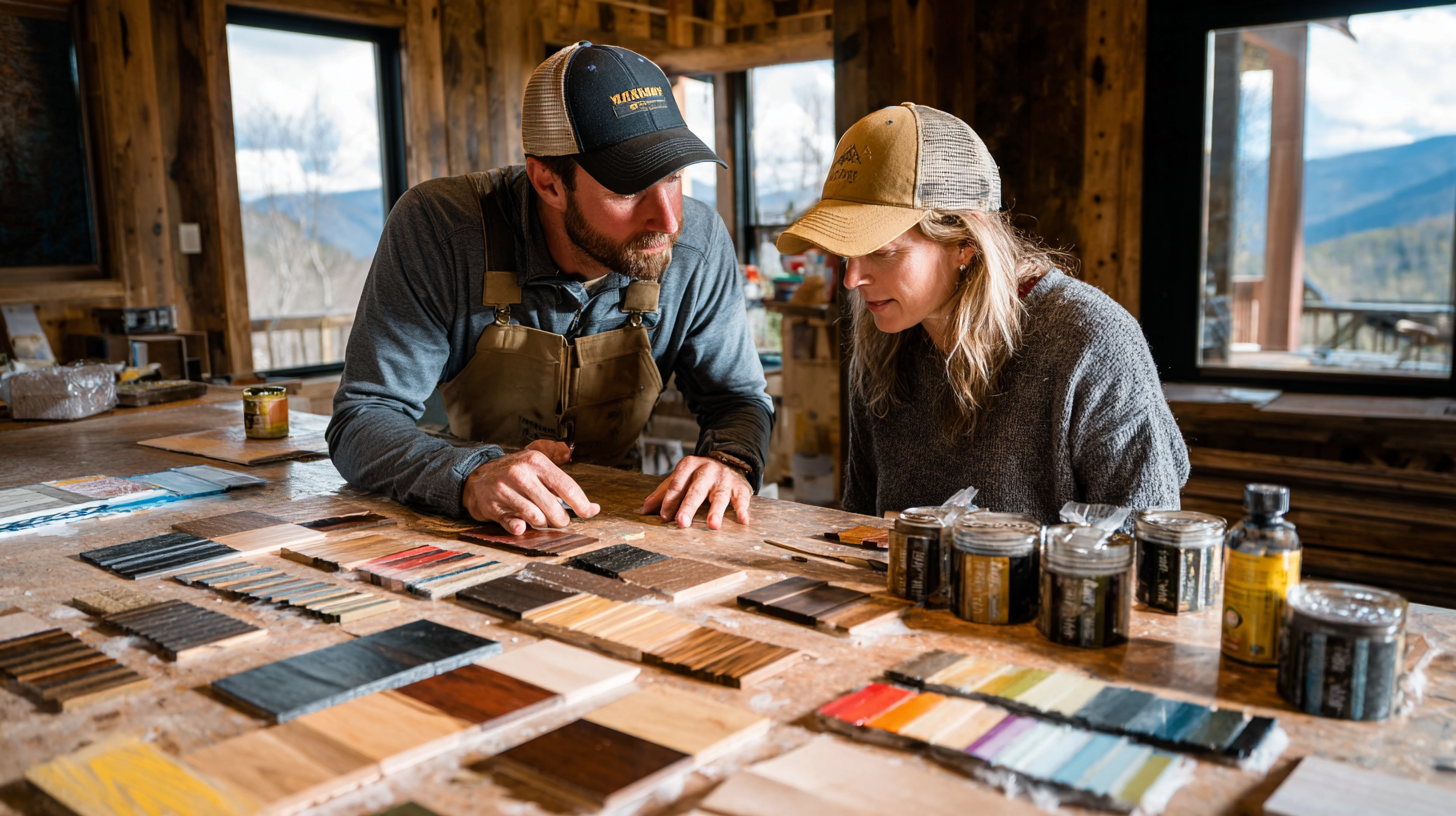
If budget is not the primary concern and you want something with real visual impact, hardwood decking like ipe, cumaru, or tigerwood is worth understanding. These tropical hardwoods are naturally dense, resist rot without chemical treatment, and have a richness of color that composite cannot quite match. Ipe in particular is one of the most durable decking materials available anywhere, with a hardness rating that shrugs off heavy furniture and heavy foot traffic alike.
Even hardwoods need maintenance in this region’s conditions. Ipe requires regular oiling to keep that deep brown color. Without it, it weathers to a silver-gray that some people love and others do not. Installation also requires pre-drilling because of the density, which adds labor time. Sourcing responsibly certified hardwood matters too. Look for FSC certification to make sure you are not contributing to old-growth deforestation. For environmental considerations regarding deck materials, consult the U.S. Environmental Protection Agency.
PVC is 100 percent plastic, so moisture is essentially a non-issue. It will not rot, will not absorb water, and resists mold growth completely. For shaded decks that stay damp, it is a compelling pick. The downside is that lower-end PVC can feel hollow underfoot and get slippery when wet. In a region where afternoon thunderstorms are basically a summer tradition, texture and grip matter. Stick with textured profiles and you largely solve that problem.
Should You DIY Your Deck or Hire a Contractor?
For most homeowners in the Asheville area, hiring a local contractor produces better long-term results than a DIY deck build because proper site drainage, flashing, and fastener selection in WNC’s wet conditions require experience that directly affects how long your deck lasts. That said, understanding the trade-offs helps you make the right call for your situation.
DIY deck building can save labor costs upfront, and for handy homeowners with some construction experience, a straightforward pressure-treated deck on flat ground is achievable. Where DIY tends to fall short in this region is moisture management. Getting the ledger flashing right, sloping the deck surface for drainage, and choosing the correct fasteners for composite or hardwood all have real consequences in a climate this wet. A mistake in any of those areas shortens the deck’s life significantly. A local contractor who works with these materials and this terrain regularly will also know which composite brands hold up best under WNC conditions and which installation details make the biggest difference over time. The upfront cost premium for professional installation often pays back in avoided repairs and a longer service life.
Side-by-Side Material Comparison
| Material | Upfront Cost | Maintenance Level | Moisture Resistance | Freeze-Thaw Performance | Lifespan in WNC Conditions | Best For |
|---|---|---|---|---|---|---|
| Capped Composite | Moderate to High | Very Low | Excellent | Excellent | 25 to 30 years | Most homeowners wanting low upkeep and long life |
| Pressure-Treated Lumber | Low | High (reseal every 1 to 2 years) | Moderate with maintenance | Moderate with maintenance | 10 to 15 years with maintenance | Budget-focused builds and structural framing |
| Tropical Hardwood (Ipe) | High | Moderate (annual oiling) | Excellent | Very Good | 25 to 40 years | Homeowners prioritizing natural beauty and durability |
| PVC | Moderate to High | Very Low | Superior (no absorption) | Very Good | 25 to 30 years | Shaded or persistently damp sites |
| Cedar or Redwood | Moderate | High (reseal every 1 to 2 years) | Good with maintenance | Moderate | 15 to 20 years with maintenance | Homeowners who prefer natural wood and will maintain it |
Quick Recap
- Asheville’s roughly 2,100-foot elevation, 47-plus inches of annual rainfall, and freeze-thaw winters make material selection more demanding than in milder climates.
- Capped composite is the best overall choice for most WNC homeowners because it resists moisture, freeze-thaw cycles, mold, and fading with minimal upkeep.
- Pressure-treated lumber is the most affordable starting point but needs resealing every one to two years to hold up in this climate.
- Tropical hardwoods like ipe offer exceptional natural durability and beauty, but require periodic oiling and responsible sourcing.
- PVC is the right call for the dampest and most shaded sites because it absorbs zero moisture, though textured profiles are important for wet-weather grip.
- Cedar and redwood perform reasonably well with consistent maintenance but fall short of composite or hardwood over a 20-plus year timeframe.
- Site-specific factors, including shade, slope, and drainage, matter as much as the material you choose.
- For most homeowners in Asheville, Weaverville, Hendersonville, and Riceville, hiring a local contractor familiar with WNC conditions produces better long-term results than DIY.
Frequently Asked Questions
What is the most durable deck material for Asheville’s wet climate?
Capped composite and tropical hardwoods like ipe are the most durable deck materials for Asheville’s wet climate. Capped composite resists moisture from all angles and requires minimal maintenance. Ipe is exceptionally hard and naturally rot-resistant. Both outperform basic pressure-treated wood over a 20-plus year timeframe when properly installed.
How often does a wood deck need maintenance in Western North Carolina?
Pressure-treated wood decks in WNC typically need cleaning and resealing every one to two years due to humidity, rainfall, and UV exposure. Skipping maintenance leads to cracking, warping, and mold growth faster here than in drier climates. Hardwoods like ipe need oiling annually or every other year to maintain appearance and color.
Is composite decking worth the extra cost in Asheville?
For most local homeowners, yes. The upfront cost premium pays off because you avoid annual sealing costs, board replacement, and refinishing labor. In a climate with over 47 inches of annual rainfall and freeze-thaw winters, composite’s moisture resistance means a much longer service life with far less effort. Industry research suggests composite’s total cost of ownership often beats wood by year ten in humid climates.
Can I use cedar or redwood for my deck in this area?
Cedar and redwood are naturally rot-resistant and look beautiful, but they are softer than hardwoods and require regular sealing in Asheville’s wet climate. They perform reasonably well if maintained consistently, but expect more upkeep than composite and a shorter lifespan than tropical hardwoods under WNC’s conditions.
What deck material works best for a shaded mountain deck that stays damp?
PVC is the strongest choice for a shaded, persistently damp mountain deck because it contains no wood fiber and cannot absorb water or support mold growth. Capped composite is a close second and offers a more natural look. Both significantly outperform wood products in chronically wet, low-light conditions.
What is the best fence material for a backyard in Asheville?
Vinyl and aluminum are the best fence materials for Asheville backyards because they resist humidity and freeze-thaw cycles without needing regular painting or sealing. Cedar is the best wood option if you prefer a natural look and are willing to maintain it. Composite fencing brings the same low-maintenance benefits as composite decking to fence applications.
Should I hire a contractor or DIY my deck in the Asheville area?
Hiring a local contractor familiar with WNC conditions produces better long-term results for most homeowners because proper ledger flashing, surface drainage slope, and fastener selection in a wet mountain climate require experience. DIY is feasible for handy homeowners on simpler projects, but moisture management mistakes in this region shorten deck life significantly and are hard to fix after the fact.
If you are planning a deck project in Asheville, Weaverville, Hendersonville, or Riceville and want honest advice from a local team that knows this climate, we are glad to help. Call us at (828) 500-1940 to talk through your options.