Key Takeaways
Creating your dream outdoor space doesn’t have to feel overwhelming when you understand the landscape design process and work with folks who treat your yard like their own.
- Good landscape design starts with understanding your family’s lifestyle and how you actually use your outdoor space
- Site analysis reveals what Mother Nature’s already working with so you don’t fight against her
- Professional designers create detailed plans that prevent costly mistakes and buyer’s remorse
- The installation phase requires coordination between multiple trades and weather considerations
- Ongoing maintenance plans keep your investment looking stellar year after year
What Makes Mountain Home Landscaping Different
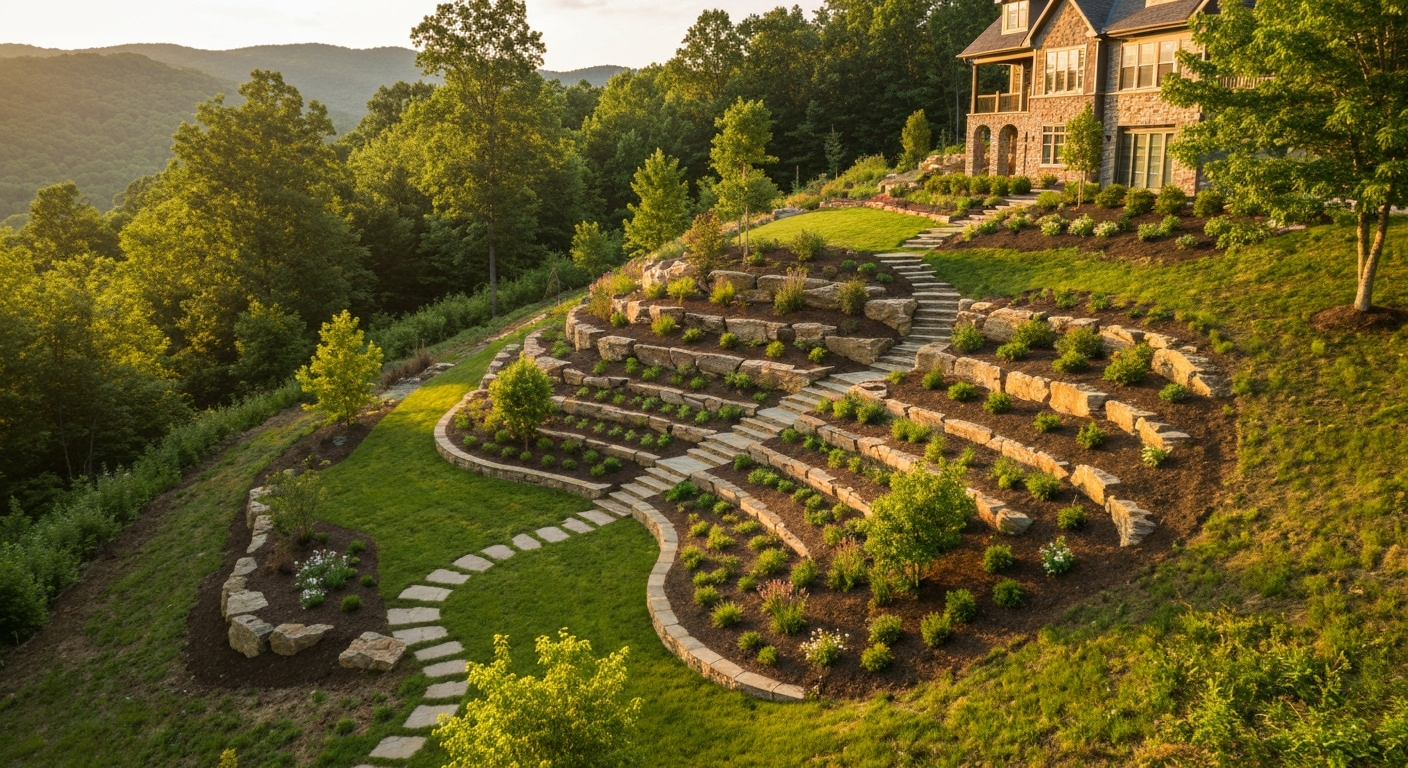
Let’s be honest – landscaping around here isn’t like throwing some petunias in a cookie-cutter suburban plot. Our mountain terrain throws curveballs that would make a major league pitcher jealous. You’ve got slopes that could double as ski runs, clay soil that laughs at drainage attempts, and microclimates that change faster than a teenager’s mood. That’s why the landscape design process for homes in this region needs to be as thoughtful as picking the right hiking boots. We’ve learned that cookie-cutter approaches work about as well as flip-flops on a muddy trail. Every yard tells its own story, and our job is listening to what yours is trying to say before we start sketching dreams on paper.
Discovery Phase: Getting to Know You and Your Dirt
Before we start daydreaming about pergolas and fire pit installation, we need to play detective with your property. Think of this as the getting-to-know-you phase, except we’re equally interested in your Saturday morning coffee routine and your soil’s drainage solutions quirks. We’ll walk your property together, talking about how your family actually lives. Do the kids need space to practice soccer? Does your dog have strong opinions about where the best bathroom spots are located? Are you the type who wants to grow tomatoes or the type who thinks low maintenance landscaping sounds like pure heaven? This isn’t just small talk – it’s the foundation that keeps your whole project from turning into an expensive regret. We’re also sizing up what Mother Nature handed you to work with, from soil conditions to drainage patterns to those sneaky spots where water likes to throw impromptu pool parties.
Design Development: From Wild Ideas to Real Plans
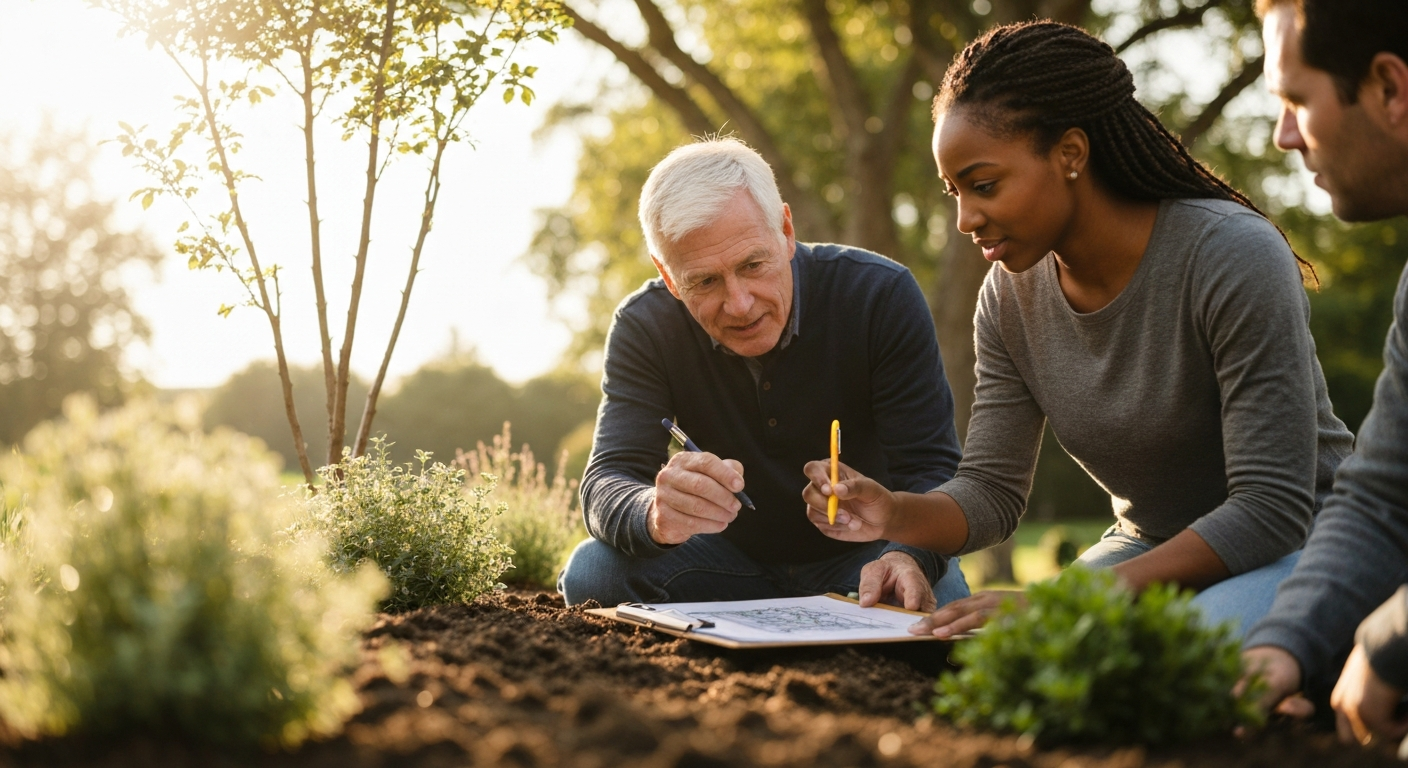
Here’s where the magic happens, but it’s more methodical magic than waving a wand and hoping for the best. We take all those conversations and observations and start sketching possibilities. According to the American Society of Landscape Architects, proper design development can reduce project costs by up to 20% by identifying potential issues before installation begins. First comes the bubble diagram – basically a fancy way of saying we draw circles where different activities might live in your yard. Then we get into the nitty-gritty details with scaled drawings that show exactly where every plant, pathway, and hardscape feature will call home. We’re not just pretty picture makers here; we’re thinking about sight lines from your kitchen window, making sure the fire pit doesn’t smoke out your neighbor’s deck, and ensuring that gorgeous Japanese maple won’t be blocking your driveway in ten years. This phase usually involves a few rounds of “what if we tried this instead” because getting it right on paper saves a whole lot of headaches later.
Material Selection That Makes Sense
Choosing materials for mountain properties requires some serious local knowledge. That beautiful flagstone might look amazing in the showroom, but if it turns into an ice rink every winter morning, we’re setting you up for a lawsuit from your mail carrier. We focus on materials that play nice with our weather patterns and actually improve with age rather than looking shabby after the first good thunderstorm. Our natural stone installations use locally sourced materials that already know how to handle what this climate dishes out.
Installation: Where Plans Meet Reality
Installation is like conducting an orchestra, except half the musicians are heavy machinery and the other half are plants that have opinions about where they want to live. We start with the bones of the project – grading, drainage, and hardscaping contractor services – because trying to install a patio after the plants are in is like trying to renovate your kitchen through the bedroom window. According to the EPA, proper installation sequencing can reduce project timelines by 30% and minimize plant stress. Weather becomes our unofficial project manager during this phase, sometimes calling timeout when conditions aren’t right for concrete pours or plant installations. We’ve learned that rushing because the calendar says so usually leads to do-overs, which nobody’s wallet appreciates. Our irrigation installation happens at just the right moment in the sequence, after hardscapes are set but before final grading and planting. It’s a dance we’ve performed enough times to know the steps, but every property teaches us something new.
Quality Control That Actually Controls Quality
We don’t just show up, plant stuff, and wave goodbye like a landscaping fairy. Every phase gets checked and double-checked because fixing a drainage problem after the patio’s poured is about as fun as root canal surgery. Our team leads have an average of 15+ years of experience and know what corner-cutting looks like from a mile away. We document everything with photos because memories get fuzzy when warranty questions come up two years later.
Establishment and Ongoing Care
Here’s the truth nobody talks about: your landscape doesn’t reach its full potential the day we finish installing. Plants need time to settle in and figure out their new neighborhood, kind of like how you need a few weeks to find the best coffee shop after moving to a new town. The first year is crucial for establishment, which is why we provide detailed care instructions that don’t require a horticulture degree to understand. We’re talking about real-world guidance like “water deeply twice a week unless it rains” rather than academic lectures about soil moisture content. According to the University of Georgia Extension, properly established landscapes have a 90% higher survival rate and require 40% less maintenance over their lifetime. Many of our clients opt for our plant establishment programs during that critical first year, which takes the guesswork out of keeping everything healthy while root systems get comfor
Additional Resources
Seasonal Timing Considerations for Your Asheville Landscape Project
Understanding the optimal timing for landscape installation in Asheville’s four-season climate can significantly impact your project’s success and long-term health. Spring (March through May) offers the ideal window for most plantings, as mild temperatures and consistent rainfall help establish root systems before summer heat arrives. Fall planting, particularly September through October, provides another excellent opportunity as cooler air temperatures stress plants less while soil remains warm enough for root development.
Winter months present unique advantages for hardscape installation and major grading work, as contractors often have greater availability and soil compaction issues are minimized in dormant landscapes. However, avoid planting during Asheville’s unpredictable winter weather patterns. Summer installations require intensive watering schedules and careful plant selection, making this season best reserved for drought-tolerant native species or emergency replacements.
Plan your landscape design process to align with these seasonal windows, beginning consultations 2-3 months before your preferred installation timeframe to ensure proper planning and material procurement.