Key Takeaways
TL;DR: Hillside erosion in Buncombe County is a real problem driven by clay-heavy soil, steep grades, and heavy mountain rainfall. Grading, retaining walls, native ground cover, and proper drainage work together to stop runoff before it damages your property or your neighbor’s.
- Clay soil and steep slopes in Western North Carolina make erosion a persistent challenge for homeowners.
- Proper grading redirects water away from foundations and vulnerable hillside areas.
- Retaining walls built with the right materials and drainage backing last decades in mountain terrain.
- Native ground cover plants establish deep root systems that anchor soil far better than turf grass.
- A layered approach combining grading, walls, plants, and drainage gives the most durable results.
Why Slope Erosion Is a Specific Problem in Buncombe County
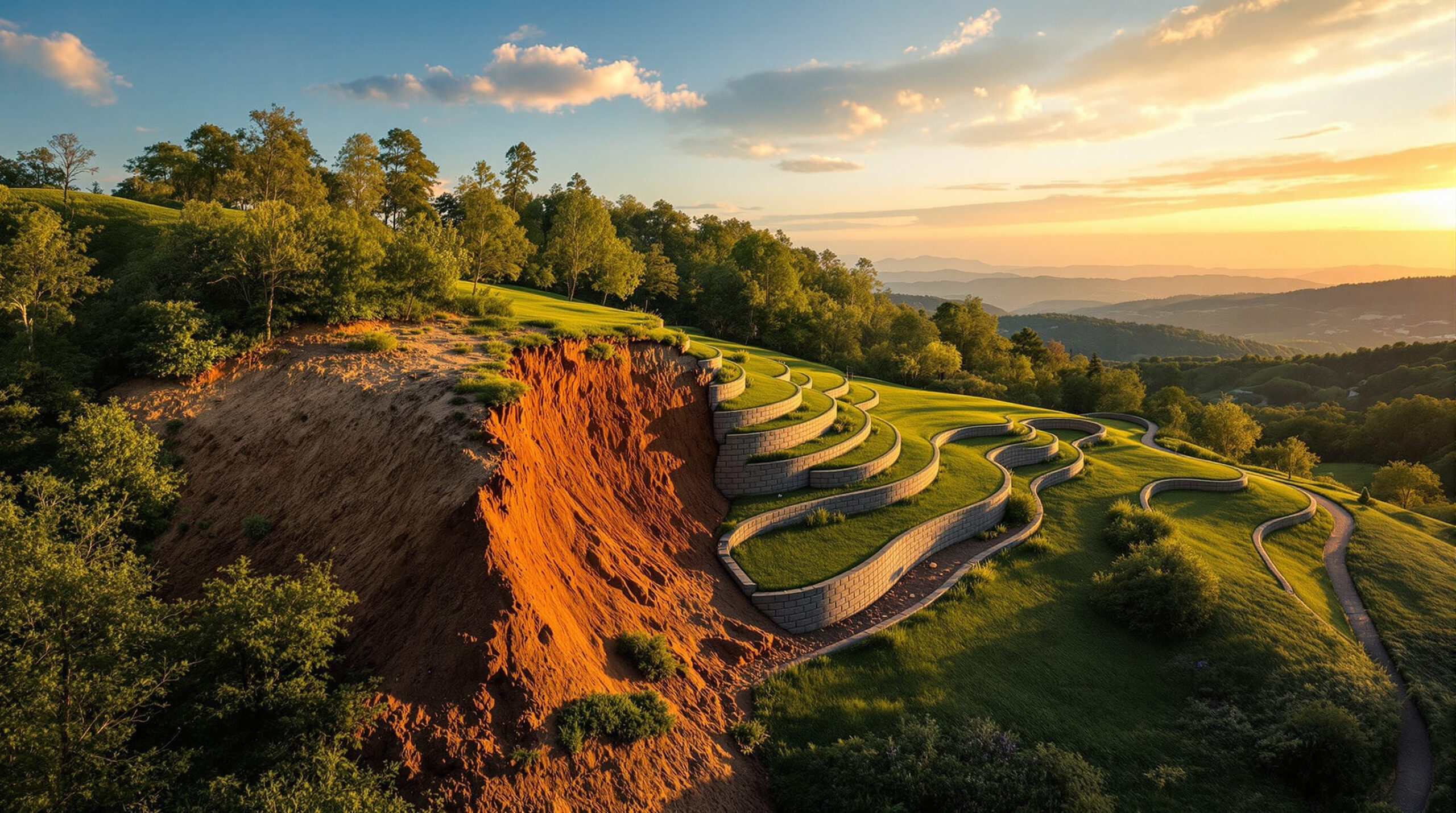
Buncombe County’s combination of steep terrain, heavy seasonal rainfall, and dense clay soil creates erosion conditions that flat-land solutions simply don’t fix. Western North Carolina averages around 47 inches of rain per year according to NOAA climate records, and a lot of that falls hard and fast during summer storm events. When water hits a clay slope that can’t absorb it quickly, runoff picks up soil and carries it downhill fast. That means exposed roots, washed-out mulch beds, failing hillsides, and in serious cases, foundation problems or damage to downhill neighbors’ properties. If you’ve watched a muddy river form in your yard every time it rains, you’re not imagining it. The geology here demands a different approach than you’d take in the Piedmont or the coast. Working with local terrain rather than against it is the only strategy that actually holds up over time. For more information on soil composition in North Carolina, see the official North Carolina state website. Homeowners dealing with these conditions can find targeted guidance in our hillside drainage solutions for Buncombe County homeowners to understand where to start.
Grading: Getting Water to Go Where You Want It
Grading is the foundation of any slope erosion control plan, and it’s where a lot of DIY attempts fall short. Proper grading shapes the land so that water moves away from vulnerable areas like your foundation, garden beds, and bare hillsides, instead of pooling or cutting channels through them. In Buncombe County, grading almost always has to account for clay subsoil that sheds water rather than absorbing it. When the grade is wrong, even the best retaining wall or drainage pipe won’t save you from runoff problems.
A professional site assessment looks at where water currently flows, where it’s causing damage, and how the existing slope can be reshaped to change that pattern. Sometimes small adjustments make a big difference. Adding a swale, reshaping a berm, or cutting a diversion channel can redirect hundreds of gallons of water per storm away from your house and toward an area that can handle it. Grading is also the first step before installing hardscaping features, so getting it right saves money on every phase that follows. For homeowners weighing whether to hire out or tackle grading themselves, our breakdown of slope landscaping costs for professional vs DIY approaches lays out what to expect. For best practices on erosion control, the U.S. Environmental Protection Agency provides guidelines on managing stormwater and erosion. Regrading a slope without addressing the underlying drainage path is like mopping the floor without turning off the faucet. Fixing the source first is essential to any lasting solution.
Retaining Walls Built for Mountain Conditions
Retaining walls do two jobs on a hillside: they hold back soil and they manage the water pressure building up behind them. In mountain terrain with clay-heavy ground and freeze-thaw cycles through winter, a wall that skips proper drainage backing will fail. Full stop. Water trapped behind a wall with no way out builds hydrostatic pressure, and eventually the wall gives way.
Material Options and What They Handle
Natural stone, segmental concrete block, and boulder walls all have a place in WNC landscapes. Natural boulders sourced locally blend into the terrain and handle weight beautifully when set correctly. Segmental block systems come in engineered configurations that accommodate taller walls with built-in drainage design. The right choice depends on wall height, soil load, and the aesthetic you want. For slopes where boulder placement is part of the plan, rip rap slope stabilization in NC offers another proven option that works with the natural character of mountain terrain. For technical guidance on retaining wall construction, consult the Occupational Safety and Health Administration for safety standards. For residential retaining walls on slopes over four feet, professional installation and proper drainage aggregate behind the wall are strongly recommended by industry standards. Skipping that step is the most common reason walls fail prematurely. Reems Creek Outdoors designs walls with drainage gravel and perforated pipe built into every project for exactly this reason. Material costs and site conditions vary, and expected lifespan depends on construction quality, materials, and maintenance.
Ground Cover Plants That Actually Anchor Your Slope
Turf grass on a steep slope is about as effective at erosion control as a paper towel on a leaky pipe. The root system is shallow, it requires mowing on dangerous angles, and it gives way fast when water volume picks up. Native plants and deep-rooted ground covers are a completely different story.
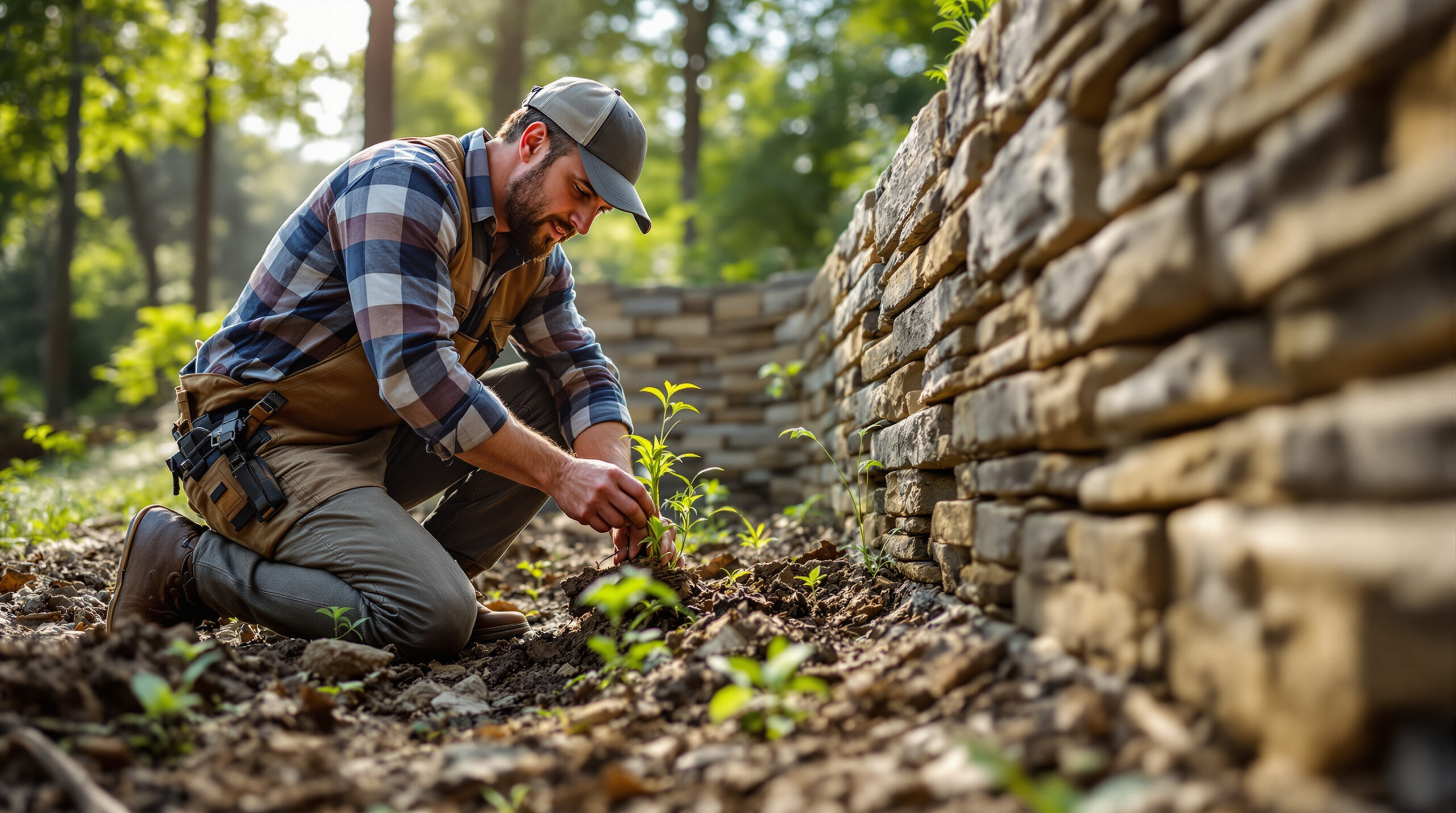
Plants like creeping juniper, native wild ginger, liriope, and native ferns establish root systems that go deep into the soil profile and physically bind it together. Native species adapted to WNC conditions are also drought-tolerant once established, which means they keep holding soil even in dry stretches between heavy rains. Ornamental grasses like switchgrass add visual interest while providing excellent slope stability. For steeper areas, erosion control fabric installed during planting gives new roots time to establish before the next big storm rolls through. Learn more about native plant species at Wikipedia’s article on native plants. Our Blue Ridge landscaping tips for mountain properties cover plant selection and establishment strategies that hold up through the full range of WNC seasons. A layered plant palette, with taller shrubs breaking wind and rain impact upslope and low ground covers carpeting the soil below, gives you the best long-term protection. If you’re managing other yard features near utility access points, check out our guide on landscaping around utility boxes and meters in Asheville to keep those areas functional and good-looking.
Drainage Solutions That Do the Heavy Lifting
Slope erosion control in Buncombe County isn’t complete without addressing where all that water is actually going. Grading and plants slow runoff, but on steep grades with high rainfall, you still need infrastructure to move water safely off your property. French drains, catch basins, downspout extensions, and channel drains are all tools in the drainage toolkit, and the right combination depends on your specific site. For federal standards on stormwater management, see the U.S. Environmental Protection Agency. Our full overview of drainage solutions for sloped mountain property in Asheville NC goes deeper on how these systems work together on challenging terrain.
A French drain is a perforated pipe buried in gravel that intercepts groundwater moving downhill and routes it to a safe discharge point. Catch basins collect surface runoff at low points and channel it underground. Downspout extensions keep roof runoff from dumping concentrated water right at the base of a slope, which is one of the most common triggers for yard erosion. Concentrated flow from a single downspout can do more erosion damage than diffuse rainfall across an entire yard. Pairing drainage infrastructure with the grading and planting strategies above gives you a complete system rather than a patchwork of partial fixes. Every property is different, but the goal is always the same: move water gently, slowly, and in a direction you control.
Frequently Asked Questions
What causes slope erosion in Buncombe County specifically?
The combination of steep terrain, clay-heavy soil, and high annual rainfall averaging around 47 inches creates ideal conditions for hillside erosion. Clay resists water absorption, so runoff moves fast across slopes. Freeze-thaw cycles in winter also loosen soil and rock, making slopes more vulnerable to erosion during spring rains.
How much does slope erosion control typically cost in Western NC?
Costs vary significantly based on slope size, severity of erosion, and which solutions are needed. Grading work, retaining walls, drainage pipe, and planting each carry separate costs. Small drainage corrections might run a few hundred dollars, while a comprehensive retaining wall and drainage system on a large slope can reach $10,000 or more. An on-site estimate gives