Key Takeaways
TL;DR: Riceville, NC homeowners deal with steep grades, heavy clay soil, and freeze-thaw cycles that generic landscaping companies often miss. Hiring a local Western North Carolina team that knows the terrain means your yard actually holds up season after season, instead of washing downhill after the first hard rain.
- Riceville’s clay-heavy soil and slopes require site-specific grading and drainage planning before any planting or hardscaping begins.
- Popular services for this area include mulching, retaining wall installation, flagstone patios, and erosion control.
- A local landscaping company familiar with WNC geology and climate outperforms generic crews who treat every yard the same.
- Reems Creek Outdoors serves Riceville and surrounding communities with landscape design and hardscaping services.
- Getting the right contractor starts with asking the right questions before anyone breaks ground.
What Landscaping in Riceville NC Actually Requires
Landscaping services in Riceville NC need to account for clay soil, significant elevation changes, and seasonal weather swings that can undo poorly planned work within a single winter. Riceville sits tucked into the eastern edge of Buncombe County, where rolling hills and wooded lots create beautiful properties that also happen to be genuinely challenging to landscape. You can’t just throw down sod and call it a day. The soil holds water. Slopes shift. And whatever you install in October is going to face a serious test come January.
That’s not meant to scare anyone. It’s just the reality of working with mountain land, and it’s exactly why the approach matters as much as the materials. A solid landscape plan here starts with understanding what the land is actually doing, where water moves during a hard rain, how steep the grade really is, and whether the existing drainage is helping or quietly working against you. Homeowners dealing with persistent water issues should explore drainage solutions for WNC properties before any planting or hardscaping begins.
Reems Creek Outdoors is a locally-owned team based in Western North Carolina, and Riceville is one of the communities we serve regularly. The terrain here isn’t a surprise to us. We design and install with WNC conditions baked into every decision, from plant selection to stone placement to how a retaining wall gets footed.
Anytime you’re landscaping on a slope in this part of North Carolina, drainage has to be the first conversation, not an afterthought. Clay soil doesn’t forgive sloppy grading — one good storm will reveal exactly where the weak points are.
Common Landscaping Services Riceville NC Homeowners Request
Riceville homeowners tend to request a focused set of services that address both the practical and aesthetic sides of their properties. The most common requests fall into a few clear categories, and knowing what’s available helps you prioritize where to start.
Mulching and Bed Maintenance
Mulching is one of the highest-value, lowest-drama services available. A fresh layer of hardwood or pine bark mulch insulates plant roots through cold snaps, cuts down on weeds, and keeps moisture from evaporating during dry stretches. For Riceville properties with established trees and foundation plantings, mulching twice a year makes a visible difference without a big project footprint.
Retaining Walls and Erosion Control
Slopes without proper support erode. It’s not dramatic, it’s just physics. Retaining walls built from natural stone or segmental block hold soil in place, create usable flat areas on otherwise unusable hillsides, and add serious visual structure to a yard. This is one area where cutting corners on materials or installation depth causes real problems later. Homeowners weighing their options can review hardscaping ideas for sloped backyards in Western NC to understand what approaches work best for their specific grade and soil type. For environmental considerations regarding erosion and slope management, see resources from the Environmental Protection Agency.
Flagstone Patios and Hardscaping
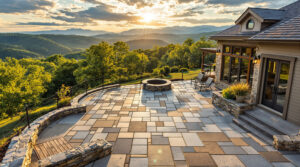
Outdoor living space is a major quality-of-life upgrade for Riceville homeowners. A well-built flagstone patio handles freeze-thaw cycles better than poured concrete and looks like it belongs on a mountain property because it actually does. Natural stone patios, walkways, and steps tie into the surrounding landscape instead of competing with it.
Gravel and Permeable Surfaces
For driveways, paths, and areas prone to pooling water, a permeable gravel surface lets water filter through instead of running off and causing erosion downstream. In a region with frequent heavy rainfall, permeability isn’t just a nice feature, it’s genuinely useful infrastructure.
Why Local Knowledge Changes the Outcome
Local landscaping knowledge in Western North Carolina directly affects whether a project holds up long-term or starts failing within a season or two. This region has specific soil profiles, drainage patterns, and climate conditions that differ meaningfully from flatter, drier parts of the country. A crew that regularly works Buncombe County terrain has seen what works and what doesn’t, and that experience shows in the finished product.
Generic landscaping companies sometimes apply the same template to every job regardless of site conditions. That approach can work fine on a flat suburban lot in the Piedmont. In Riceville, it tends to create problems. Plants get selected without considering the microclimates that mountain elevation creates. Walls get installed without adequate drainage behind them. Grading gets eyeballed instead of properly calculated. For properties on steeper ground, rip rap slope stabilization is one proven method that holds up under the kind of rainfall this region regularly receives.
Soil composition in WNC varies dramatically even within a small area. What works on one side of a ridge may completely fail on the other, which is why site-specific assessment matters so much in this region.
Local landscaping contractors who work this area regularly also tend to know the utility placement patterns, the common drainage challenges, and even the specific plants that thrive in the local climate without becoming invasive. Speaking of utilities, thoughtful landscaping around utility boxes and meters is something that gets overlooked on a lot of properties but matters both aesthetically and practically. For safety information regarding utility work and landscaping, consult the Occupational Safety and Health Administration.
How to Choose the Right Landscaping Contractor in This Area
Choosing a landscaping contractor for your Riceville property comes down to verifying credentials, asking specific questions about site experience, and making sure the contractor actually walks your land before quoting the job. A contractor who quotes without visiting is making guesses, and guesses on a sloped mountain lot tend to cost you money later.
There are a few things worth asking any contractor before signing anything. Do they carry liability insurance and workers’ comp? Can they show examples of work completed on similar terrain? Do they pull permits when required? Are they familiar with WNC drainage challenges specifically? These aren’t trick questions, they’re basic due diligence. For a deeper look at what to ask, this piece on landscape contractor questions in the Asheville area covers the key ones in detail.
It’s also worth understanding what goes into hiring a landscape contractor in the Asheville NC area so you know what to expect from the process, from the first estimate through project completion. Surprises during a project usually come from unclear expectations at the start, not from the work itself.
Homeowners often focus on price alone when choosing a contractor. But the most expensive mistake is hiring someone who doesn’t understand the site conditions and has to redo work after the first major storm.
Frequently Asked Questions
What types of landscaping services are available in Riceville NC?
Riceville homeowners can access landscape design, mulching, retaining wall installation, flagstone patio construction, gravel surface installation, erosion control, drainage planning, and general lawn care. The right mix depends on the specific conditions of each property, including slope, soil type, and existing drainage patterns.
How does clay soil in WNC affect landscaping projects?
Clay soil holds water and compacts easily, which creates drainage problems and makes it harder for plant roots to establish. Landscaping plans in this region need to account for clay by amending soil in planting beds, building proper drainage infrastructure, and selecting plants suited to moisture-retentive soil conditions. For general landscaping principles, Wikipedia’s landscaping article provides a broad overview.