Key Takeaways
TL;DR: Landscaping around utility boxes and meters can transform eyesores into attractive yard features — but only if you follow clearance rules, use the right plants, and plan for utility worker access. Skip the guesswork and let a local pro handle the design so you avoid fines, failed inspections, or a technician trampling your new garden beds.
- Utility companies require 36 to 48 inches of clear working space around most meters and junction boxes.
- Low-growing, non-invasive plants are the safest choice near underground lines and meter pedestals.
- Decorative screens and fencing can legally conceal utility boxes if they include access panels or swing-open sections.
- Asheville’s mountain clay soil makes root management near buried utilities especially important.
- Always call 811 before digging anywhere near utility infrastructure — no exceptions.
Why Utility Boxes Are the Backyard Problem Nobody Talks About
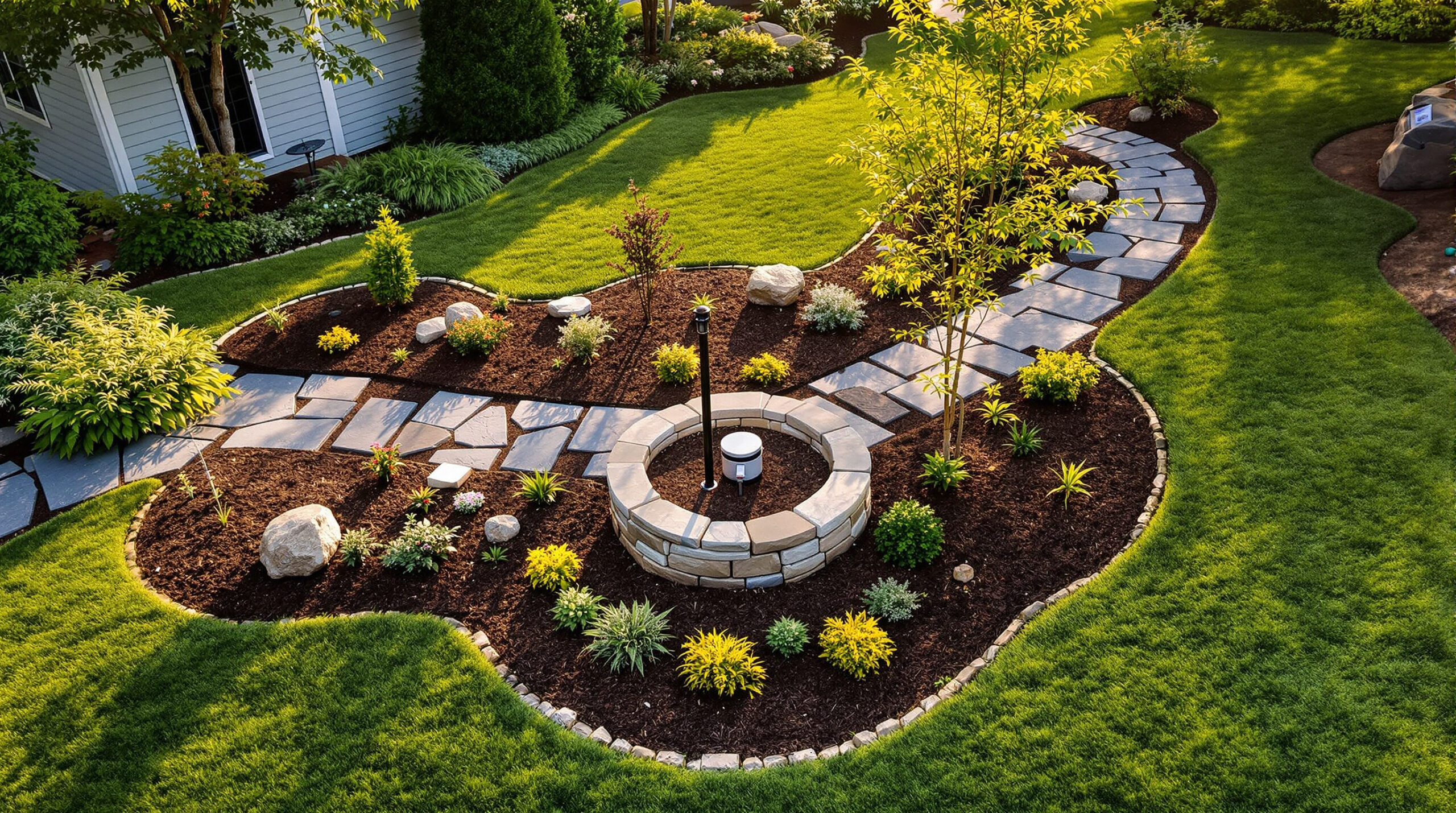
Utility boxes and meters are functional eyesores that almost every homeowner in Asheville deals with. You plan a beautiful landscape, pick out your plants, sketch your garden beds — and then there’s that gray metal box sitting right in the middle of everything, daring you to ignore it. Landscaping around utility boxes and meters is one of those design challenges that sounds simple until you realize there are real rules attached to it. Get it wrong and you could face service call complications, code violations, or worse — you get attached to a planting arrangement that a utility worker legally rips out during routine maintenance. The good news is that with the right plan, those boxes can practically disappear into a well-designed backyard landscaping in Asheville.
Know the Rules Before You Plant a Single Shrub
Clearance requirements are the first thing to understand when landscaping around utility boxes and meters. Most utility providers — electric, gas, and water alike — require a minimum of 36 to 48 inches of unobstructed access on all sides of a meter or above-ground box. The Occupational Safety and Health Administration (OSHA) and individual providers like Duke Energy publish specific easement rules that override your personal landscaping preferences every single time. Violating those rules doesn’t just mean a stern letter. It can mean a utility crew removes your plants, your fence section, or your decorative screen without prior notice or compensation.
Beyond clearances, there’s the underground side of this equation. Western North Carolina’s granite-heavy geology and dense clay soil mean root systems behave differently here than in flatter regions. A plant that stays compact in a Piedmont yard can send aggressive roots sideways through Asheville’s rocky subsoil, working toward buried conduit and pipe. That’s why plant selection isn’t just aesthetic here — it’s structural. Homeowners dealing with similar underground concerns often find it helpful to review safe planting guidelines for landscaping over utility lines before finalizing any plan.
Experienced landscape professionals consistently note that homeowners underestimate how much space utility workers actually need to safely service equipment. The recommended framing is to think of clearance requirements as a buffer zone, not a design limitation.

Smart Plant Choices That Look Good and Stay Compliant
Picking the right plants is where landscaping around utility boxes and meters gets genuinely fun. The goal is visual softening without physical obstruction. Low-growing ornamental grasses like Blue Fescue or Liriope work beautifully because they stay compact, tolerate partial shade from the box itself, and don’t send invasive roots toward buried lines. Dwarf varieties of native shrubs — think Dwarf Fothergilla or compact Inkberry Holly — add seasonal interest without growing tall enough to block meter readouts. For guidance on plants that thrive in this region’s unique conditions, Blue Ridge landscaping tips for mountain properties offer a strong starting point.
Avoid plants with aggressive root systems near any buried utility infrastructure. Bamboo is an obvious no, but so are fast-growing ornamentals like Bradford Pear or anything in the Populus family. Hostas, native ferns, and ornamental sedges are all solid, low-maintenance options that look natural in Asheville’s mountain landscape style without creating headaches down the road. For more information on native plant selection, consult your local cooperative extension service and regional horticultural resources. If you’re battling unwanted growth in these areas, knowing what kills weeds permanently and naturally can help you maintain clean beds without disturbing nearby utility infrastructure.
Container plantings are another underused strategy. A few well-placed large containers with seasonal color give you full flexibility — if a utility worker needs access, you move the pots. No digging, no drama.
Screens, Fences, and Structures That Actually Work
Sometimes plants alone aren’t enough to hide a large electrical pedestal or a cluster of meters on the side of a house. That’s where decorative screens and low fencing panels come into play. The key word is access. Any screen or fence you install around a utility box needs a functional swing-open section or removable panel that gives technicians immediate, unobstructed entry. Permanently anchored screens that require tools to remove are almost universally non-compliant.
Cedar lattice panels on a hinged frame are a classic approach that works well in Western North Carolina’s climate. They weather gracefully, hold climbing plants like Coral Honeysuckle or native Clematis without invasive root problems, and swing open cleanly for service access. Powder-coated metal screens are another durable option that complements more contemporary yard designs. Homeowners exploring broader hardscaping solutions for challenging terrain in Asheville often find that combining structural screens with thoughtful plantings delivers the best results.
Landscape designers working in the mountain South frequently identify the same problem: homeowners build a beautiful screen and then nail it shut. The screen itself is rarely the issue — maintaining proper access is always the critical factor.
Drainage and Grade Considerations Near Meters
In Asheville specifically, drainage is a conversation that belongs in every landscaping plan, including the spots around utility infrastructure. Meters and junction boxes at grade level need to stay dry. Regrading soil or mulching too aggressively near a utility pedestal can redirect water flow directly toward that equipment. Saturated soil around electrical pedestals creates safety hazards and corrosion issues that become your problem fast. The Environmental Protection Agency (EPA) provides guidance on residential drainage best practices.
Make sure your mulch depth stays shallow — generally no more than a few inches — near any utility structure and that it slopes away from the base rather than toward it. If your yard already has drainage challenges — and plenty of Asheville-area properties do, given the topography — addressing the broader drainage plan before you finalize landscaping around meters is just smart sequencing. Homeowners on hilly lots should explore drainage solutions for sloped mountain property as part of that broader planning process. Civil engineers and grading consultants working in the Southern Appalachians consistently emphasize that drainage should be resolved before aesthetics — poor water management around a utility pedestal can undermine even the best planting plan.
Frequently Asked Questions
How much clearance do I need to leave around a utility box?
Most utility providers require 36 to 48 inches of clear, unobstructed access on all sides of meters, electrical pedestals, and above-ground junction boxes. Always verify the specific requirement with your local provider before planting or installing any structure. Requirements can vary by provider type — electric, gas, and water each have their own rules. For official guidance on utility safety, contact your local utility provider directly or visit your provider’s published easement and clearance documentation.
Can I plant shrubs directly in front of my electric meter?
You can plant shrubs near an electric meter, but not directly in front of it. Meter readers and service technicians need a clear line of sight and physical access. Shrubs placed too close can also overgrow and obstruct the meter within a season or two. Low-growing plants positioned at least four feet away are typically the safest approach.
What plants work best for landscaping around utility boxes and meters?
Low-growing, non-invasive species work best. Ornamental grasses like Blue Fescue, native groundcovers, compact native shrubs, hostas, and ornamental sedges are all solid options. Avoid anything with aggressive root systems — bamboo, fast-growing ornamentals, and large-canopy trees should stay well away from buried utility lines and above-ground equipment.
Is it legal to build a screen or fence around a utility box?
Yes, but only if the screen or fence includes a functional access panel or hinged section that allows utility workers to reach the equipment without removing the structure. Permanently enclosed or nailed-shut screens are non-compliant and subject to removal by utility crews.