Key Takeaways
TL;DR: Hardscaping projects in Asheville can return 50% to 80% of their cost at resale, with flagstone patios, gravel driveways, and fire pits performing best in Buncombe County’s competitive market. Local geology, steep grades, and clay-heavy soil affect both installation costs and long-term durability. Choosing the right project for your site conditions matters more than picking the most expensive option.
- Flagstone patios typically return 55% to 75% of project cost in Asheville-area resale values.
- Gravel driveways run $1,500 to $4,000 installed and add immediate curb appeal in mountain settings.
- Fire pit installations average $2,500 to $6,000 and rank high on buyer wish lists in WNC.
- Buncombe County’s clay soil and frost-heave cycles require proper base preparation or structures fail early.
- Buyers in Asheville’s $400,000 to $700,000 price range consistently prioritize usable outdoor living space.
- Drainage and slope management are not optional add-ons — they protect every dollar you put into hardscaping.
- A licensed local contractor with regional experience reduces costly rework caused by site-specific conditions.
Why Hardscaping ROI in Asheville NC Works Differently Than the National Average
Hardscaping ROI in Asheville NC runs higher than national benchmarks because of three factors unique to this market: the region’s outdoor lifestyle culture, the competitive inventory of homes in the $350,000 to $750,000 range, and the physical reality of mountain lots that leave buyers craving usable flat space. National remodeling recovery data from sources like the Cost vs. Value Report typically shows outdoor project returns of 40% to 60%. In Asheville and surrounding communities like Weaverville and Hendersonville, that number climbs closer to 60% to 80% for well-executed projects because functional outdoor square footage is genuinely scarce on sloped lots.
Reems Creek Outdoors has worked across Buncombe County long enough to know that what sells a home here is not just curb appeal in the traditional sense. It is a flagstone patio that feels like a second living room. It is a gravel driveway that holds up through a wet Western North Carolina winter without turning into a rutted mess. It is a fire pit that makes a buyer picture themselves sitting outside in October with a cup of coffee while the leaves come down off the ridge. These are not luxury items in this market. They are expectations.
Understanding where your money goes and what it gets back requires looking at specific project types, real material costs, and how local conditions affect both installation quality and long-term durability. That is exactly what this breakdown covers.
Flagstone Patio Installation: Asheville’s Highest-ROI Hardscaping Project
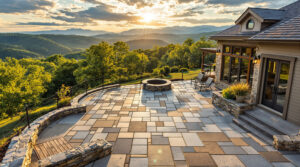
A well-installed flagstone patio in Asheville returns between 55% and 75% of its installed cost at resale, making it the most reliable hardscaping investment for homeowners in this region. Project costs range from $4,500 to $9,500 depending on square footage, stone selection, and site prep complexity.
What does a flagstone patio actually cost to install in Buncombe County?
Material costs for flagstone in Western North Carolina fall between $3 and $8 per square foot for the stone itself, depending on whether you choose locally sourced fieldstone, Pennsylvania bluestone, or Tennessee crab orchard. Bluestone runs on the higher end and has a polished look that photographs well for listings. Local fieldstone costs less and blends naturally into mountain settings, which appeals strongly to buyers who moved here specifically for that aesthetic. Labor adds $8 to $15 per square foot on top of materials. A 300-square-foot patio with moderate site prep lands in the $4,500 to $6,500 range. Add significant grading, a drainage channel, or a step system down a slope and you are looking at $7,000 to $9,500.
Why does base preparation matter so much on Asheville lots?
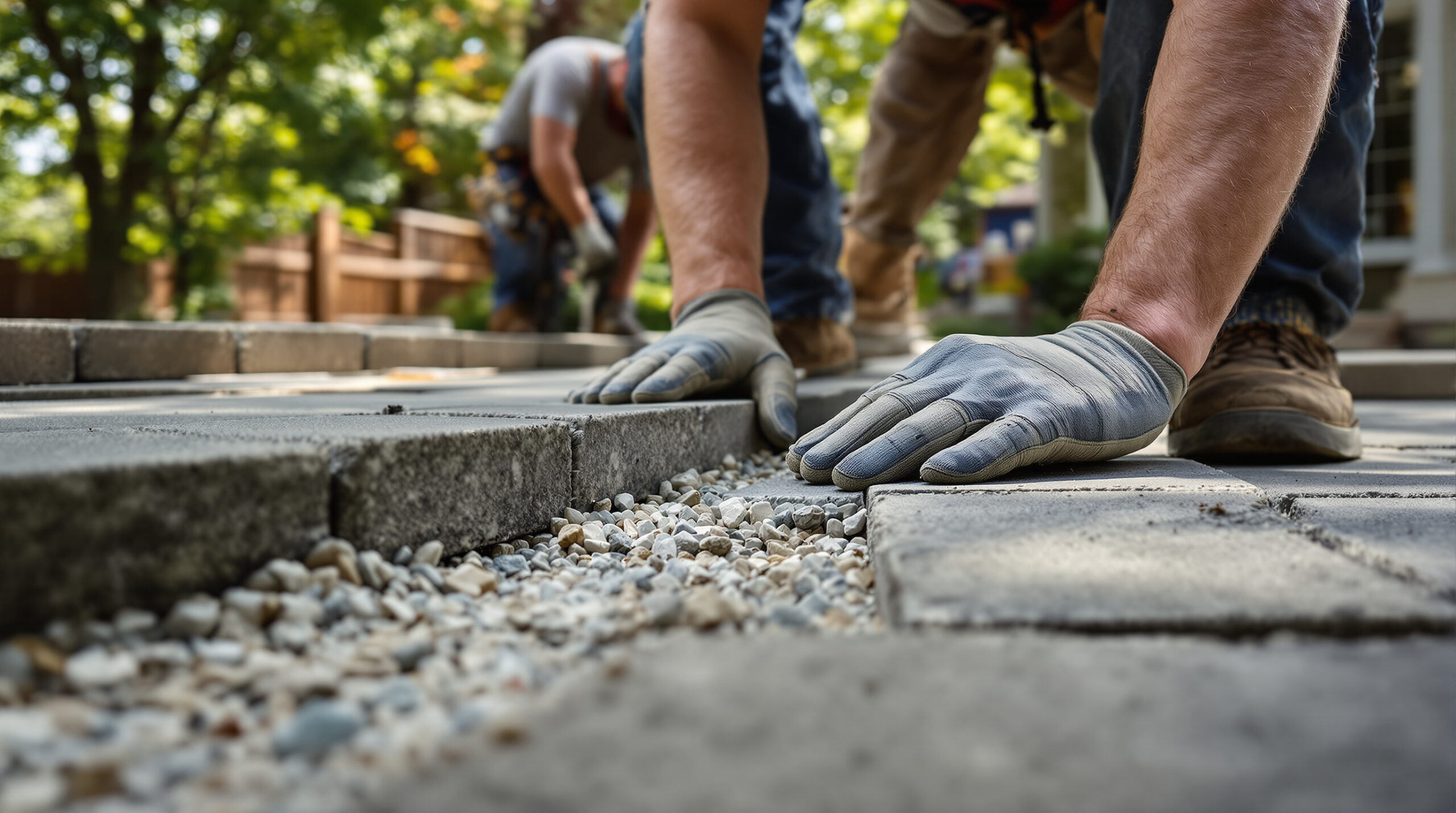
Buncombe County soil is predominantly red clay with high shrink-swell potential. That means it expands when wet and contracts when dry. Pair that with freeze-thaw cycles that run from November through March and you have a recipe for shifting, cracking, and heaving flagstones within three to five years if the base is not built correctly. A proper base requires 6 to 8 inches of compacted gravel sub-base, a 1-inch sand or stone dust setting layer, and adequate slope away from the structure for drainage. Skipping any of those steps is how a $6,000 patio becomes a $3,000 repair job in year four. For authoritative guidance on soil mechanics and frost heave, see USGS.gov for geological resources related to clay soils and seasonal movement. For detailed installation standards, the guide on flagstone patio installation in Asheville NC covers base specs and material comparisons specific to this area.
How do buyers respond to flagstone patios during home tours?
Real estate agents in the Asheville market consistently report that outdoor living spaces are among the top five features buyers mention after walkthroughs. A flagstone patio that is level, well-drained, and connected to the home’s interior flow with a logical step sequence reads as finished, intentional space. That translates to reduced days on market and stronger offers. “Outdoor rooms have become non-negotiable for a significant portion of buyers in Western North Carolina,” said James Farrell, a certified residential appraiser with 18 years of experience in mountain markets. “A properly built patio adds appraised value, not just emotional appeal.”
Gravel Driveways: Low Cost Entry Point With Strong Curb Appeal Returns
Gravel driveways cost $1,500 to $4,000 installed in the Asheville area and consistently improve first impressions enough to justify the investment, particularly on rural or semi-rural lots where asphalt feels out of place against the surrounding landscape.
What types of gravel work best in Western North Carolina’s wet climate?
Asheville averages around 47 inches of rainfall annually, more than the national average, which means drainage capacity is not a nice-to-have in a gravel driveway — it is the whole game. Crushed stone with angular edges, specifically #57 stone or #21A base stone, packs and interlocks better than rounded pea gravel and does not migrate as badly during heavy rain events. A proper installation includes geotextile fabric underlayment to prevent the stone from sinking into clay soil, edging to contain lateral spread, and a slight crown or cross-slope of 2% to 4% to shed water. Depth should be 4 inches minimum, with 6 inches preferred on steep approaches.
Does a gravel driveway actually add value or just save money compared to asphalt?
On rural properties and lots with natural landscaping aesthetics, gravel driveways often appraise comparably to asphalt because they fit buyer expectations for the property type. On suburban infill lots in areas like North Asheville or the River Arts District, asphalt or concrete may return more. The key is matching the driveway material to the property context. A Sample Scenario: a homeowner on a half-acre lot in Weaverville spends $2,800 on a properly installed gravel driveway. Comparable homes without a finished driveway surface sell for $8,000 to $12,000 less on average in that price tier, suggesting the investment returns two to four times its cost in marketability even before formal appraisal credit.
How does permeable gravel connect to Asheville’s drainage challenges?
Steep lots throughout Buncombe County face real erosion risk when impervious surfaces redirect stormwater. Gravel driveways act as permeable surfaces, allowing water to infiltrate rather than sheet across the lot. This directly reduces erosion pressure on surrounding landscape areas. For environmental standards and permeable surface guidance, consult EPA.gov resources on stormwater management and permeable pavements. Homeowners dealing with slope stability issues should review the resource on slope erosion control in Buncombe County NC before finalizing any driveway or patio plan. For additional permeable surface options, the permeable gravel patio guide covers material specs and drainage design in detail.
Fire Pit Installations: The Emotional ROI That Converts Browsers Into Buyers
Fire pit installations in Asheville range from $2,500 for a simple in-ground ring with a gravel surround to $6,000 or more for a built-in stone structure with seating walls and a flagstone pad. They deliver strong emotional ROI by making outdoor space feel livable year-round in a climate where evenings cool off quickly even in summer.
What are the real costs of a built-in fire pit versus a portable option?
Portable fire pits cost $150 to $600 and move with the homeowner. They add zero appraised value. Built-in fire pits with a masonry surround, seating wall, and finished pad cost $3,500 to $6,000 installed and contribute to appraised outdoor living area value when configured as part of a larger patio system. The distinction matters when you are spending money specifically to improve resale value. For safety and building standards, OSHA.gov provides guidance on outdoor structure and fire safety compliance. A fire pit bolted onto an existing patio with proper drainage and seating returns roughly $0.40 to $0.60 per dollar invested in comparable market pricing. That number improves when the fire pit anchors a full outdoor living zone with a patio, seating areas, and integrated landscaping.