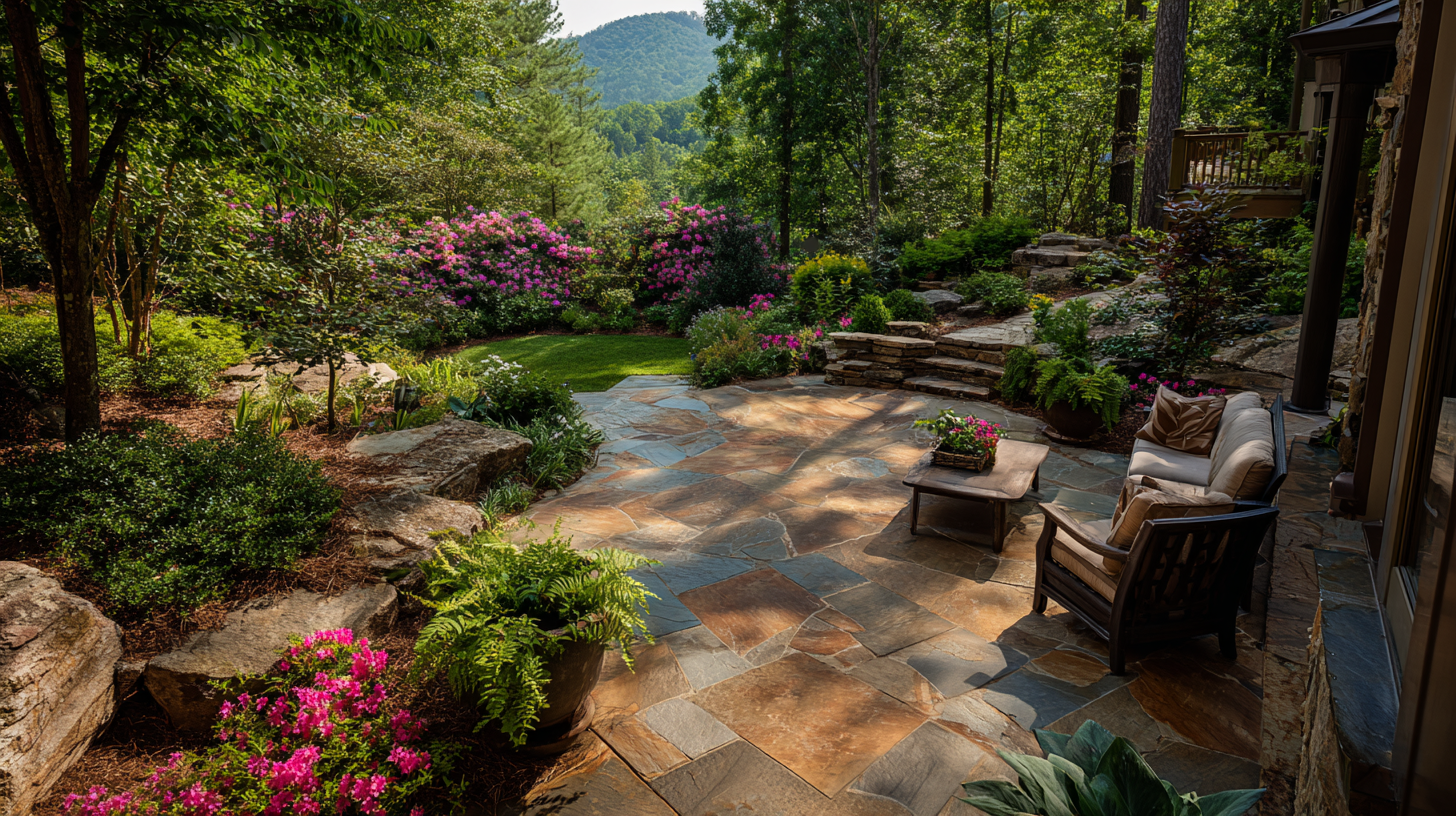
Flagstone vs Slate Outdoor Flooring: Which Stone Actually Wins?
Choosing between flagstone vs slate for your outdoor patio or walkway is one of those decisions that feels simple until you start digging into the details. At Reems Creek Outdoors, we help homeowners across Asheville, Weaverville, Hendersonville, and Riceville pick the right stone for their property, their budget, and Western North Carolina’s sometimes punishing mountain climate. Here is the honest breakdown you need before you buy a single square foot.
Flagstone vs Slate: What Is the Actual Difference?
This is the question we get most often, and it is worth getting straight before anything else. Flagstone is not one specific rock. It is a broad category that describes any flat, walkable stone used for patios, walkways, and steps. Sandstone, limestone, quartzite, and yes, even slate can technically be sold as flagstone depending on how it is cut and marketed. Slate, on the other hand, is a specific type of metamorphic rock. It forms when fine-grained sedimentary rock gets squeezed and heated deep underground, which compresses its mineral grains into a dense, layered structure that splits naturally into flat sheets. That geological backstory matters a lot when you are deciding what to put in your yard.
The key difference between slate and flagstone comes down to density and origin. Most flagstone on the market is sedimentary, meaning it formed from compressed layers of sand, shell, or mineral deposits over time. Sedimentary stones are softer, more porous, and easier to cut. Slate’s metamorphic density makes it harder, less porous, and more resistant to moisture. Both look beautiful. They just behave very differently once the rain starts and the temperature drops.
Slate vs Flagstone: How Do They Compare on Cost?
Flagstone is generally the more budget-friendly choice, both for materials and installation. Because most flagstone varieties are softer and more irregular, they are easier and faster to cut and set. That means lower labor costs on top of lower material costs per square foot. Slate costs more per square foot and typically requires more skilled labor to cut cleanly and install correctly without cracking the stone. The gap in total project cost depends heavily on which flagstone variety you are comparing. Quartzite flagstone runs closer to slate in price. Sandstone and limestone flagstone are where you see the biggest savings upfront.
Where the math gets interesting is long-term. Slate needs less frequent sealing and weathers more gracefully in exposed conditions, so your ongoing maintenance costs stay lower. Softer flagstone varieties need annual or biennial sealing to protect against moisture damage, especially here in the mountains. Before you decide to cut corners on either material or try to go the DIY route, it is worth reviewing the hidden costs of DIY hardscape mistakes so the savings pencil out the way you expect them to.
Slate vs Stone: How Does Slate Stack Up Against Other Options?
When people search slate vs stone, they usually want to know whether slate is worth the extra money compared to other outdoor surfacing options. Here is the honest comparison.
Slate vs sandstone flagstone: Sandstone is softer and more porous. It costs less and is easier to work with, but it absorbs more water and takes more freeze-thaw damage over time. It needs more frequent sealing in wet mountain climates like ours.
Slate vs limestone flagstone: Limestone is also porous and reacts to acidic rain over time, which can roughen its surface. Slate does not have that problem. Limestone can be beautiful, but it takes more upkeep in areas with heavy rainfall.
Slate vs travertine: Travertine has a warm, classic look, but its natural pitting traps dirt and moisture. Slate’s dense surface stays cleaner with less effort.
Bluestone vs slate: Bluestone is probably slate’s closest competitor for mountain applications. It is dense, handles freeze-thaw cycles well, and has a cool blue-gray tone similar to slate. Costs are comparable, and both perform well in the Northeast and mountain regions. The main difference is color range. Bluestone stays in the blue-gray family, while slate can show greens, purples, and deeper charcoals depending on the quarry source.
Slate vs granite: Granite is the hardest and most durable of all outdoor stone options, but it is also the most expensive and heaviest to work with. For most residential patios, slate delivers similar durability without the extra cost or weight.
If you are still exploring your options, a look at permeable paving vs traditional options can help you see how natural stone fits into the broader picture of outdoor surface choices.
Slate Pavers for Patios: Are They Worth It in Mountain Climates?
Short answer: yes, and Western North Carolina’s climate is actually one of the best arguments for choosing slate pavers for your patio. Asheville sits at around 2,134 feet elevation, and the surrounding mountains push that even higher. Winters here bring repeated freeze-thaw cycles rather than one long deep freeze, and that repeated expansion and contraction is what does the most damage to outdoor stone.
When water soaks into a porous stone and freezes overnight, it expands by about nine percent. That pressure builds inside small cracks and pores and eventually forces them open wider. Over several seasons, this creates spalling, flaking, and surface cracking that makes your patio look rough and can turn into a real tripping hazard. Slate’s very low water absorption rate, typically under one percent, means there is almost nothing inside the stone to freeze in the first place. That is a significant advantage up here. Slate’s metamorphic structure gives it this density, formed under intense geological heat and pressure that compresses the mineral grains tightly together.
Quartzite flagstone behaves similarly and also handles freeze-thaw well. Sandstone and limestone flagstone are the ones to watch closely. If you choose either of those, sealing annually before winter gives them the best shot at surviving the season without cracking. UV exposure at higher elevations is also more intense, which can fade some flagstone varieties faster than you might expect. Slate tends to hold its color better over time because that same density resists surface weathering. According to NC State University’s geology resources, metamorphic rocks like slate are significantly more resistant to surface weathering than sedimentary stones, which supports using slate for fully exposed mountain applications.
Drainage matters just as much as the stone itself. Even slate can shift and crack if it sits in standing water. For properties with slopes or drainage challenges, addressing hillside drainage issues in Buncombe County before installing any stone surface protects your investment from day one.
Slate Stepping Stones vs Flagstone Stepping Stones: Which Holds Up Better?
Stepping stones take more direct impact and more concentrated foot traffic than a full patio surface, so durability matters even more here. Slate stepping stones win on longevity for exposed mountain applications because their low water absorption and dense surface resist the edge chipping and surface spalling that softer flagstone can develop over time. A sandstone or limestone stepping stone that sees heavy foot traffic and sits in a wet area will show wear faster than slate would in the same spot.
That said, flagstone stepping stones set into a lawn or garden bed, where grass or ground cover grows between them and drainage is natural, tend to hold up well because the installation style limits water pooling. The relaxed, organic look of irregular flagstone stepping stones is also a better fit for the casual mountain garden aesthetic that a lot of Asheville homeowners are going for. Slate stepping stones feel a bit more formal and contemporary. Neither is wrong. It really comes down to the style of your yard and how much wear the path is going to take. Either way, setting them properly with a stable base underneath is non-negotiable. The Natural Stone Institute’s installation guidelines are clear that base preparation is the single most important factor in long-term performance for any stone surface, regardless of material.
Choosing the Right Stone for Your Outdoor Space
The right choice between flagstone vs slate comes down to four things: your budget, how exposed the space is to weather, the look you want, and how much ongoing maintenance you are actually going to do. Here are the practical questions to ask yourself.
Is your space fully exposed to rain, sun, and freezing temperatures? Fully exposed spaces in Western NC benefit most from slate or quartzite flagstone. Covered patios and porches are where softer flagstone options can perform well for many years without cracking.
What is your realistic budget? If budget is the main constraint, flagstone with proper sealing and drainage is a smart, cost-effective path. Just go in knowing the ongoing maintenance costs.
What look are you going for? Flagstone suits relaxed, organic mountain aesthetics. Slate fits cleaner, more contemporary outdoor rooms. Matching the stone to the character of your home and how you plan to use the space matters more than any ranking of which stone is objectively better.
How much maintenance will you actually do? If sealing stone every couple of years sounds like something that will get pushed off indefinitely, go with slate. It needs less frequent attention to stay in good shape. Flagstone is forgiving, but over time it will show more wear if sealing gets skipped.
One overlooked factor is lighting. Natural stone surfaces look dramatically different after dark, and thinking through your walkway lighting options at the same time as your stone choice helps you see the full picture of what the finished space will look and feel like once the sun goes down. You can also explore more about how we approach these decisions in our landscape design process guide for Asheville homes. And if you are weighing this decision as part of a pre-sale project, the question of whether landscaping before selling your house makes financial sense is worth thinking through too, since slate’s reputation for durability and aesthetics can add perceived value.
Quick Recap: Flagstone vs Slate at a Glance
- Flagstone is a category of flat stones; slate is a specific dense metamorphic rock
- Slate absorbs very little water, making it more resistant to freeze-thaw cracking in mountain climates
- Flagstone costs less upfront and is easier to install, but needs more frequent sealing
- Slate costs more and requires more skilled labor, but needs less ongoing maintenance
- Quartzite flagstone is the toughest flagstone option and performs closest to slate in freeze-thaw conditions
- Installation quality and drainage matter as much as stone choice for long-term performance
- Covered or sheltered spaces give softer flagstone varieties their best shot at lasting without heavy upkeep
- Fully exposed, high-traffic, or wet areas are where slate earns its higher price
Frequently Asked Questions
Is flagstone cheaper than slate?
Yes, flagstone is generally cheaper than slate for both materials and installation. Flagstone material costs less per square foot, and because softer flagstone varieties are easier and faster to cut and set, labor costs tend to be lower too. Slate costs more per square foot and typically requires more skilled labor to cut cleanly without cracking. The total cost gap depends on which flagstone variety you choose. Quartzite flagstone runs closer to slate in price, while sandstone and limestone flagstone show the biggest upfront savings. Keep in mind that lower upfront cost can come with higher long-term maintenance costs if you are using a porous flagstone variety in a fully exposed mountain location.
Can you use slate outside?
Yes, slate works very well outside, especially in climates with freeze-thaw cycles like Western North Carolina. Its low water absorption rate means moisture cannot get inside the stone and cause cracking when temperatures drop overnight. Outdoor slate performs best when it is properly sealed and installed over a well-drained base. In the Asheville area specifically, slate’s density makes it one of the stronger natural stone choices for fully exposed patios, walkways, and steps where freeze-thaw damage is a real seasonal concern.
Does flagstone crack in winter?
Flagstone can crack in winter if it absorbs water that then freezes and expands inside the stone. The risk depends heavily on the flagstone variety. Sandstone and limestone flagstone are more porous and more vulnerable to freeze-thaw cracking. Quartzite flagstone is much denser and handles cold much better. Annual sealing before winter significantly reduces the risk for all flagstone types by limiting how much water the stone absorbs in the first place. If you skip sealing on a porous flagstone variety through a few hard winters in the mountains, you are likely to start seeing surface spalling or cracking that shortens the life of the installation.
Which stone is better for a patio in Asheville NC?
For fully exposed patios in Asheville, slate or quartzite flagstone gives you the best long-term performance because both handle the region’s freeze-thaw cycles well. For covered patios, porches, or spaces with good overhead protection, softer flagstone varieties work well and cost less. The decision also comes down to aesthetics and budget. Flagstone fits the relaxed, organic mountain style many Asheville homeowners love, while slate suits cleaner contemporary designs. Either way, proper drainage and a solid base matter more than which stone you pick. A good contractor will make sure those fundamentals are right before a single stone gets set.
How do you maintain flagstone vs slate outdoors?
Flagstone maintenance involves sealing the stone every one to three years depending on the variety and how much weather exposure it gets. You should also check for any loose pieces after winter, re-sand joints if you used a sand-set installation, and sweep or rinse off debris that can stain softer stone surfaces. Slate maintenance is lighter by comparison. Because slate absorbs so little water, it does not need sealing as often, though applying a sealer every few years helps preserve its color and keeps the surface looking sharp. Both stones benefit from keeping joints clean and making sure drainage around the patio stays clear so water does not pool on or under the surface over time.
Ready to Pick Your Stone? We Can Help.
Whether you are leaning toward flagstone vs slate or still weighing your options, our team at Reems Creek Outdoors knows Western North Carolina’s terrain, climate, and building conditions inside and out. We treat every property like it is our own, and we will help you find the stone that fits your space, your style, and your budget without any sales pressure or corporate runaround. Call us at (828) 500-1940 to talk through your project, or reach out through our contact form and we will get back to you fast.