Key Takeaways
TL;DR: Wood decks in Asheville face relentless moisture, rot, and staining pressure from the region’s wet mountain climate. Flagstone, natural stone, and concrete pavers offer low-maintenance, long-lasting alternatives that hold up better over decades, cost less to maintain, and look great year-round without annual sealing or board replacement headaches.
- Asheville’s high annual rainfall accelerates wood rot, mold, and structural decay on traditional decks faster than most homeowners expect.
- Flagstone, bluestone, and concrete pavers require virtually no ongoing maintenance compared to pressure-treated wood or composite decking.
- Hardscaping alternatives typically carry significantly longer lifespans than standard wood deck surfaces in wet climates.
- Material costs for stone patios vary considerably depending on square footage, site prep, and stone type; obtaining local quotes is the best way to establish an accurate budget.
- Slope, drainage, and soil conditions in Western North Carolina require proper base preparation that a qualified local hardscaper should assess before installation.
- Reems Creek Outdoors designs and installs stone patios, flagstone areas, and paver outdoor living spaces built for mountain terrain and seasonal conditions.
- Choosing the right surface material now saves thousands in replacement, refinishing, and structural repair costs over a 20-year ownership period.
Why Asheville Homeowners Are Walking Away From Wood Decks
Wood decks in Asheville, NC face moisture levels, humidity swings, and rainfall totals that accelerate decay far faster than in drier climates. The average annual rainfall in the area is substantial, with summer humidity frequently reaching high levels. That combination is genuinely punishing for wood surfaces. A pressure-treated deck that might last many years in drier climates often shows rot, warping, and structural compromise considerably sooner here in the mountains of Western North Carolina. Homeowners who built decks in the late 2000s and early 2010s are now facing the full replacement cycle, and many of them are asking a smart question: what if I never have to do this again?
That question is driving real demand for wood deck alternatives in hardscaping across the Asheville area. Flagstone, natural stone slabs, concrete pavers, and granite sets offer surfaces that laugh at rain, shrug off mold, and require almost no annual maintenance. They don’t need sealing every two to three years. They don’t splinter. They don’t harbor the structural rot that makes a deck unsafe before it even looks visibly damaged. And in a region where outdoor living is practically a lifestyle requirement, getting this decision right matters. Understanding the outdoor living space cost in Asheville NC helps homeowners budget realistically from the start.
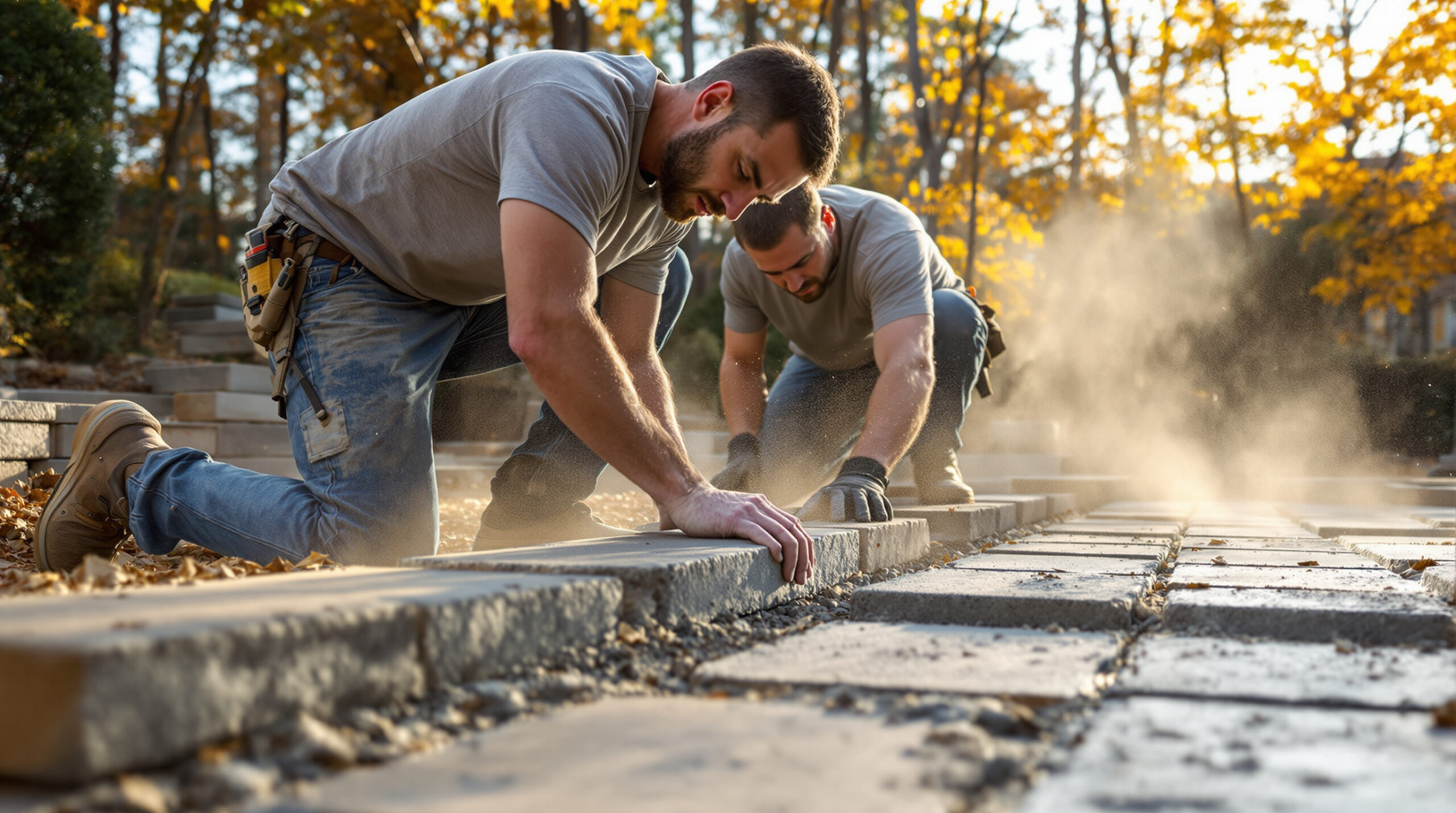
Reems Creek Outdoors works with homeowners across Asheville, Weaverville, Hendersonville, and Riceville to design and install stone patios and paver outdoor living spaces that replace the endless maintenance cycle of wood. This article walks through the material options, costs, installation factors, and long-term comparisons so you can make a genuinely informed decision about your outdoor space.
What Asheville’s Climate Actually Does to a Wood Deck
Asheville’s wet, temperate mountain climate creates a specific and consistent set of problems for wood decking that homeowners often underestimate when they first install a deck. The region receives significant annual rainfall, with wet springs, humid summers, and freeze-thaw cycles in late fall and winter that expand and contract wood fibers repeatedly. This combination does more damage than simple moisture alone.
How fast does wood rot in a wet mountain climate like Asheville’s?
Pressure-treated lumber resists rot for an initial period, but that protection is not permanent. In climates with consistent high humidity and rainfall like this region, the chemical treatment can begin losing effectiveness over time, especially in areas with poor drainage or standing water. Once rot takes hold in joists, ledger boards, or beam connections, the structural safety of the entire deck can be compromised. Inspectors often find that visually intact deck surfaces hide significant rot in the framing below, where moisture sits longest. Consulting a qualified local contractor or structural inspector is advisable for guidance on moisture management and structural protection in humid environments.
What does mold and mildew cost a homeowner annually?
Mold and mildew treatment on a wood deck in a humid climate typically requires recurring professional cleaning, plus deck staining and sealing on a regular basis. Over a multi-year ownership period, maintenance costs can add up significantly before any structural repairs are factored in. That figure often surprises homeowners who thought the initial build was the primary expense.
Does composite decking solve the moisture problem?
Composite decking performs better than natural wood in moisture resistance, but it is not immune to mold growth on the surface in humid climates, and it still requires regular cleaning. High-quality composite boards carry a notably higher price per linear foot than pressure-treated lumber, making a mid-size deck a substantial investment. Composite also retains heat in direct sun, which matters during Asheville summers. It does not deliver the same aesthetic as natural stone, and it still relies on a wood subframe that faces the same rot vulnerabilities as any other deck structure. Consulting a qualified local contractor or structural inspector is advisable for guidance on maintaining outdoor structures safely in wet climates. Reviewing the best deck materials for Asheville’s climate can help homeowners weigh all available options before committing.
Flagstone Patios as a Primary Wood Deck Alternative
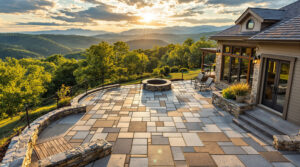
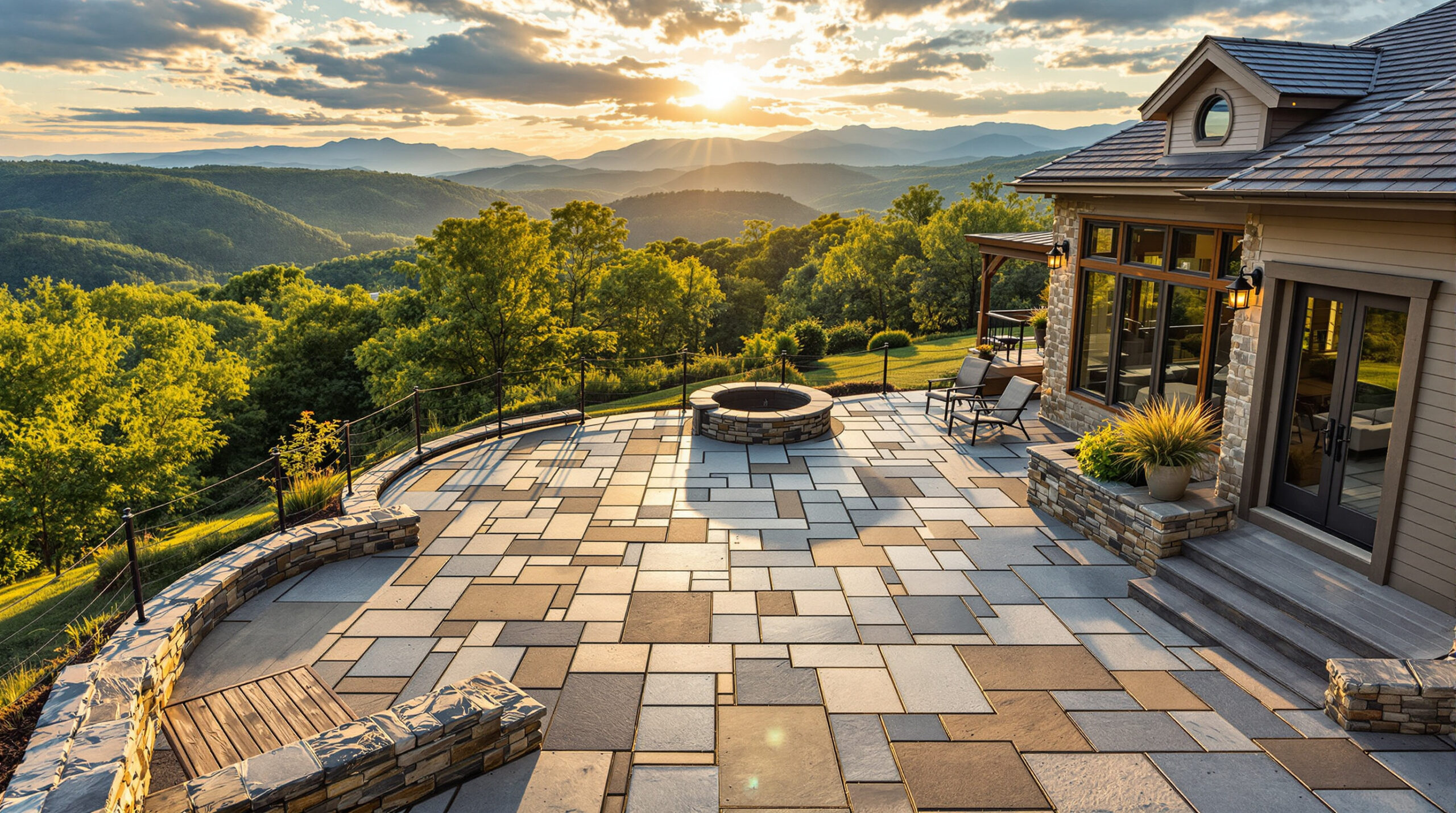
Flagstone is one of the most popular hardscaping alternatives to wood decks for homeowners in the Asheville area, and the reasons come down to longevity, appearance, and the near-zero maintenance requirement. Flagstone is a broad category that includes quartzite, slate, limestone, sandstone, and bluestone slabs cut or broken into irregular or semi-regular shapes and set into a prepared base. Learn more about flagstone and its geological properties on Wikipedia.
What does a flagstone patio cost in Western North Carolina?
Flagstone patio installation in the Asheville market varies in cost depending on stone type, slab thickness, and site preparation requirements. Costs can range considerably, and obtaining local quotes is the best way to establish an accurate budget for your specific site. Bluestone and quartzite tend to run at the higher end of material costs, while locally sourced fieldstone and irregular flagstone can bring costs down. Site prep, including grading, base compaction, and drainage planning, represents a meaningful portion of total project cost and should never be skipped in this terrain. A full breakdown of flagstone patio installation in Asheville NC covers what to expect at each stage of the process.
How long does a flagstone patio last compared to a wood deck?
Properly installed flagstone patios can last for several decades with minimal intervention. The stone itself does not rot, warp, splinter, or absorb moisture in ways that cause structural failure. The primary maintenance task is occasional joint sand replenishment in dry-laid installations and periodic inspection for settling in areas with significant slope or clay soil movement. Compare that to a wood deck requiring board replacement, refinishing, and potential structural repair every 10 to 15 years, and the long-term math favors stone significantly.
What are the aesthetic advantages of flagstone over decking?
Flagstone integrates naturally with mountain and wooded landscapes in a way that manufactured decking materials cannot replicate. The irregular shapes, natural color variation, and textured surface of quartzite or bluestone complement the existing visual character of most Asheville properties. Natural stone surfaces create a sense of permanence and connection to landscape that synthetic materials struggle to replicate, a quality that can add measurable property value. Stone patios also photograph beautifully and can anchor outdoor kitchen, fire pit installation, and garden design in ways that wood platforms rarely achieve.
Natural Stone Slabs and Granite Sets for Outdoor Living Spaces
Beyond flagstone, homeowners in this region have access to several natural stone options that work exceptionally well as wood deck replacements. The local geology of Western North Carolina, with its significant granite and gneiss deposits, makes certain stone types both regionally appropriate and relatively accessible compared to importing materials from distant quarries. Material durability in wet climates is an active area of study across building science and engineering research.