Key Takeaways
TL;DR: A sloped backyard isn’t a problem to apologize for. With the right hardscaping ideas, it becomes one of the most interesting outdoor spaces on your street. Retaining walls, terraced patios, built-in steps, and smart drainage can turn a steep grade into a genuinely usable, beautiful yard.
- Retaining walls are the foundation of any sloped backyard project. They hold soil in place while creating flat, usable areas.
- Terraced patios work with your grade instead of fighting it, and they look stunning on mountain lots.
- Built-in steps and pathways connect levels safely and turn elevation change into a design feature.
- Drainage is not optional on slopes. Poor drainage is the number one reason hardscaping fails early in Western NC.
- Local soil and frost patterns in Asheville matter more than any design trend you find on Pinterest.
Why Sloped Backyards in Asheville Are Actually a Gift
Most homeowners see a steep backyard and immediately feel a little defeated. Mowing it is a workout. Furniture slides. Kids and dogs tumble. But here is the thing: a sloped lot in Western North Carolina gives you something flat yards cannot touch. You have elevation, natural character, and the bones for a layered outdoor space that looks intentional and genuinely cool. The problem is not the slope. The problem is trying to use it like it is flat ground. The right hardscaping ideas for a sloped backyard start by accepting what the terrain is, then working with it. Clay-heavy mountain soil, freeze-thaw cycles, and steep grades are what we deal with every single day around here. Our Blue Ridge landscaping tips for mountain properties go deeper on how local conditions shape every decision. Once you stop treating the slope as a flaw and start treating it as a canvas, everything changes.
Retaining Walls: The Backbone of Any Slope Project
If your backyard drops more than a foot or two from one end to the other, a retaining wall is almost certainly part of your answer. These structures hold back soil, prevent erosion, and carve out flat areas where you can actually do something useful. Around Asheville, the most common materials are natural stone, concrete block, and boulder walls. Each has its place. For more information on soil stability and erosion control, see resources from the USDA.
Natural Stone Walls
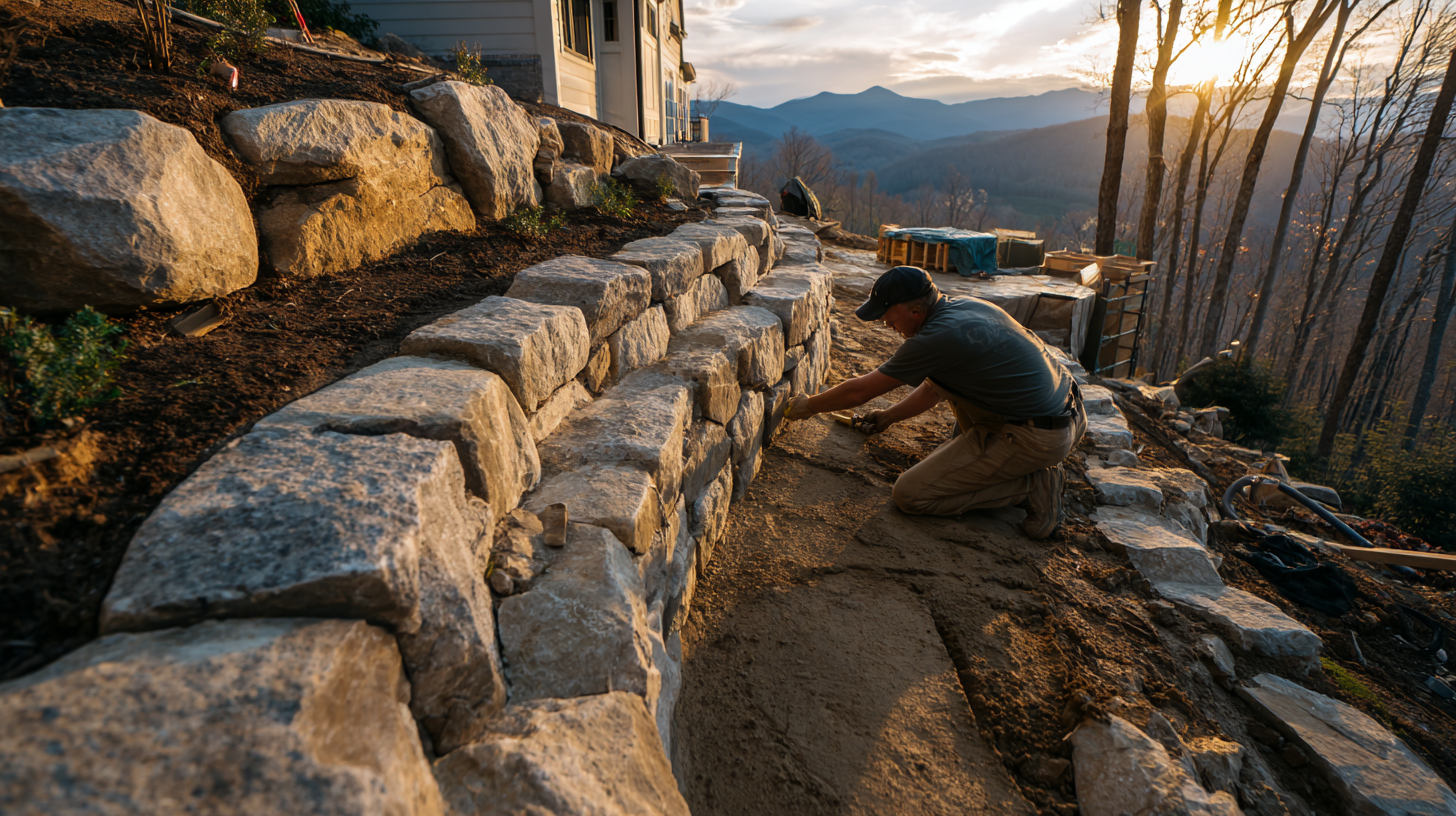
Natural stone blends beautifully with mountain surroundings and weathers well over time. It costs more upfront but tends to look better at year ten than it did at year one. For a region where the landscape is already full of exposed rock faces and wooded terrain, dry-stacked or mortared stone walls feel like they belong.
Concrete Block and Boulder Options
Concrete segmental block is the workhorse choice. It installs faster, handles significant height, and is engineered for load-bearing. Boulder walls are the most natural-looking option of all, but they require equipment to place correctly. Whatever material you choose, the engineering behind the wall matters as much as the aesthetic. Poor drainage behind a retaining wall is how walls fail. Period. If you want to go deeper on that piece, our hillside drainage solutions for Buncombe County page covers exactly what to watch for.
Terraced Patios and Outdoor Living on Multiple Levels
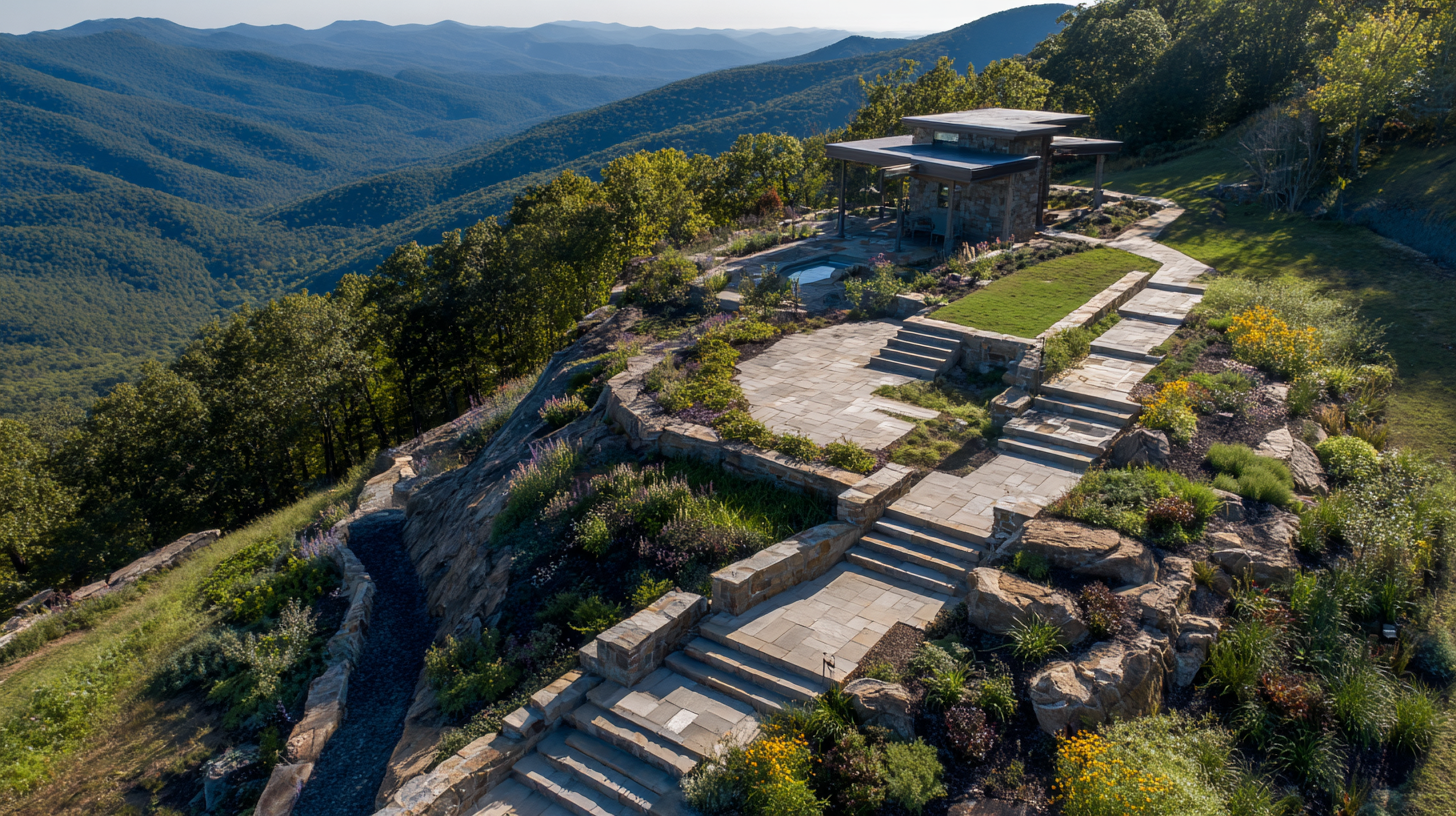
One flat patio on a steep lot often looks awkward, like someone just glued a square onto the hillside. Terraced patios solve that. You break the slope into two or three distinct levels, each with its own purpose. A lower level might be a fire pit installation area. A middle terrace handles dining and a grill. An upper level could be a simple sitting area with a view. Each space feels intentional instead of crammed in.
The construction process involves excavating into the slope, building retaining structures between levels, and then finishing each pad with pavers, natural stone, or poured concrete. In the mountains, you also need to think about freeze-thaw movement. Materials and base preparation that work in Charlotte do not always hold up the same way here. Proper base depth and compaction matter more than they do in warmer climates. According to the American Society of Landscape Architects, terracing is one of the most effective techniques for creating functional outdoor spaces on grades exceeding ten percent. When it is done right, a terraced backyard does not just look good on the day it is installed. It holds up over years of mountain winters.
“Terraced designs on steep lots require careful drainage planning at every level, not just at the base,” says Dr. Eric Stafne, an extension horticulture specialist who has written extensively on grading and landscape construction principles. “Water that pools between tiers accelerates erosion and undermines the structures themselves.”
Steps, Pathways, and Making Elevation Feel Natural
Stairs in a sloped backyard are not just functional. They are a design statement. Wide, generous steps with flat treads feel welcoming. Narrow, steep steps feel like a fire escape. When we build outdoor steps on a slope, we follow standard riser-to-tread ratios from landscape construction guidelines, typically around a four-inch rise to a twelve to fourteen-inch tread for comfortable outdoor walking.
Pathways that wind through grade changes keep people moving through the yard without it feeling like a hike. Gravel paths, flagstone runs, or paver pathways all work depending on the grade, traffic, and look you are after. Curved paths feel more natural on hilly terrain than straight lines, which can actually emphasize how steep the drop is. Building steps and pathways into a slope project from the beginning is much cheaper than adding them later. If you are planning ahead for construction season, our guide on preparing your yard for spring construction in Asheville is worth a read before you start pricing materials.
“Outdoor stair construction is one area where homeowners consistently underestimate the importance of a stable, compacted base,” notes Joe Raboine, a recognized authority in hardscape design and director of design at a major hardscape manufacturer. “Settlement on slopes happens faster than on flat ground, and even minor shifts create trip hazards.”
Drainage: The Part Nobody Wants to Talk About Until It Is Too Late
Slope and water go together. That is just physics. When rain hits a steep backyard, it moves fast. Without proper drainage built into your hardscaping plan, that water finds the path of least resistance, which is often through your new patio base, under your retaining wall, or straight into your foundation. Western NC clay soil makes this worse because it sheds water instead of absorbing it well. For comprehensive guidance on drainage best practices, consult resources from the EPA and OSHA on site safety and water management.
Drainage solutions for sloped hardscaping include French drains behind retaining walls, channel drains along patio edges, grading adjustments that redirect sheet flow, and dry creek beds that handle heavy storm events while looking completely natural. When comparing surface treatment options, permeable paving versus traditional paving is a conversation worth having on any sloped lot. Every hardscaping project we do on a slope gets a drainage plan first. It is not an add-on. It is the foundation of everything else. For a full breakdown specific to this area, check out our page on drainage solutions in Asheville NC for additional context on how local conditions change the equation.
“In regions with significant clay content and freeze-thaw cycling, drainage behind and beneath hardscape installations is not optional,” says landscape architect Chip Allen, a practitioner with extensive experience in Appalachian terrain. “It is the single most important factor in long-term structural performance.”
Frequently Asked Questions
What is the best retaining wall material for a steep backyard in Western NC?
It depends on your budget, height needs, and look you want. Natural stone blends beautifully with mountain terrain. Concrete segmental block handles taller walls and heavy loads well. Boulder walls are the most naturalistic option but require equipment to install. All three work in this region when properly engineered with drainage behind them.
How much does it cost to hardscape a sloped backyard?
Costs vary widely based on slope severity, square footage, materials, and site access. In Western NC, a basic terraced patio with retaining walls typically runs from $8,000 to $20,000 or more for complex projects. Getting a site-specific estimate is the only reliable way to get an accurate number for your property.
Do I need a permit for a retaining wall in Asheville?
Generally, walls over four feet in height require a permit in Buncombe County and most surrounding municipalities. Even shorter walls may require permits depending on location relative to property lines or local ordinances. For specific requirements, check with your local building code enforcement office.

