Key Takeaways
TL;DR: Hillside drainage in Buncombe County is a different beast than flat-land water management. Clay-heavy soil, steep grades, and heavy mountain rainfall make proper drainage planning essential for protecting your home, yard, and retaining walls from erosion and water damage.
- Buncombe County’s clay soil sheds water fast instead of absorbing it, making surface runoff a major issue on any slope.
- Common hillside drainage tools include French drains, swales, dry creek beds, and retaining walls with built-in drainage layers.
- Ignoring slope drainage leads to foundation damage, retaining wall failure, and serious soil erosion over time.
- A properly designed drainage system works with your terrain, not against it, and adds real long-term value to your property.
- Local expertise matters here. Mountain terrain behaves differently than what you’ll find in flatter regions.
Why Hillside Drainage in Buncombe County Is Its Own Animal
If you’ve got a sloped yard anywhere around Asheville, you already know water doesn’t ask permission before it goes where it wants. Buncombe County averages around 47 inches of rain per year, and when that rain hits a steep grade covered in clay-heavy Appalachian soil, it moves fast. Real fast. That water picks up momentum, carries topsoil, undercuts retaining walls, pools near foundations, and turns what should be a beautiful mountain property into a soggy, eroding mess. Flat-land drainage advice simply doesn’t apply here. The grades are steeper, the soil behaves differently, and the freeze-thaw cycles through winter add another layer of stress that most drainage contractors in other regions never have to think about. Getting hillside drainage solutions right in Buncombe County means understanding all of that before you ever break ground. For more information on soil and water management in mountainous regions, see the USDA Natural Resources Conservation Service.
The Usual Suspects: What’s Causing Your Drainage Problem
Before you can fix a drainage issue on a hillside, you’ve got to know what’s actually causing it. Most of the time, it comes down to a few familiar culprits.
Clay Soil and Surface Runoff
Western North Carolina soil tends to be dense and clay-rich. Clay doesn’t absorb water the way sandy or loamy soil does. Instead, it sheds it. When rain hits a sloped yard with clay soil, you get sheet flow, which is a thin sheet of water rushing downhill and taking your topsoil with it. Over time, this carves channels, exposes roots, and deposits sediment in places you really don’t want it, like against your foundation or in your driveway. If you’re dealing with persistent bare patches after runoff strips your ground cover, understanding what kills grass permanently in Asheville clay soil can help you diagnose compounding problems on your slope.
Improper Grading
Sometimes the problem is human-made. Grading that wasn’t done with drainage in mind, or grading that has shifted over years of settling, can redirect water toward your house instead of away from it. According to the U.S. Environmental Protection Agency, proper site grading should direct surface water at least six feet away from any structure. In mountainous terrain, that’s not always easy without a real plan. If you’re tackling grading work ahead of a bigger project, our guide on preparing your yard for spring construction in Asheville walks through what that process looks like.
Lack of Vegetation or Erosion Control
Bare slopes are drainage disasters waiting to happen. Plant roots hold soil in place and slow surface runoff significantly. A slope without adequate ground cover is one hard rain away from a mudslide situation. This is especially common on newly graded sites or properties where previous landscaping has died off. Knowing whether to remove trees before landscaping on a sloped site matters here, since removing tree root systems can temporarily destabilize a hillside and worsen runoff until new vegetation is established.
Hillside Drainage Solutions That Actually Work Here
There’s no one-size-fits-all answer for slope drainage. The right solution depends on your grade, your soil, how much water you’re dealing with, and where you want it to end up. That said, a few proven approaches work consistently well in mountain terrain.
French Drains
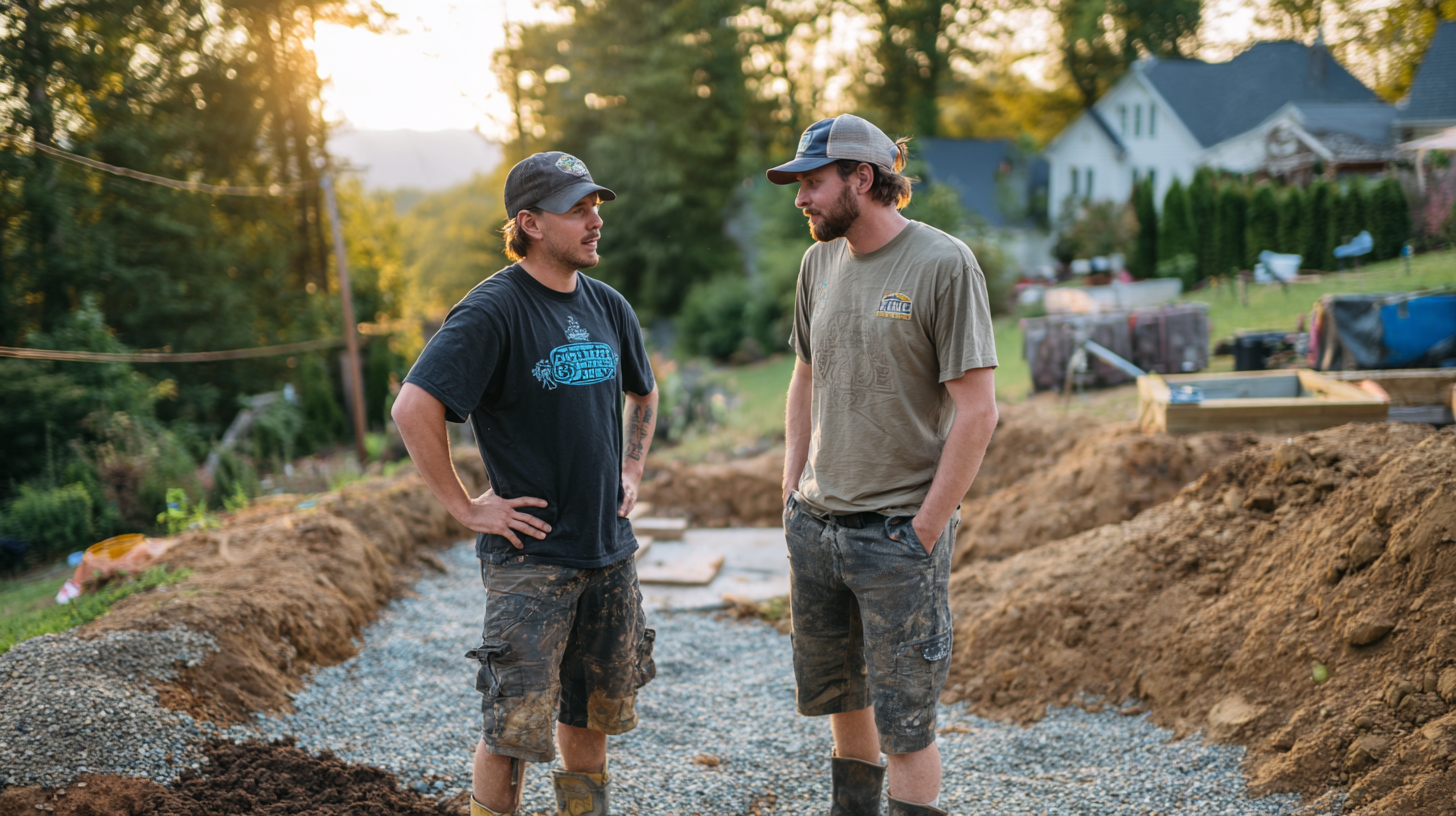
A French drain is a gravel-filled trench with a perforated pipe that collects subsurface water and redirects it away from problem areas. On a hillside, they’re often installed across the slope to intercept water moving downhill before it reaches your foundation or retaining wall. They’re reliable, relatively low-profile once installed, and effective at handling both surface and subsurface water. Proper installation in rocky or clay-heavy soil takes real skill, though. A poorly installed French drain can collapse, clog, or simply move water somewhere equally bad.
Swales
A swale is a gently sloped channel designed to direct surface water across a hillside rather than straight down it. Think of it as a soft redirect. Swales can be grass-lined or planted with deep-rooted native species that tolerate wet conditions. They slow the water down, reduce erosion, and move runoff safely to a discharge point. Done well, a swale looks like a natural feature of your landscape. Done poorly, it just becomes another drainage problem. Incorporating sustainable landscaping practices when designing swales, like selecting native plants that tolerate periodic saturation, makes them far more effective long-term.
Dry Creek Beds
A dry creek bed is essentially a decorative version of a swale lined with river rock and boulders. It handles surface runoff during heavy rain while looking like a natural mountain stream the rest of the time. They’re popular in the Asheville area because they fit the aesthetic of mountain properties and genuinely do the job. They’re also a smart solution for areas where you want drainage without visible infrastructure. Our overview of hardscaping ideas to enhance your outdoor living space covers how dry creek beds and other stone features can be integrated into a cohesive landscape plan.
Retaining Walls With Drainage Layers
Retaining walls hold soil in place on a slope, but without proper drainage built into them, they’re just a dam waiting to fail. Any retaining wall on a hillside needs a gravel backfill layer and perforated pipe at the base to relieve hydrostatic pressure. Without it, water builds up behind the wall and eventually pushes it over. We see failed retaining walls constantly around Western North Carolina, and almost every one failed because drainage was an afterthought. Homeowners in the area looking at professional retaining wall work should explore hardscaping options in Riceville NC that include properly engineered wall-and-drain combinations. For a deeper look at real drainage system options for sloped properties, our post on drainage solutions in Asheville NC covers the details.
DIY vs. Hiring a Pro for Hillside Drainage
Some homeowners look at a drainage problem and think they can handle it with a shovel and a Saturday afternoon. Sometimes that’s true, especially for minor grading or adding some surface rock to redirect small amounts of runoff. But hillside drainage systems in mountain terrain are a different level of project. Miscalculating slope, using the wrong pipe, or not accounting for where the water ends up can make things significantly worse, and costly. “Drainage work on steep slopes requires understanding both hydrology and the specific soil conditions on that site,” says Dr. Richard McLaughlin, Extension Soil Specialist at NC State University. “What works in one location may completely fail in another based on soil type, compaction, and seasonal water table behavior.” If you’re dealing with foundation concerns, retaining wall failure, or significant erosion, bring in someone who knows local terrain. Our Blue Ridge landscaping tips for mountain properties break down what those decisions actually look like in practice. “I’ve seen homeowners spend thousands fixing DIY drainage projects that weren’t designed with the whole slope in mind,” says landscape contractor and erosion control specialist Ben Crary. “Getting the outlet location right is just as important as the inlet.” And landscape architect Sarah Watts, ASLA, puts it plainly: “On a hillside, water is going somewhere no matter what you do. A good drainage plan decides where that is before the rain does.”
Frequently Asked Questions
How do I know if my hillside drainage problem is serious?
If you’re seeing erosion channels in your yard, water pooling near your foundation, cracks in retaining walls, or

