
Key Takeaways
- Buncombe County sits in EPA Zone 1, the highest radon risk category in the United States
- The average Asheville home tests at 3.2 pCi/L, more than double the national average of 1.3 pCi/L
- Professional radon testing takes 48 hours and uses continuous monitors that record hourly data
- The EPA recommends mitigation for any home testing at or above 4.0 pCi/L
- If levels are high, radon mitigation systems reduce concentrations by 90% or more
- Testing costs $125 to $175 for most Asheville homes
You can’t see radon. Can’t smell it. Can’t taste it. But if you live in Asheville or anywhere in Buncombe County, there’s a solid chance it’s accumulating in your home right now.
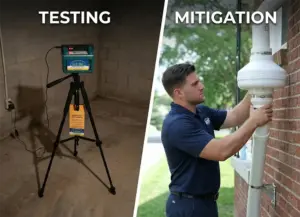
Radon is a radioactive gas that seeps up from the ground, enters through cracks and gaps in your foundation, and collects in the air you breathe every day. It’s the second leading cause of lung cancer in the United States, right behind smoking. The EPA estimates radon kills about 21,000 Americans every year.
And here’s the thing that most people don’t realize: Western North Carolina sits on some of the most radon-prone geology in the country. The Blue Ridge Mountains are beautiful. They’re also loaded with uranium-bearing granite that releases radon gas as it naturally decays.
We test homes so you know what you’re breathing. If the numbers come back high, we know how to fix it. If they come back low, you get peace of mind and documentation to prove it.
This guide covers everything Asheville homeowners need to know about radon testing: what radon is, why our area has elevated levels, how testing works, what results mean, and what to do next.
What Is Radon?
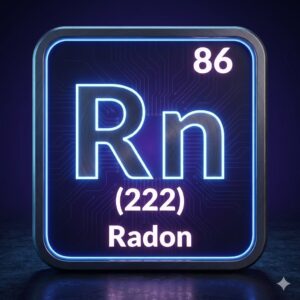
Radon is a naturally occurring radioactive gas. It forms when uranium in soil and rock breaks down through radioactive decay. Uranium decays into radium, and radium decays into radon. This process has been happening since the Earth formed and will continue for billions of years.
Unlike most gases, radon is heavy. It doesn’t rise and disperse into the atmosphere like helium or methane. Instead, it seeps through soil and tends to accumulate in low-lying areas and enclosed spaces. Like your basement. Like your crawl space. Like the first floor of your home.
Radon itself is colorless and odorless. You can’t detect it with your senses. The only way to know if radon is present is to test for it.
When you breathe air containing radon, the gas enters your lungs. Radon continues to decay inside your body, releasing alpha particles that damage lung tissue. Over years of exposure, this damage can lead to lung cancer. The higher the radon concentration and the longer the exposure, the greater the risk.
The good news is that radon is completely manageable. Testing identifies whether you have a problem. Radon mitigation systems fix the problem if you do. Millions of American homes have been successfully tested and mitigated. This isn’t an unsolvable crisis. It’s a known issue with proven solutions.
Why Asheville Has a Radon Problem
Not all areas have elevated radon. The concentration depends on local geology, specifically how much uranium exists in the underlying soil and rock.
Western North Carolina has a lot of uranium.
The Blue Ridge Mountains are composed primarily of igneous and metamorphic rocks: granite, gneiss, schist, and similar formations. These rocks formed deep in the Earth under intense heat and pressure. They contain higher concentrations of uranium and radium than sedimentary rocks like limestone or sandstone.
As these rocks weather and break down over millions of years, the uranium they contain becomes part of the soil. Radon gas generated by this decay migrates upward through soil and fractured bedrock. In areas with uranium-rich geology, more radon reaches the surface.
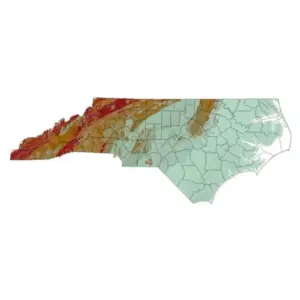
Buncombe County is classified as EPA Zone 1. This is the highest risk designation on the EPA’s radon zone map. Zone 1 counties have predicted average indoor radon levels above 4 pCi/L, the threshold at which the EPA recommends mitigation.
The actual average indoor radon level in Buncombe County is approximately 3.2 pCi/L. That’s 2.5 times higher than the national average of 1.3 pCi/L. Some homes test much higher. We’ve seen results above 20 pCi/L in the Asheville area.
Neighboring counties share similar geology and risk profiles:
| County | EPA Zone | Risk Level |
|---|---|---|
| Buncombe | Zone 1 | Highest (predicted >4 pCi/L average) |
| Henderson | Zone 1 | Highest |
| Transylvania | Zone 1 | Highest |
| Mitchell | Zone 1 | Highest |
| Madison | Zone 2 | Moderate (predicted 2-4 pCi/L) |
| Haywood | Zone 2 | Moderate |
| McDowell | Zone 2 | Moderate |
These zone designations are predictions based on geology. Individual homes within any zone can test higher or lower than the average. Your neighbor’s radon level tells you nothing about yours. The only way to know your home’s radon concentration is to test it.
Mountain Homes and Radon
Mountain construction in WNC often involves building on slopes, using pier foundations, or incorporating walk-out basements that are partially underground. These design elements can affect radon entry.
Homes built into hillsides may have more foundation surface area in contact with soil. Walk-out basements create living space below grade where radon accumulates. Pier foundations with enclosed crawl spaces can trap radon beneath the home.
None of these construction types guarantees high radon. Plenty of mountain homes test low. But the combination of uranium-rich geology and construction styles that maximize soil contact creates conditions where elevated radon is common.
Newer homes aren’t safer than older homes. In fact, modern energy-efficient construction with tight building envelopes can trap radon more effectively than older, draftier homes. Air sealing that reduces energy bills also reduces the natural ventilation that would dilute radon.
The bottom line: if you live in Western North Carolina, assume nothing about your radon levels. Test and find out.
The Health Risks of Radon Exposure
Radon is the second leading cause of lung cancer in the United States, responsible for an estimated 21,000 deaths annually. Only smoking causes more lung cancer deaths.
When you breathe radon, the gas itself isn’t the primary danger. Radon decays quickly (its half-life is about 3.8 days), producing radioactive particles called radon progeny or radon daughters. These particles are solid, not gaseous. They attach to dust and aerosols in the air, and when inhaled, they lodge in lung tissue.
As radon progeny continue to decay, they emit alpha particles directly into lung cells. Alpha particles are heavy and highly ionizing. They damage DNA in ways that can lead to cancer. This damage accumulates over time with continued exposure.
Risk Factors
Your risk from radon depends on three main factors:
Concentration. Higher radon levels mean more radioactive particles in every breath. A home at 8 pCi/L presents roughly twice the risk of one at 4 pCi/L.
Duration. Radon risk is cumulative. Living in a high-radon home for 20 years is more dangerous than living there for 2 years. This is why testing matters even if you’ve been in your home for decades without symptoms. The damage may already be accumulating.
Smoking status. Smokers exposed to radon face dramatically higher lung cancer risk than non-smokers. The combination of radon and smoking is synergistic, not merely additive. If you smoke and have elevated radon, you have two urgent reasons to address the situation.
Putting the Risk in Perspective
The EPA provides risk estimates for radon exposure:
| Radon Level | Lifetime Risk (Non-Smokers) | Comparable Risk |
|---|---|---|
| 20 pCi/L | 3.6% | 35x average outdoor risk |
| 10 pCi/L | 1.8% | 18x average outdoor risk |
| 4 pCi/L | 0.7% | 7x average outdoor risk |
| 2 pCi/L | 0.4% | 4x average outdoor risk |
These percentages may seem small, but they represent meaningful risk over a population. For context, the lifetime risk of dying in a car accident is about 1%. Radon at 10 pCi/L presents comparable risk to a non-smoker.
For smokers, multiply these risks by roughly 10x.
The EPA set the action level at 4.0 pCi/L as a practical threshold. Below this level, the cost and effort of mitigation may not be justified for most people. Above this level, the risk is significant enough that mitigation makes sense.
There’s no “safe” level of radon in the sense that zero risk exists. Even low concentrations present some risk. But the practical reality is that risk at low levels is small, and you can’t eliminate all environmental exposures. The 4.0 pCi/L threshold balances health protection with reasonable action.
How Radon Enters Your Home
Radon migrates from soil into your home through any pathway that connects indoor air with the ground. The driving force is air pressure differential: your home typically has slightly lower air pressure than the surrounding soil, which draws radon-laden soil gas indoors.
Common Entry Points
Foundation cracks. Concrete foundations develop cracks over time from settling, temperature changes, and soil pressure. Even hairline cracks provide pathways for radon.
Construction joints. Where the foundation floor meets the walls, gaps often exist. Expansion joints in slabs create similar openings.
Gaps around pipes and utilities. Plumbing, electrical conduits, and other penetrations through the foundation create entry points if not properly sealed.
Sump pits. Basement sump pits connect directly to soil beneath the home. If not sealed, they’re direct radon highways.
Crawl space soil. Homes with dirt-floor crawl spaces have radon entering directly through exposed soil. Even encapsulated crawl spaces can have radon issues if the barrier isn’t complete. Our crawl space radon mitigation services address these specific challenges.
Well water. In some cases, radon dissolves in groundwater and enters the home when water is used. This is less common than soil gas entry but can contribute to indoor levels, especially with private wells in granite bedrock.
The Stack Effect
Your home acts like a chimney. Warm air rises and exits through upper levels, creating negative pressure at lower levels. This pressure differential pulls air from the path of least resistance, which is often through the foundation from surrounding soil.
The stack effect is strongest in winter when indoor-outdoor temperature differences are greatest. This is one reason radon levels tend to peak during cold months in Western North Carolina.
HVAC systems can either help or hurt depending on their design. Systems that depressurize basements or crawl spaces can increase radon entry. Balanced ventilation systems that bring in outdoor air can dilute radon.
Why Your Neighbor’s Levels Don’t Predict Yours
Radon varies house to house, even on the same street. Two homes 50 feet apart can have dramatically different levels. Factors that cause this variation:
Soil composition. Uranium distribution in soil isn’t uniform. One home may sit on a pocket of higher-uranium material.
Foundation type and condition. Different foundation designs, ages, and crack patterns affect radon entry.
Ventilation patterns. How the home is constructed and operated affects how much outdoor air dilutes indoor radon.
Subslab materials. Gravel beneath the foundation can either facilitate or impede radon movement depending on its characteristics.
The only way to know your home’s radon level is to test your home. No amount of neighborhood data, home age assessment, or construction analysis substitutes for actual measurement.
Understanding Radon Measurements
Radon concentration is measured in picocuries per liter (pCi/L). This unit tells you how much radioactive radon is present in each liter of air.
A picocurie is a measure of radioactivity. One picocurie equals about 2.2 radioactive decay events per minute. More picocuries means more radioactive material and more alpha particles being released.
Key Thresholds
0.4 pCi/L: Average outdoor radon level. This is the baseline, representing natural background radon in open air.
1.3 pCi/L: Average indoor radon level nationally. Most American homes have some radon, but the average is below action thresholds.
2.0 pCi/L: The level below which the EPA considers risk relatively low. Some organizations use this as an alternative target for mitigation.
3.2 pCi/L: Average indoor level in Buncombe County. This is 2.5 times the national average, reflecting our high-risk geology.
4.0 pCi/L: The EPA action level. Mitigation is recommended for any home testing at or above this threshold.
Higher levels: We’ve seen homes in Asheville test at 10, 15, even above 20 pCi/L. These represent significantly elevated risk and should be addressed promptly.
Why the 4.0 Threshold?
The EPA chose 4.0 pCi/L as a practical action level, not because radon suddenly becomes dangerous at this number. Risk increases proportionally with concentration. A home at 3.9 pCi/L isn’t meaningfully safer than one at 4.1 pCi/L.
The 4.0 threshold represents a point where the lifetime lung cancer risk (about 0.7% for non-smokers) justifies the cost of mitigation for most people. It’s a balance between health protection and practicality.
Some homeowners choose to mitigate at lower levels, especially if they have young children, existing lung conditions, or simply want the lowest possible exposure. That’s a personal decision. The EPA provides guidelines, not mandates.
For a deeper dive on what different numbers mean, see our guide to understanding your radon test results.
How Professional Radon Testing Works
Professional radon testing uses continuous radon monitors (CRMs) to measure radon concentration over a minimum of 48 hours. These electronic devices record hourly readings, providing detailed data about radon levels in your home.
For a complete walkthrough of the testing process, see our step-by-step guide to how radon testing works.
Before We Arrive: Closed-House Conditions
Accurate radon testing requires closed-house conditions. This means keeping windows and doors closed for at least 12 hours before we place the monitors, and maintaining these conditions throughout the testing period.
You can still enter and exit through doors normally. Brief openings don’t significantly affect results. What you want to avoid is extended periods with windows open, whole-house fans running, or anything else that dramatically changes air exchange.
If you have a fireplace, don’t use it during the test. Fireplaces pull air up and out of the home, affecting pressure dynamics and potentially skewing results.
The goal is to measure radon under conditions representative of how you live during seasons when the house is closed up. A summer test with windows wide open doesn’t tell you what you’re breathing in January.
Step 1: Monitor Placement
We place continuous radon monitors in the lowest livable level of your home. If you have a finished basement, that’s where the monitor goes. If you have a crawl space with living area above, we test on the main floor.
Proper placement matters:
- At least 20 inches off the floor but below breathing height
- Away from exterior walls, windows, and doors
- Not in kitchens, bathrooms, or laundry rooms (humidity affects some monitors)
- Away from drafts, vents, and air movement
- Not in direct sunlight
For larger homes (over 2,000 square feet) or homes with multiple foundation types (part basement, part crawl space), we may place additional monitors to capture a complete picture.
Step 2: The 48-Hour Testing Period
Once monitors are in place, we leave them for a minimum of 48 hours. The EPA requires at least 48 hours for a valid short-term test. Many protocols recommend 48 to 96 hours for best accuracy.
During this time, you live your life normally. Cook dinner. Watch TV. Sleep in your own bed. The only requirements:
- Keep windows and exterior doors closed (normal entry/exit is fine)
- Don’t run whole-house fans or window fans
- Don’t operate fireplaces or wood stoves
- Don’t move or tamper with the monitors
Most people forget the monitor is there after the first few hours.
Step 3: Data Retrieval and Analysis
After the testing period, we retrieve the monitors and download the data. The device has recorded hourly radon concentrations throughout the test.
We analyze this data for:
Average concentration. This is the primary result, the number that determines whether mitigation is recommended.
Hourly patterns. Radon fluctuates throughout the day based on pressure, weather, and home operation. Understanding these patterns provides context.
Anomalies. Sudden drops might indicate windows were opened. Unusual spikes might reflect weather events. The hourly data helps identify anything that might have affected results.
This hourly data is one of the biggest advantages of professional testing over DIY kits. A charcoal test kit just absorbs radon and gives you one averaged number. If conditions were compromised during the test, you’d never know.
Step 4: Your Results
Results are available immediately after we pull the data. No waiting for lab analysis. No mailing anything off.
You’ll receive a written report documenting:
- Test location and dates
- Monitor type and calibration information
- Hourly readings throughout the test period
- Average radon concentration
- Whether closed-house conditions were maintained
- Interpretation of results and recommended next steps
For real estate transactions, this documentation provides evidence that testing was conducted properly. Lenders, inspectors, and attorneys all recognize professional testing reports.
DIY Test Kits vs. Professional Testing
You can buy radon test kits at hardware stores for $15 to $40. These typically use charcoal canisters that absorb radon over several days, then get mailed to a lab for analysis.
Both DIY and professional testing will give you a radon number. But they’re not the same thing. We’ve written a complete comparison of DIY radon kits vs. professional testing if you want the full breakdown.
How DIY Kits Work
Charcoal test kits contain activated charcoal that adsorbs radon from the air. You open the canister, leave it in your home for 2 to 7 days, seal it, and mail it to a laboratory. The lab measures accumulated radon and calculates an average concentration. Results come back in 1 to 2 weeks.
Some kits use alpha track detectors instead of charcoal. These work better for long-term testing (90+ days) but follow the same basic principle: passive collection followed by lab analysis.
Advantages of DIY Kits
- Cheap ($15 to $40)
- Available at hardware stores and online
- No scheduling required
- Adequate for basic peace-of-mind screening
Limitations of DIY Kits
No hourly data. Charcoal kits average everything over the test period. If someone opened windows for an afternoon, the result is artificially low. You’d never know.
No tamper detection. In real estate transactions, there’s no way to verify testing conditions were maintained. This creates disputes.
Lab turnaround. You wait 1 to 2 weeks for results. In real estate transactions with tight timelines, this is often too slow.
User error risk. Improper placement, inadequate testing duration, or failure to maintain closed-house conditions can all compromise results.
Limited credibility. For real estate transactions, professional testing is the standard. A DIY kit from Amazon doesn’t carry the same weight with lenders and attorneys.
When DIY Makes Sense
If you just want a general sense of whether radon might be a problem in your own home, a DIY kit is a reasonable starting point. You’re not selling the house. You don’t need documentation for anyone else. You just want to know.
A DIY result below 2.0 pCi/L is reassuring. A result above 4.0 pCi/L tells you professional testing and probably mitigation are in your future. Either way, you have information you didn’t have before.
When Professional Testing Is Necessary
Real estate transactions. Buyers, sellers, lenders, and attorneys expect professional testing. The hourly data and proper protocols provide defensible documentation.
Mitigation verification. After installing a radon system, professional testing confirms it’s working. The contractor’s guarantee depends on a valid post-mitigation test.
Disputed results. If radon becomes contentious in a negotiation, hourly data from professional testing can resolve questions about test validity.
Maximum confidence. Some people want the certainty of professional-grade equipment and protocols. If you’re going to test, you might as well do it right.
Our Recommendation
For real estate transactions, always go professional. The cost difference ($125-$175 vs. $20-$40) is trivial compared to the transaction value, and professional testing prevents disputes.
For routine home screening, a DIY kit is acceptable as a starting point. If results are elevated or borderline, follow up with professional testing before making decisions about mitigation.
When to Test Your Asheville Home for Radon
The EPA recommends that every home be tested for radon. But certain situations should move testing to the top of your priority list. For the complete list of testing triggers, see our guide on when to test your home for radon.
When Buying a Home
This is the most common reason people test. You’re about to make the largest purchase of your life. You want to know what’s in the air before you commit.
Test during your due diligence period, alongside your home inspection. If radon is high, you have time to negotiate mitigation before closing. Even if the seller provides previous test results, get your own test. Levels change over time, and you have no way to verify how an old test was conducted.
Our radon testing guide for home buyers covers everything you need to know about testing during a purchase.
When Selling a Home
Smart sellers test before listing. If levels are low, you have documentation to share with buyers. If levels are high, you can mitigate proactively and market a radon-free home.
Waiting for the buyer to test puts you in a reactive position. Testing ahead keeps you in control of the timeline, contractor selection, and narrative. Read our complete radon guide for home sellers for pre-listing strategies.
Every 2 to 5 Years
Radon levels aren’t static. They change as your home settles, as cracks develop, as soil conditions shift, and as weather patterns vary. The EPA recommends retesting every 2 to 5 years, even if previous results were low.
If you have a mitigation system, retest every 2 years to confirm it’s still working effectively. Fans fail. Seals degrade. Periodic testing catches problems early.
After Major Renovations
Any significant work on your foundation, basement, or crawl space can change radon entry patterns. Retest after:
- Finishing a basement
- Foundation repair or waterproofing
- Adding rooms on a slab
- Crawl space encapsulation
- HVAC system replacement
- Major additions to the home
The work might not affect radon at all. But you won’t know without testing.
If You’ve Never Tested
Maybe you’ve lived in your home for 15 years and never thought about radon. Maybe you bought before radon testing was standard in real estate transactions. Maybe you just never got around to it.
Test now.
Radon exposure is cumulative. The longer you breathe elevated levels, the more damage accumulates. Finding out today is better than continuing to not know.
Radon Testing Cost in Asheville
Professional radon testing costs $125 to $175 for most Asheville homes. For a complete breakdown of what’s included and factors that affect pricing, see our radon testing cost guide.
That price includes:
- Professional-grade continuous radon monitors
- Proper placement following EPA/AARST protocols
- 48+ hour testing period
- Hourly data analysis
- Written report with results and recommendations
Factors That Affect Price
Home size. Homes over 2,000 square feet or with multiple foundation types may need additional monitors. Each additional monitor adds to the cost.
Real estate transactions. Testing for home sales sometimes costs slightly more due to scheduling demands and documentation requirements.
Commercial properties. Testing offices, apartment buildings, daycares, or other commercial spaces requires more monitors and more complex protocols. Contact us for custom commercial quotes.
DIY Kits as a Budget Alternative
Hardware store test kits cost $15 to $40. They work for basic screening but lack the hourly data, tamper detection, and documentation of professional testing.
Testing vs. Mitigation Costs
Testing costs $125 to $175. Mitigation costs $1,100 to $2,500.
You can’t know whether you need mitigation without testing first. And if levels are low, you’ve bought peace of mind for less than a nice dinner out.
Radon Testing for Real Estate Transactions
 Radon testing is standard practice in Asheville real estate transactions. Here’s what buyers and sellers need to know.
For Buyers
Schedule radon testing during your due diligence period, typically alongside your home inspection. The test requires 48+ hours, so start early to avoid timeline crunches.
If radon tests at 4.0 pCi/L or higher, you have several options:
Ask the seller to mitigate before closing. This is most common. The seller installs a system and provides post-mitigation test results.
Negotiate a credit. Instead of seller-completed work, you take a credit (typically $1,500 to $2,500) and handle mitigation yourself after closing.
Accept as-is. In competitive markets, some buyers accept high radon and plan to mitigate on their own.
Walk away. If the seller won’t address radon and you’re uncomfortable with the levels, you can terminate under your inspection contingency.
In most Asheville transactions, the seller pays for mitigation. This is market practice, not a legal requirement.
For Sellers
Test before listing. Knowing your radon level ahead of time gives you options:
- Low results become marketing material
- High results get fixed before anyone else sees them
- Either way, you avoid surprises during negotiations
North Carolina requires sellers to disclose known radon test results on the property disclosure form. If you’ve tested, you must disclose. If you haven’t tested, you can honestly state you have no knowledge of radon conditions.
Testing proactively puts you in control. Waiting for the buyer to test puts them in control.
For Realtors
We work with real estate professionals throughout Buncombe and surrounding counties. Our testing accommodates transaction timelines, and our documentation satisfies lender and attorney requirements.
If you’re an agent who regularly encounters radon questions, we’re happy to discuss how testing fits into your transaction workflow.
Understanding Your Radon Test Results
Your test result is reported in picocuries per liter (pCi/L). Here’s how to interpret the number:
Below 2.0 pCi/L: Low
Your radon levels are relatively low. No action needed. The EPA recommends retesting every 2 to 5 years since levels can change over time.
You may still have measurable radon in your home. “Low” doesn’t mean “zero.” But at these concentrations, the risk is minimal and mitigation isn’t cost-effective.
2.0 to 3.9 pCi/L: Elevated
Your levels are above average but below the EPA action threshold. Mitigation isn’t formally required, but some homeowners choose to address levels in this range.
Consider your situation. Young children? Lots of time spent in the basement? Other lung cancer risk factors? The higher within this range, the more reasonable mitigation becomes.
At minimum, retest in a year or two. Levels can drift upward, and you may eventually cross the 4.0 threshold.
4.0 pCi/L and Above: Action Recommended
Your home tests above the EPA action level. Mitigation is recommended.
Don’t panic. This is common in Buncombe County. It’s also completely fixable. Radon mitigation systems reduce levels by 90% or more in most homes. A result of 8.0 pCi/L typically drops below 1.0 pCi/L after mitigation.
The higher your result, the more promptly you should act. A home at 4.5 pCi/L has some flexibility. A home at 20 pCi/L should be addressed as soon as practical.
What Very High Results Mean
Results above 10 pCi/L are significantly elevated. Results above 20 pCi/L represent substantial risk.
At 20 pCi/L, you’re breathing air with roughly the lung cancer risk equivalent of smoking half a pack of cigarettes daily. These levels warrant prompt action.
The good news: mitigation works just as well on very high levels. A system that reduces radon by 95% brings a 20 pCi/L home down to 1.0 pCi/L. The starting point doesn’t limit how low you can go.
What Happens If Radon Levels Are High
High radon is fixable. Radon mitigation systems have been installed in millions of American homes. The technology is proven and effective.
How Mitigation Works
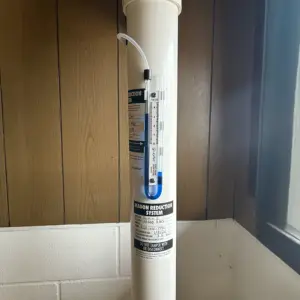
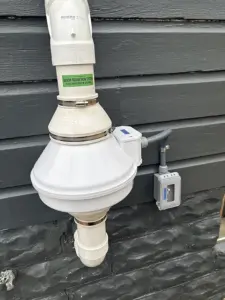
The most common approach is sub-slab depressurization. A pipe is installed through your foundation, connected to a fan that creates suction beneath the slab. Radon that would otherwise seep into your home is drawn into the pipe and vented outside above the roofline.
For homes with crawl spaces, similar systems work with the crawl space floor. A radon barrier is installed, and suction pipes vent soil gas to the exterior.
Most residential systems install in one day. You don’t need to leave your home. The system runs continuously and quietly in the background.
Learn more about how radon mitigation systems work.
Mitigation Cost
Radon mitigation in Asheville typically costs $1,100 to $2,500. Price depends on:
- Home size and layout
- Foundation type (slab, basement, crawl space)
- System routing (interior through attic vs. exterior)
- Complexity of the installation
We provide quotes for mitigation if your test results indicate it’s needed.
Post-Mitigation Testing
After a system is installed, we retest to verify it’s working. Post-mitigation levels should be below 4.0 pCi/L, ideally below 2.0 pCi/L.
This testing is typically included with mitigation installation. The contractor’s guarantee depends on documented results showing the system achieved its goal.
System Maintenance
Radon mitigation systems are low-maintenance but not no-maintenance. The fan has a lifespan of 5 to 15 years depending on the model. A manometer on the system shows whether it’s maintaining proper suction.
Check the manometer periodically. If it shows the system isn’t working, the fan may need replacement. Retest every 2 years to confirm levels remain low.
The Best Time of Year to Test
Radon levels fluctuate seasonally. In Western North Carolina, levels tend to be highest in winter and lowest in summer. For a deeper look at timing considerations, see our guide on the best time of year to test for radon in WNC.
Why Winter Levels Are Higher
Closed-house conditions. When it’s cold, you keep windows shut. Less fresh air dilutes indoor radon.
The stack effect. Greater indoor-outdoor temperature differences create stronger pressure differentials that pull more radon from soil.
Frozen ground. When surface soil freezes, radon that would escape outdoors gets directed through foundations instead.
Implications for Testing
Testing in winter captures your home at or near worst-case conditions. If levels are safe in January, they’re almost certainly safe in July.
Summer testing with windows open can produce artificially low results. Professional protocols require closed-house conditions regardless of season, but natural summer ventilation patterns mean you may never actually experience the conditions the test represents.
Practical Timing
If you’re buying or selling a home in any season, test during that season. Real estate transactions don’t wait for optimal testing weather. Just understand that winter levels may be somewhat higher than summer results.
If you’re testing for your own information and have flexibility, December through February gives you the clearest picture of worst-case conditions.
Service Areas
We provide radon testing throughout Western North Carolina, including:
Buncombe County: Asheville, Weaverville, Black Mountain, Fairview, Swannanoa, Woodfin, Montreat, Leicester
Henderson County: Hendersonville, Fletcher, Mills River, Flat Rock
Madison County: Mars Hill, Marshall, Hot Springs
Haywood County: Waynesville, Canton, Clyde, Maggie Valley
McDowell County: Marion, Old Fort
Transylvania County: Brevard, Rosman
If you’re not sure whether we cover your area, just ask. We serve most of WNC within about 40 miles of Asheville.
Why Choose Reems Creek Outdoor Solutions
We’re a local company that knows Western North Carolina. We live here. We work here. We understand the geology, the construction styles, and the radon challenges specific to this area.
We’re not a franchise or a call center routing your request to whoever’s available. When you call us, you’re talking to people who will actually show up at your home.
We believe in transparency. Our pricing is straightforward. Our results are delivered clearly. We don’t use scare tactics or push unnecessary services. If your radon is low, we’ll tell you. If it’s high, we’ll explain your options honestly.
We do the work right. Our testing follows EPA and AARST-ANSI protocols. Our equipment is professionally calibrated. Our documentation holds up in real estate transactions.
And we’re here for the long term. We’re not just testing your radon and disappearing. We offer radon mitigation services if you need them. We’re available for questions. We stand behind our work.
Frequently Asked Questions
How long does a radon test take?
The monitors need to be in place for a minimum of 48 hours. Including setup and retrieval, most tests are completed within 3 to 5 days from scheduling to results.
What is a safe level of radon?
The EPA recommends mitigation at 4.0 pCi/L or above. There’s no “safe” level in the sense of zero risk, but below 2.0 pCi/L is generally considered low. The average outdoor level is 0.4 pCi/L.
Can I test for radon myself?
Yes. Hardware store kits cost $15 to $40 and provide basic screening. For real estate transactions or when you need defensible documentation, professional testing is the standard.
Does every home in Asheville have radon?
Almost every home has some radon. The question is how much. Some Asheville homes test below 2.0 pCi/L. Others test above 20 pCi/L. You can’t predict based on neighbors, home age, or foundation type.
When is the best time of year to test?
Winter is ideal because closed-house conditions create peak radon accumulation. However, any time is better than not testing at all.
What if my test comes back high?
We install mitigation systems that reduce radon by 90% or more. Most systems cost $1,100 to $2,500 and install in one day. Post-mitigation testing confirms the fix worked.
Is radon testing required when buying a home in NC?
It’s not legally required, but it’s standard practice in Asheville transactions. Lenders and inspectors typically recommend it given our Zone 1 status.
Who pays for radon testing in real estate transactions?
The buyer typically pays for testing ($125 to $175). If mitigation is needed, the seller usually pays, though this is negotiable.
Should I buy a house with high radon?
High radon isn’t a reason to walk away. It’s completely fixable. The questions are who pays for mitigation and whether the seller is cooperative. A mitigated home is as safe as one that never had high radon.
How accurate are professional radon tests?
Professional continuous monitors are highly accurate when properly calibrated and deployed. Our monitors are calibrated annually by certified laboratories, and we follow EPA/AARST protocols for placement and testing conditions.
Can radon affect my pets?
Pets breathe the same air you do. Dogs and cats can develop lung cancer from radon exposure, though research on pet radon exposure is limited. If radon is high enough to concern you for your family, it’s worth addressing for your pets too.
Do radon levels change over time?
Yes. Levels fluctuate with seasons, weather, and changes to your home. That’s why the EPA recommends retesting every 2 to 5 years, even if previous results were low.
What if the seller already has a radon test?
You can consider old results, but conditions change. Get your own test to know current levels under verified conditions.
How much does radon mitigation cost?
Mitigation systems in Asheville typically cost $1,100 to $2,500 depending on home size, foundation type, and installation complexity.
Do mitigation systems really work?
Yes. Properly installed systems reduce radon by 90% to 99% in most homes. A home testing at 8 pCi/L typically drops below 1 pCi/L after mitigation.
How long do radon systems last?
The piping and most components last indefinitely. The fan typically lasts 5 to 15 years depending on the model. Replacement fans cost $150 to $300 including installation.
The Bottom Line
Radon is invisible, but the risk is real. Buncombe County’s geology puts your home in the highest risk category in the country. The EPA estimates radon causes 21,000 lung cancer deaths annually. These aren’t scare tactics. They’re facts.
Testing takes 48 hours and costs $125 to $175. It tells you exactly what you’re breathing.
If levels are low, you get peace of mind and documentation you can use if you ever sell.
If levels are high, you get a problem you can fix. Mitigation systems work. They’re proven. They’re affordable. And they make your home safe.
The only bad option is not knowing.
Schedule your radon test today.
Call (828) 500-1940 or email Becker@reemscreekoutdoors.com.
Reems Creek Outdoor Solutions Asheville’s Trusted Lawn, Landscape, and Property Health Pros